
There is a profound, restorative magic that fills a home when a heavy pot of soup gently simmers on the stovetop for hours. As the afternoon light begins to slant through the kitchen windows, the air transforms into a rich, aromatic haven of savory beef, sweet earthy root vegetables, and fragrant herbs. It is a sensory experience that instantly transports us back to simpler days, gathering around a sturdy wooden table with family, spooning up warmth from deep ceramic bowls. Yet, in our modern, fast-paced lives, finding the time to craft a soup that tastes like it simmered all day can feel like an elusive luxury. We crave comfort, but we demand simplicity, efficiency, and unwavering reliability from our weeknight dinners.
Enter the ultimate comfort food classic, reimagined for the modern home cook: a magnificent, hearty bowl of goodness designed to be completely approachable. This culinary creation bridges the gap between deep, slow-cooked complexity and everyday convenience, ensuring that anyone—from a tentative beginner to a seasoned home chef—can achieve absolute perfection on the very first try. Every element has been thoughtfully calibrated to deliver maximum flavor with minimal fuss, transforming humble pantry staples and fresh market produce into a masterpiece of texture and taste. Whether you are battling a brisk autumn chill, comforting a household through the sniffles, or simply searching for a wholesome, one-pot wonder to feed a hungry family, this recipe is your ultimate culinary anchor.
Prepare to embark on a delicious journey that demystifies soup-making once and for all. By breaking down the process into logical, rewarding steps and understanding the unique personality of each ingredient, you will master a technique that you will turn to again and again. Grab your favorite heavy-bottomed pot, pour yourself a cup of tea, and let us dive into the wonderful world of hearty, homemade goodness that proves great cooking does not have to be complicated.

Why Make Vegetable Beef Soup Made Easy
The culinary landscape is flooded with recipes promising quick results, yet many sacrifice depth, texture, and authentic flavor in the name of speed. The true beauty of a well-crafted soup lies in its ability to marry robust, savory proteins with vibrant, tender-crisp vegetables in a harmonious broth. When we talk about making this comforting classic approachable, we are not talking about cutting corners or relying on heavily processed shortcuts that leave your palate wanting more. Instead, we are focusing on smart kitchen techniques that build layers of rich flavor naturally, efficiently, and without unnecessary complication.
Traditional soup recipes often intimidate home cooks with endless lists of ingredients, complicated chopping requirements, and ambiguous instructions that leave too much room for error. This approach cuts through the noise. It honors the core principles of great cooking: searing meat to lock in savory richness, utilizing aromatic vegetables to build a flavor foundation, and timing the addition of delicate produce so that nothing turns to mush. By understanding the rhythm of the pot, you transform cooking from a chore into a deeply satisfying creative outlet. You learn how heat transforms raw elements into a cohesive, velvety broth that coats the back of a spoon and warms you from the inside out.
Furthermore, making this dish at home gives you absolute control over what goes into your body. Commercial canned soups are often loaded with hidden sodium, artificial preservatives, and mystery ingredients that sit heavily in your stomach. When you make your own, every single component is hand-selected by you. You can taste as you go, adjusting the seasoning to suit your personal preference, ensuring that the final result is wholesome, nourishing, and deeply satisfying. It is an act of care—both for yourself and for the people you love sharing your table with.
Another wonderful aspect of this culinary style is its incredible versatility and forgiveness. Cooking should never feel like a high-stakes chemistry experiment where a single misplaced measurement ruins the entire batch. This recipe is designed to be resilient. If you are missing a specific vegetable, the pantry or refrigerator likely holds a wonderful alternative. If you have extra time to let it simmer longer, the flavors only deepen and improve. This flexibility empowers home cooks to experiment with confidence, building intuition and kitchen wisdom that translates to every other meal they prepare.
Finally, there is the undeniable economic and practical value of a great one-pot meal. Buying ingredients in season, utilizing economical cuts of meat that soften beautifully under gentle heat, and making a batch large enough to yield generous leftovers all contribute to smart, sustainable household management. A single pot feeds a crowd, scales down effortlessly for smaller households, and actually tastes even better on the second day as the flavors continue to mingle and mature overnight in the refrigerator. It is the ultimate gift of time and nourishment to your future self.
Why You’ll Love This Vegetable Beef Soup Made Easy
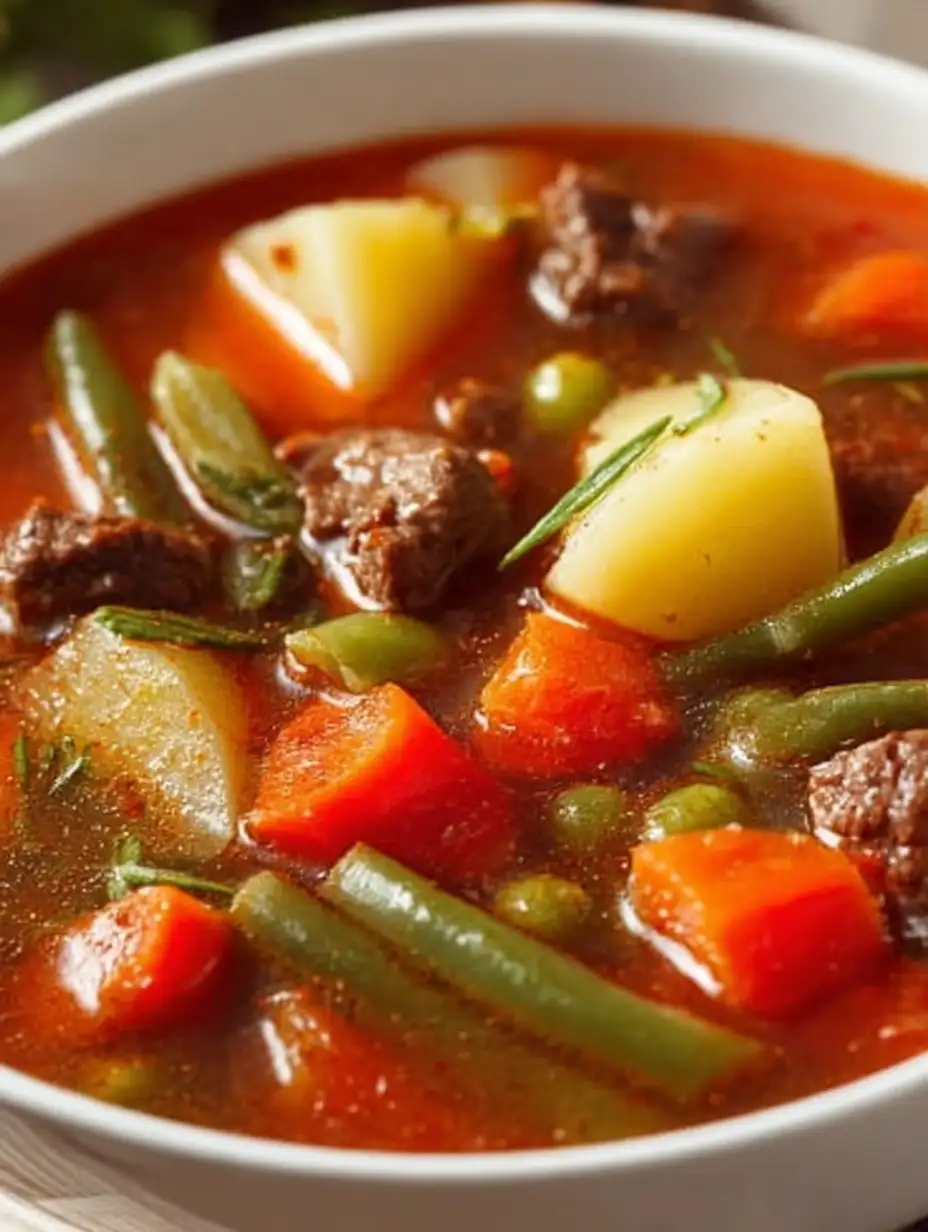
There are countless reasons why this particular recipe quickly becomes a cherished favorite in household meal rotations everywhere. First and foremost is the incredible texture profile. Too many homemade soups suffer from a monotonous mouthfeel where every ingredient has dissolved into a uniform, uninspired mush. Here, every spoonful offers a delightful contrast. You experience the tender, melt-in-your-mouth richness of well-cooked beef, followed by the pleasant bite of perfectly cooked root vegetables, rounded out by the bright pop of sweet green peas and tender-crisp green beans. It is a symphony of textures that keeps each bite interesting from the first spoonful to the very last.
Flavor is, of course, paramount, and this dish delivers an aromatic punch that fills your entire home with an irresistible, mouth-watering fragrance hours before dinner is even served. The secret lies in the foundational steps: searing the meat to create a deeply savory crust, sautéing onions to release their natural sweetness, and allowing the broth to absorb the subtle, earthy notes of dried thyme and tangy diced tomatoes. The resulting broth is rich, glossy, and deeply satisfying—never watery or flat. It begs to be soaked up with a thick slice of crusty artisan bread or a warm, buttered dinner roll.
Time management is another major victory for the modern cook. While the soup does require some time on the stove to allow the beef to tenderize and the flavors to meld, the actual active hands-on preparation is remarkably brief. Once the ingredients are in the pot and the gentle simmer is established, your presence is hardly required. You are free to help with homework, unwind with a good book, catch up on household chores, or simply relax. The stove does the heavy lifting, turning modest ingredients into a gourmet-level masterpiece while you reclaim your evening.
Dietary adaptability is also a huge win for families with varied nutritional needs. Whether you are navigating gluten sensitivities, dairy-free requirements, or simply trying to incorporate more vitamin-rich vegetables into your weekly diet, this recipe accommodates adjustments with effortless grace. You do not need to rewrite the entire formula to make it work for your specific lifestyle. It is naturally wholesome, free of unnecessary additives, and packed with lean protein, fiber, and essential micronutrients that support overall well-being.
Lastly, let us talk about the psychological comfort of a hot bowl of soup. Food is deeply tied to our emotions, memory, and sense of security. On a stressful day, walking into a home scented with rich broth and tender vegetables provides an immediate sense of relief and grounding. It is a tangible reminder to slow down, disconnect from the digital noise, and savor the simple pleasures of a nourishing meal shared in good company. That emotional payoff is ultimately why we cook, and why this recipe holds a permanent place in our culinary repertoire.
Ingredients and Substitutions
Understanding your ingredients is the ultimate hallmark of a great cook. When you know why an ingredient is included, how it behaves during the cooking process, and what can take its place in a pinch, you unlock true kitchen freedom. Here is the carefully curated roster of components that make this recipe shine, along with deep culinary insights for each item.
- 1 lb beef stew meat or chuck roast, cut into small cubes
- 2 tbsp olive oil for browning the beef
- 1 medium onion, chopped sautéed after browning beef
- 6 cups beef broth rich for flavor
- 1 can diced tomatoes adds acidity
- 1 tsp dried thyme classic seasoning
- 2 carrots chopped adds sweetness
- 2 medium potatoes russets or Yukon golds, chopped
- 1 cup green beans chopped
- 1 cup peas adds sweetness and color
Beef Stew Meat or Chuck Roast: The protein foundation of the dish. Pre-cut stew meat is convenient, but purchasing a well-marbled chuck roast and cubing it yourself yields superior tenderness and flavor. The internal fat found in chuck meat melts away during the long simmer, keeping the beef juicy and enriching the surrounding broth. If you prefer alternative proteins, boneless skinless chicken thighs cut into bite-sized pieces work wonderfully, though you will need to reduce the initial simmering time since chicken cooks much faster than beef.
Olive Oil: Used for the initial searing phase. Olive oil provides a pleasant, subtle fruitiness and a high smoke point that allows you to develop a gorgeous brown crust on the meat without burning. If you do not have olive oil on hand, avocado oil, canola oil, or even clarified butter work exceptionally well. Avoid extra virgin olive oil for the high-heat sear, as its lower smoke point can cause it to scorch prematurely.
Medium Onion: The aromatic cornerstone of savory cooking. As onions soften and translucent in the pot, they release natural sugars that balance the savory meat and acidic tomatoes. Yellow or white onions are the traditional choice for their sharp, clean flavor profile, while sweet onions like Vidalia offer a milder, sweeter result. If you are out of fresh onions, one tablespoon of onion powder can step in during a pinch, though fresh is always strongly recommended for optimal depth.
Beef Broth: The liquid medium that carries all the flavors. High-quality beef broth or bone broth provides an intensely savory, umami-rich base that elevates the entire dish. Look for low-sodium varieties so you can retain total control over the final salt levels in your soup. If you are out of beef broth, vegetable broth or rich chicken broth can be substituted, though the flavor profile will shift to be slightly lighter and less robust.
Diced Tomatoes: A crucial element that provides a bright pop of acidity to cut through the rich, heavy notes of the meat and broth. Canned diced tomatoes retain their shape nicely and release their juices into the liquid as it simmers. Fire-roasted diced tomatoes are a fantastic gourmet upgrade that adds a subtle smoky undertone. If you prefer a smoother texture, crushed tomatoes or tomato sauce can be used instead.
Dried Thyme: A classic woody herb that pairs harmoniously with beef and root vegetables. It brings earthy, floral notes that ground the flavor profile. If you have fresh thyme available, use three times the amount—about one tablespoon of fresh leaves stripped from their stems. Rosemary or oregano also make wonderful substitutions if you want to experiment with different herbal bouquets.
Carrots: These introduce a vibrant splash of natural orange color and a gentle, comforting sweetness that balances the savory elements of the soup. Peeling them is optional depending on your preference for rustic versus refined texture. If you are looking for alternatives, parsnips or sweet potatoes make incredible swaps that offer a similar nutritional and textural profile.
Potatoes (Russets or Yukon Golds): The starchy backbone that makes the soup truly hearty and filling. Yukon Golds hold their shape beautifully while offering a buttery texture, whereas Russets tend to break down slightly, naturally thickening the broth as they cook. Red potatoes are another fantastic option that maintains a firm, waxy bite. For a lower-carb variation, you can substitute peeled turnip cubes or cauliflower florets.
Green Beans: These add a wonderful snap and a fresh, grassy note that prevents the soup from feeling too heavy. Fresh-cut green beans are ideal, but frozen green beans work swimmingly and can be added directly from the freezer. Asparagus pieces or zucchini chunks also make delightful seasonal substitutions depending on what is growing in your garden or available at the market.
Green Peas: The final vibrant addition that brings a burst of sweet pop and gorgeous green color right at the end of the cooking process. Peas are delicate and lose their bright flavor if overcooked, which is why they are introduced in the final stages. Frozen sweet peas are vastly superior to canned peas here, retaining a fresh garden crunch and vibrant color. Edamame or corn kernels make fun, unconventional swaps if you want to mix things up.
How to Make Vegetable Beef Soup Made Easy
Mastering this recipe is all about respecting the timeline of flavor development. By introducing ingredients in a deliberate sequence, you ensure that every component achieves its ideal state of tenderness and taste. Take your time during the initial searing phase, as those golden-brown caramelized bits left at the bottom of the pot are pure liquid gold that will dissolve into the broth and provide incredible depth.
Step-by-Step Cooking Instructions
Step 1: In a large pot, heat the olive oil over medium heat and brown the beef stew meat until golden brown on all sides.
Begin by preheating your heavy-bottomed Dutch oven or stockpot over medium-high heat. Pat your beef cubes completely dry with paper towels—this is a vital secret for achieving a gorgeous, deep-brown crust rather than steaming the meat. Add the olive oil, let it shimmer, and drop the beef in without overcrowding the pan. Listen for a satisfying sizzle. Resist the urge to constantly stir; let the meat rest undisturbed for two to three minutes on each side so it develops an intensely savory, caramelized crust. Once the beef is beautifully browned across all surfaces, use a slotted spoon to transfer it to a clean plate, leaving the precious rendered juices and flavorful browned bits right inside the pot.
Step 2: Remove the beef and sauté chopped onion in the same pot until softened, scraping the browned bits from the bottom.
Turn the heat down slightly to medium. Toss your freshly chopped onions directly into the residual oil and beef drippings left behind in the pot. As the onions begin to sizzle, they will release moisture, which acts as a natural solvent. Take a wooden spoon and vigorously scrape the bottom of the pot, releasing all those delicious caramelized brown fragments of beef. This process, known as deglazing without alcohol, infuses the onions with immense savory complexity. Watch the onions closely and listen for a gentle, steady hiss, stirring occasionally until they turn translucent, tender, and beautifully fragrant, taking on a light golden hue at the edges.
Step 3: Add beef back to the pot along with beef broth, diced tomatoes, and dried thyme. Allow to simmer on low heat for about 45 minutes.
Return the browned beef, along with any savory juices that have accumulated on the plate, back into the pot with the softened onions. Pour in the rich beef broth and the can of diced tomatoes, including their juices. Sprinkle the dried thyme evenly over the surface. Stir everything together thoroughly, scraping the bottom one last time to ensure no hidden bits remain stuck. Bring the liquid up to a gentle, rolling boil, then immediately reduce the heat to low and cover the pot with a lid. Let it simmer gently for 45 minutes. During this time, the house will fill with an incredible aroma, and the tough collagen within the beef will gently break down, transforming into meltingly tender morsels while enriching the broth.
Step 4: After 45 minutes, add the chopped carrots, potatoes, green beans, and peas.
Carefully remove the lid, being mindful of the hot steam escaping the pot. The broth should look rich and smell deeply savory. Now it is time to introduce the foundational vegetables. Add your freshly chopped carrots, diced potatoes, and chopped green beans directly into the simmering liquid. (Note: Hold off on the green peas for just a few moments longer, as they require very little cooking time to stay vibrant and sweet). Stir everything gently to submerge the vegetables in the flavorful broth, replace the lid, and prepare for the final stage of cooking.
Step 5: Simmer for an additional 20–30 minutes, until the vegetables are fork-tender.
Allow the soup to continue its gentle simmer with the added root vegetables for about 15 minutes, stirring occasionally. During the last 5 to 10 minutes of cooking, stir in your green peas, leaving the lid off so you can monitor the progress. Test the potatoes and carrots with a sharp fork or the tip of a paring knife—they should slide in effortlessly with zero resistance. Taste the broth carefully and adjust with salt and freshly cracked black pepper according to your personal preference. Ladle the piping-hot soup into deep bowls and serve immediately.
Storage & Reheating
One of the greatest joys of making a large batch of homemade soup is looking forward to the meals it provides long after the initial cooking is done. In fact, many culinary enthusiasts argue that vegetable beef soup actually tastes better on the second and third days. Overnight, the starch from the potatoes gently settles into the broth, the flavors marry into a unified symphony, and the spices fully permeate every single vegetable and piece of meat. Proper storage ensures that your culinary efforts remain safe, fresh, and just as delicious as the moment they left the stove.
To store leftovers safely, allow the soup to cool down to room temperature on the counter, but do not leave it sitting out for longer than two hours to ensure food safety. Transfer the cooled soup into airtight glass or heavy-duty plastic containers. Seal them tightly and place them in the refrigerator, where the soup will keep beautifully for three to four days. When you are ready to enjoy a bowl, simply scoop out the desired portion into a saucepan and warm it gently over medium-low heat on the stovetop, stirring occasionally until heated through. You can also microwave individual portions in a microwave-safe bowl, covering it loosely and heating in one-minute increments, stirring in between to ensure even temperature distribution.
If you wish to preserve your soup for long-term enjoyment, freezing is a fantastic option, though a few minor adjustments help maintain optimal texture. Root vegetables like potatoes can sometimes take on a slightly spongy or grainy texture after being frozen and thawed. If you plan to freeze a batch specifically, consider slightly undercooking the potatoes and carrots, or omit them entirely and stir in fresh ones when you reheat the thawed broth base. Pour the cooled soup into freezer-safe containers or heavy-duty freezer bags, leaving about an inch of headspace at the top to allow for liquid expansion as it freezes. Lay bags flat on a baking sheet in the freezer until solid, then stack them neatly to maximize freezer space.
Thawed frozen soup should ideally be transferred to the refrigerator the night before you plan to serve it, allowing for a slow, gentle thaw. When reheating from frozen or thawed states on the stovetop, you may notice that the broth has thickened significantly as the starches absorb more liquid during storage. Simply splash in a quarter cup of water, additional beef broth, or a touch of tomato juice to bring the consistency right back to where you want it. Season with a fresh pinch of salt, pepper, or a sprinkle of fresh herbs to awaken the flavors, and enjoy a comforting, homemade meal that tastes like it was just made from scratch.
More Comforting Soups You’ll Love
If you enjoyed this recipe, be sure to explore these cozy favorites from our soup collection:
- One-Pot Macaroni Cheeseburger Soup – ultra-comforting cheeseburger soup loaded with savory ground beef and cheddar cheese.
- Italian Sausage White Bean Soup – cozy Italian sausage soup simmered with creamy white beans and baby spinach.
(FAQs)
Can I make this vegetable beef soup in a slow cooker?
Yes, absolutely! To adapt this recipe for a slow cooker, start by browning the beef and sautéing the onions in a skillet on the stovetop as directed in Steps 1 and 2—this step is crucial for developing deep, rich flavor. Transfer the browned beef, onions, beef broth, diced tomatoes, thyme, carrots, and potatoes directly into your slow cooker. Cover and cook on low for 6 to 8 hours or on high for 3 to 4 hours, until the beef and root vegetables are fork-tender. Stir in the green beans and peas during the last 30 minutes of cooking so they retain their bright color and pleasant crunch.
What is the best cut of beef to use for vegetable soup?
A well-marbled beef chuck roast is widely considered the gold standard for soups and stews. As it simmers in liquid over low heat, the internal connective tissues and natural fats melt away, rendering the meat meltingly tender and imparting incredible richness to the surrounding broth. Pre-packaged “beef stew meat” is usually cut from the chuck as well, but always inspect the package to ensure the pieces feature nice marbling rather than large chunks of hard gristle or excessive lean muscle, which can turn dry and tough.
How can I thicken the broth if it turns out too thin?
If you prefer a thicker, more gravy-like broth rather than a light, brothy soup, there are several easy ways to achieve your desired consistency. You can mash a few of the cooked potato chunks directly against the side of the pot with a fork—the natural starch released will instantly body up the liquid. Alternatively, you can whisk one tablespoon of all-purpose flour or cornstarch into two tablespoons of cold water to create a smooth slurry, then stir it into the simmering soup during the last ten minutes of cooking.
Can I add pasta or rice to this soup?
Adding grains or pasta is a wonderful way to make the soup even more filling and hearty. However, it is best to cook the pasta or rice separately and stir individual portions into the bowls just before serving. If you add raw pasta or rice directly into the simmering soup pot, they will absorb a massive amount of the broth and continue to swell as they sit in leftovers, eventually turning into a mushy texture that overwhelms the vegetables.
How do I prevent the vegetables from getting mushy?
The key to maintaining perfect vegetable texture is timing their introduction based on their density. Hard root vegetables like carrots, potatoes, and parsnips require a longer cooking time to soften, which is why they go into the pot first. Delicate vegetables like green beans, peas, zucchini, and leafy greens cook in a fraction of the time and should always be added during the final 10 to 20 minutes of the simmering process to preserve their vibrant colors and crisp-tender bite.
Is this soup recipe gluten-free and dairy-free?
As written, this recipe is naturally completely dairy-free, as no butter, cream, or milk is required to achieve its rich flavor profile. To ensure it is strictly gluten-free, simply double-check the ingredient label on your store-bought beef broth to confirm there are no hidden gluten-containing thickeners or additives included. All of the fresh meats, oils, herbs, and vegetables are naturally free of gluten, making this a wonderfully inclusive meal for gatherings with diverse dietary needs.
Vegetable Beef Soup Made Easy
Ingredients
Method
- In a large pot, heat the olive oil over medium heat and brown the beef stew meat until golden brown on all sides.
- Remove the beef and sauté chopped onion in the same pot until softened, scraping the browned bits from the bottom.
- Add beef back to the pot along with beef broth, diced tomatoes, and dried thyme. Allow to simmer on low heat for about 45 minutes.
- After 45 minutes, add the chopped carrots, potatoes, green beans, and peas.
- Simmer for an additional 20–30 minutes, until the vegetables are fork-tender.



1 thought on “Vegetable Beef Soup Made Easy”