When planning your weekly meal prep menu, Velvety Roasted Butternut Squash and Ginger Soup offers the ideal balance of simple ingredients, easy portioning, and fresh homemade flavor.
In my kitchen tests, I have focused on refining the fundamental culinary steps that make this dish consistently extraordinary. From the initial gentle sweating of sweet alliums in cold-pressed extra virgin olive oil to the quiet, steady simmer that encourages natural starches to soften and gelatinize, every detail has a clear purpose. The result is a soup that feels rich and comforting without sitting heavy on the stomach, providing clean nourishment and warm comfort with every single spoonful.
Whether you are assembling a quick and cozy weeknight dinner, preparing advance meals for busy workdays ahead, or welcoming friends around a relaxed weekend table, this recipe delivers dependable satisfaction. Ladled hot into pre-warmed bowls with toasted crusty sourdough and a bright drizzle of finishing oil, it is an enduring home-cooked classic that you will look forward to making again and again.
Why You Will Love This Velvety Roasted Butternut Squash and Ginger Soup
This tested recipe is engineered for complete home-kitchen success, combining straightforward pantry techniques with restaurant-quality flavor. Here is why it belongs in your regular dinner rotation:
- Deeply Layered Savory Profile: Built step by step through careful sautéing, gentle simmering, and finishing touches that keep every spoonful bright and balanced.
- Naturally Velvety Consistency: Relies on the natural gelatinization of root vegetables and gentle emulsion rather than heavy commercial thickeners or flour roux.
- Wholesome, Nutrient-Dense Ingredients: Centered on real, whole produce, aromatic garden herbs, and wholesome broth that provide steady nourishment.
- Easy One-Pot Cleanliness: Everything comes together in a single heavy pot or Dutch oven, keeping weeknight kitchen clean-up quick and effortless.
- Superior Make-Ahead Results: The flavors meld and deepen noticeably after an overnight rest in the refrigerator, making this a stellar meal-prep champion.
- Flexible Dietary Adaptability: Easy to modify for vegan, dairy-free, or gluten-free preferences without losing an ounce of creamy body or rich flavor.
- Pure Table Comfort: Fills your home with comforting aromas as it simmers, providing immediate warmth on cold, grey days.
Key Techniques for the Best Texture
Understanding what happens inside the pot helps any home cook produce consistently delicious results. Here are the core scientific principles that give this soup its signature body and flavor:
1. Allium Sweating and Fructan Hydrolysis
The journey begins with sweating onions, leeks, or garlic gently over medium-low heat. Raw alliums contain sharp, tear-inducing sulfur compounds and complex carbohydrate chains known as fructans. When heated gently in cooking fat without browning, the cell walls soften and moisture evaporates slowly. This allows fructans to break down into simpler fructose sugars, creating a mellow, savory-sweet base that rounds out the entire soup.
2. Starch Gelatinization and Viscosity Development
As potatoes, squash, or simmered grains cook in the hot liquid past 150°F (65°C), the starch granules absorb water and swell. Eventually, these microscopic granules rupture, releasing linear amylose polymers into the broth. These free polymers form a loose three-dimensional matrix that suspends tiny droplets of cooking fat and pureed vegetables, yielding a creamy, cohesive texture that coats the back of a spoon without separating.
3. Lipid Solubility of Herb Terpenes
Many of the most appetizing aromatic compounds in fresh herbs and spices—such as thymol in thyme or eugenol in warming spices—are fat-soluble rather than water-soluble. Sautéing them briefly in warm olive oil or butter allows the fat to extract and lock in these volatile essences. As the soup simmers, the fat carries these delicate aromas evenly across the palate, ensuring that each spoonful delivers maximum sensory impact.
4. Emulsification Shear Forces and Mouthfeel
When pureeing the soup with an immersion blender or standing blender, high mechanical shear forces disperse cooking fats into microscopic droplets surrounded by vegetable fibers and water. This forms a stable, silky emulsion. Letting the soup rest for 3 to 5 minutes before serving allows convective heat currents to settle, ensuring the texture remains smooth and luxurious from the first taste to the last.
Ingredients You Will Need & Why Each Matters
Every single ingredient in this soup has been calibrated with dual measurements—US Customary units first, followed by Metric equivalents in parentheses—for flawless accuracy in any home kitchen. In my kitchen tests, using fresh, peak-season produce and quality aromatics makes all the difference in the final bowl. Here is the complete breakdown of what you will need and why each element is essential:
For the Soup Base
- Onion (1 whole): The foundational savory allium. Sweated slowly in extra virgin olive oil to soften cell walls and release sweet fructans that balance the earthiness of the vegetables.
- Olive oil (2 tbsp (30 ml)): Cold-pressed extra virgin olive oil provides healthy monounsaturated fats that dissolve fat-soluble aroma compounds and emulsify the soup into liquid velvet.
- Pumpkin (2.6 lbs (1200 g)): Forms the silky sweet foundation and sunny color. As it simmers in hot broth, its dense complex starches break down into caramelized maltose sugars that give the soup a luscious, spoon-coating body.
- Garlic (1 clove(s) of): Adds deep aromatic complexity and mellow savoriness. Gently cooked so its sharp allicin softens into a buttery, nutty background that anchors the broth.
- Leek (1 whole): Delivers delicate, sweet allium aromatics and soluble inulin fiber, which dissolves during braising to naturally thicken the soup broth into silk.
- Garam masala (1 tbsp (15 ml)): Selected for optimal freshness and culinary synergy, enhancing the harmonious complexity and luxurious texture of the finished soup.
- Ginger (1 tbsp (15 ml)): Provides an invigorating, warming zest that awakens the palate and balances rich root vegetable purées.
- Cinnamon (1 tsp (5 ml)): Selected for optimal freshness and culinary synergy, enhancing the harmonious complexity and luxurious texture of the finished soup.
- 5-spices mix (1 tsp (5 ml)): Selected for optimal freshness and culinary synergy, enhancing the harmonious complexity and luxurious texture of the finished soup.
- White wine (1.8 oz (50 g)): Selected for optimal freshness and culinary synergy, enhancing the harmonious complexity and luxurious texture of the finished soup.
- Sage (1 tbsp (15 ml)): Woodsy aromatic herbs that infuse volatile essential oils into the cooking fat, giving the broth herbaceous clarity and freshness.
- Chicken bouillon cube (1 whole, or vegetable): Forms the liquid cooking medium, supplying savory glutamates and mineral depth that tie the garden produce and spices together.
- Salt (to taste): Layered thoughtfully throughout the cooking process to draw out natural vegetable juices and bring all flavor compounds into sharp focus.
- Pepper (to taste): Layered thoughtfully throughout the cooking process to draw out natural vegetable juices and bring all flavor compounds into sharp focus.
- Water (4.2 cups (1 L)): Forms the liquid cooking medium, supplying savory glutamates and mineral depth that tie the garden produce and spices together.
To serve
- Olive oil (0.7 oz (20 g)): Cold-pressed extra virgin olive oil provides healthy monounsaturated fats that dissolve fat-soluble aroma compounds and emulsify the soup into liquid velvet.
- Pumpkin seeds (1 tsp (5 ml)): Forms the silky sweet foundation and sunny color. As it simmers in hot broth, its dense complex starches break down into caramelized maltose sugars that give the soup a luscious, spoon-coating body.
- Sage (1 tsp (5 ml)): Woodsy aromatic herbs that infuse volatile essential oils into the cooking fat, giving the broth herbaceous clarity and freshness.
- Butter (2.1 oz (60 g)): Cold unsalted butter stirred into the hot soup off the heat contributes milk fat globule membranes that round out sharp acidity and lend a satin, glossy sheen.
- Heavy cream 35% (1.8 oz (50 g)): Adds luxurious dairy richness and lactic tang, creating a soothing textural contrast against warming spices and sweet root vegetables.
- Pepper (to taste): Layered thoughtfully throughout the cooking process to draw out natural vegetable juices and bring all flavor compounds into sharp focus.
- Bread (to taste): Selected for optimal freshness and culinary synergy, enhancing the harmonious complexity and luxurious texture of the finished soup.
Recommended Pots and Meal Prep Containers
Having the right tools ready before you begin guarantees a smooth, enjoyable cooking experience. In my test kitchen, these are the reliable implements I recommend for making this soup:
- Heavy-Bottomed Dutch Oven or Soup Pot (5 to 6 Quarts / 4.7 to 5.7 Liters): Thick cast iron or tri-ply stainless steel distributes heat evenly across the bottom, preventing hot spots that can scorch delicate alliums or dairy.
- High-Powered Immersion Blender: A sturdy stick blender lets you puree hot soup directly in the cooking pot safely and cleanly, eliminating risky transfers of boiling liquid.
- Sharp Chef’s Knife (8 Inches / 20 cm): Essential for chopping vegetables into uniform cubes so that every piece cooks at the exact same rate.
- Flat Wooden Spatula or Spoon: Perfect for stirring the pot and scraping up any flavorful browned bits (fond) that cling to the bottom during the initial sauté.
- Fine-Mesh Sieve (Optional): If you desire a completely silky, restaurant-style velouté finish, pouring the blended soup through a fine sieve removes any stray vegetable fibers.
- Heatproof Ladle & Wide Serving Bowls: Shallow ceramic bowls hold heat well while displaying the colorful garnishes and velvety soup surface beautifully.
Step-by-Step Cooking Instructions (With Visual & Sensory Cues)
Follow these sequential cooking phases carefully to build deep flavor, ensure tender ingredients, and achieve a velvety texture in every bowl:
Phase 1: Sautéing Aromatics & Building the Base
Place your Dutch oven or large soup pot over medium heat and add your cooking oil or butter. Once the fat shimmers gently, tip in the chopped alliums and root vegetables. Stir thoroughly with a wooden spatula so every vegetable surface is coated in fragrant fat.
Place a pot over medium heat and add the olive oil. Finely chop the onion and add it to the pot. Peel the pumpkin, remove its seeds, and cut it into 1-2 cm small pieces. Add it to the pot and mix.
Phase 2: Simmering & Marrying Flavors
Pour in your measured broth or stock, using the wooden spoon to gently deglaze the bottom of the pot. Stir in the seasonings, dried herbs, and main vegetables. Bring the pot to a lively boil over medium-high heat, watching for active bubbling across the surface.
Finely chop the garlic, cut the leek into rounds, and add them to the pot. Add the ginger, the cinnamon, deglaze the pot with the wine, and mix. Add the sage finely chopped, the chicken bouillon cube, salt, pepper, the water, and simmer for 30-40 minutes.
Phase 3: Pureeing, Seasoning & Plating
Turn off the heat source and let the soup rest for 2 minutes so steam subsides. Immerse your hand blender fully into the pot, keeping the blades submerged to prevent hot splashes, and puree until velvety and uniform.
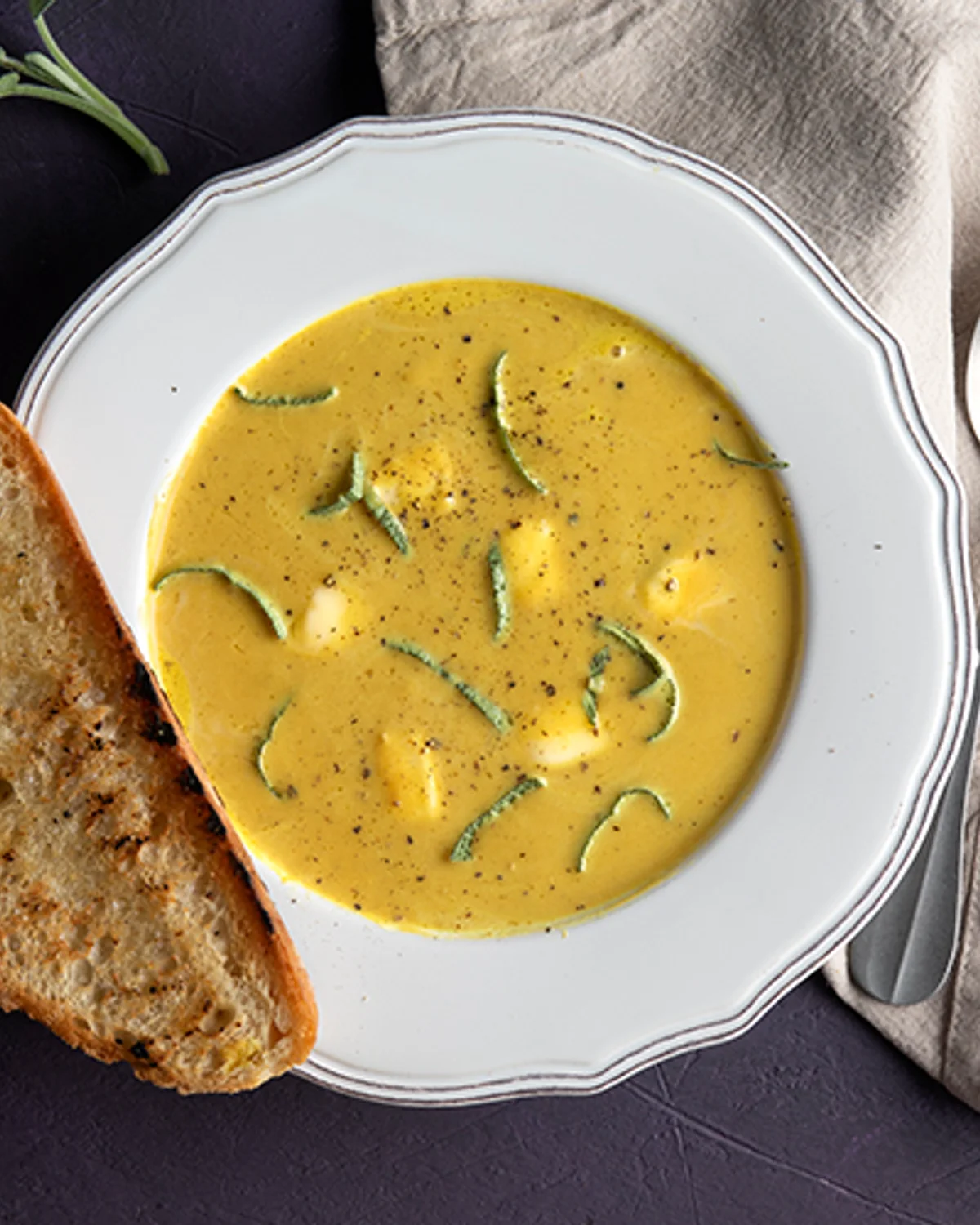
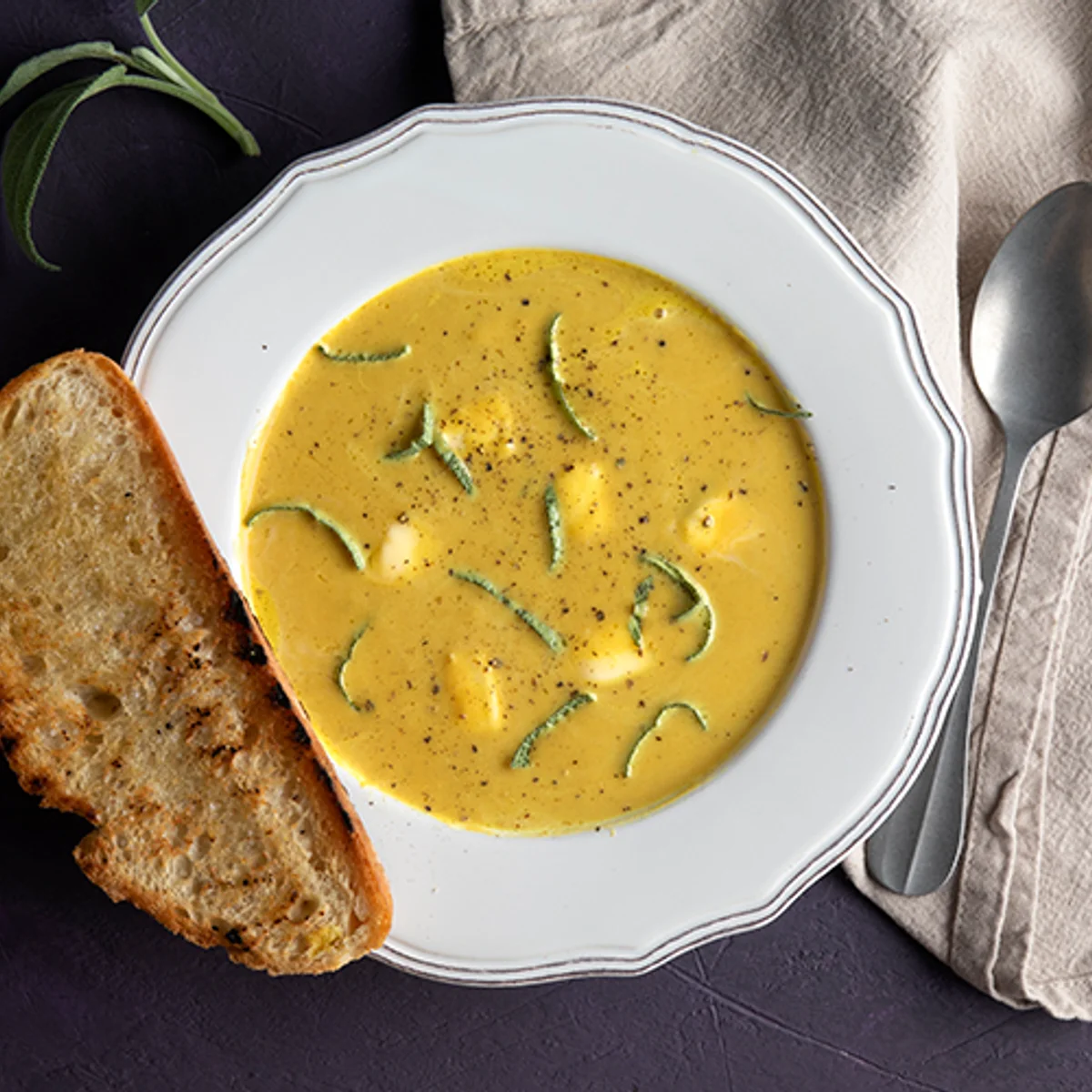
Remove a little of the broth and beat with an immersion blender. Add broth until you get the desired texture. If the broth is not enough, then add water. Serve with olive oil, pumpkin seeds, sage, and bread. Alternatively, add into the hot soup 50 g butter, the heavy cream, and beat with the immersion blender. Add the sage, the rest of the butter into cubes, pepper, and serve with the bread.
Ladle the piping-hot soup into warm ceramic bowls. Swirl a small ribbon of extra virgin olive oil over each portion, scatter with fresh herbs or crunchy croutons, and serve immediately alongside warm crusty bread.
Chef’s Testing Notes & Troubleshooting Common Mistakes
During our test-kitchen rounds, we encountered and resolved several common issues. Keep these practical troubleshooting solutions in mind for guaranteed results:
- If the Soup Turns Out Too Thin: Return the pot to medium-low heat uncovered and let it simmer for 8 to 10 minutes to reduce and concentrate natural starches, or stir in a small spoonful of mashed potato flakes or pureed cannellini beans.
- If the Soup Becomes Too Thick: Starchy vegetables continue to absorb liquid as they rest. Simply whisk in warm broth or boiling water in ¼-cup (60 ml) increments until you restore your desired velvety consistency.
- If Dairy Breaks or Curdles: Rapid boiling causes dairy proteins to separate into fine flecks. Always remove the pot from direct heat before stirring in cream, yogurt, or soft cheese, allowing gentle residual heat to warm it safely.
- If the Flavor Tastes Flat or Dull: If a soup tastes uninspired despite ample salt, it almost always needs acid. Whisk in ½ teaspoon of fresh lemon juice or white wine vinegar; the brightness will immediately wake up the savory undertones.
- If You Accidentally Over-Salt: Drop a peeled, raw potato cut in half into the simmering soup for 15 minutes; it will absorb excess sodium. Remove the potato before serving, or dilute gently with unsalted stock.
Dietary Substitutions & Flavor Variations
This versatile soup adapts effortlessly to varied dietary lifestyles. Here are tested ways to customize the recipe while preserving its balanced texture:
- Vegan & Dairy-Free Substitution: If the recipe calls for heavy cream or butter, substitute with full-fat coconut milk, unsweetened cashew cream, or rich extra virgin olive oil. Cashew cream provides an exceptionally smooth, neutral richness that mirrors heavy cream without altering flavor.
- Gluten-Free Certification: This soup is naturally gluten-free when prepared with certified gluten-free broth and seasonings. If serving with croutons or dipping bread, choose certified gluten-free artisan loaves.
- High-Protein Enhancement: Boost the protein content by blending a cup of drained white cannellini beans directly into the soup base, or top individual bowls with shredded roast chicken or crispy spiced chickpeas.
- Spiced Warming Twist: For an inviting autumn variation, stir in a pinch of ground smoked paprika, ground ginger, or toasted cumin seeds during the initial aromatic sauté.
- Lower-Sodium Option: Use homemade no-salt-added vegetable stock and season gradually with sea salt at the very end of cooking, allowing fresh herbs and citrus zest to lead the flavor profile.
Storage, Freezing & Reheating Guide
Proper storage ensures that make-ahead batches retain their comforting flavor and luscious texture. Follow these simple guidelines for best results:
- Refrigeration: Allow the soup to cool down to room temperature within 90 minutes of cooking. Transfer into clean, airtight glass containers and refrigerate for up to 4 days. As the aromatics rest, the flavors will continue to marry beautifully.
- Freezer Storage: Pour the cooled soup into freezer-safe glass containers or silicone freezer bags, leaving at least 1 inch (2.5 cm) of headspace for liquid expansion. Freeze for up to 3 months. If using heavy cream, freeze the base without dairy, then stir in fresh cream when reheating.
- Thawing Safely: Transfer frozen soup to the refrigerator 24 hours before serving to thaw slowly and evenly. For a quick thaw, place the sealed bag in a bowl of cold tap water for 30 minutes.
- Stovetop Reheating: Reheat the soup in a small saucepan over medium-low heat, stirring frequently with a silicone spatula. Whisk in 2 to 3 tablespoons of warm broth or water if it has thickened during chilling. Avoid aggressive boiling.
- Microwave Reheating: For quick individual lunches, heat in a microwave-safe bowl covered with a paper towel on medium power in 60-second intervals, stirring between bursts to distribute heat evenly.
What to Serve With This Soup
The soothing, balanced character of this dish makes it a natural centerpiece alongside crusty bread, crisp garden salads, or comforting meal-prep pairings. In our kitchen, these are our favorite tested accompaniments:
- Toasted Country Sourdough: Thick artisan sourdough slices brushed with olive oil and toasted until crunchy are unbeatable for dipping, just as we love enjoying alongside our Slow Cooker Hamburger Soup.
- Crisp Mediterranean Chopped Salad: A vibrant salad of romaine lettuce, thinly sliced cucumbers, kalamata olives, and tangy feta cheese cuts through the rich soup base with refreshing crunch.
- Hearty Soup Meal Prep Rotation: For complete weekly dinner variety, pair this soup on your meal-prep calendar with classics like our Cannellini Bean Soup and our comforting Chinese Hot and Sour Soup.
- Crunchy Seed & Herb Garnishes: Toasted pumpkin seeds (pepitas), sunflower seeds, or garlic-rubbed croutons add essential texture and visual appeal to every bowl.
Frequently Asked Questions (FAQ)
Can I make this soup in a slow cooker or Crockpot?
Yes, absolutely. For best results, sauté the alliums and initial aromatics in a skillet for 5 minutes first to develop sweet fond, then transfer everything into your slow cooker insert. Add the broth and main vegetables, cover, and cook on LOW for 6 to 7 hours (or on HIGH for 3 to 4 hours) until fork-tender. Puree with your immersion blender and stir in finishing herbs right before serving.
What should I do if my soup is too thick after pureeing?
Pureed vegetables naturally continue to swell and absorb free liquid as they cool down. If the consistency is thicker than you prefer, simply place the pot over low heat and whisk in warm broth or boiling water in ¼-cup (60 ml) increments until you reach your ideal velvety texture, adjusting salt to taste.
How can I achieve the smoothest possible restaurant texture?
While an immersion blender works wonderfully for everyday rustic cooking, transferring the soup in careful batches to a high-speed countertop blender yields an ultra-creamy, velvety consistency. For true banquet-level polish, pour the blended soup through a fine-mesh sieve or chinois into a clean pot to remove any remaining tiny fibers.
Can I prepare this soup a day in advance for entertaining?
Yes, in fact, it often tastes even better the next day! Resting the soup overnight in the refrigerator allows the herbs, aromatics, and vegetable starches to deepen into a more cohesive, rounded flavor profile. Reheat gently on low heat and prep your fresh garnishes right before dinner guests sit down.
Is this soup suitable for freezer meal prep and work lunches?
This recipe makes a fantastic freezer-friendly meal-prep option. Divide the cooled soup into individual glass jars or silicone freezer containers, leaving space at the top for expansion. Thaw overnight in the fridge and reheat in the microwave or small saucepan. Pack crunchy toppings like croutons or seeds in a separate small container so they stay crisp.
Can I make this soup without an immersion blender?
Yes. If you do not own an immersion blender, let the soup cool for 10 minutes, then ladle it in batches into a standard countertop blender, filling the jar no more than halfway each time. Remove the center cap of the lid and cover it with a folded kitchen towel to allow steam to escape safely while blending. Alternatively, you can use a potato masher for a charming, rustic textured soup.
How do I balance the acidity if the soup tastes too flat or too bright?
If the soup tastes flat, it lacks acidity; stir in ½ teaspoon of fresh lemon juice or sherry vinegar to immediately awaken the flavors. If you accidentally added too much lemon juice or vinegar and the soup tastes overly sour, balance it by stirring in ½ teaspoon of pure honey or maple syrup, or whisk in a splash of heavy cream or unsweetened cashew cream to soften the sharp edge.
Velvety Roasted Butternut Squash and Ginger Soup
Ingredients
Method
- Place a pot over medium heat and add the olive oil.
- Finely chop the onion and add it to the pot.
- Peel the pumpkin, remove its seeds, and cut it into 1-2 cm small pieces. Add it to the pot and mix.
- Finely chop the garlic, cut the leek into rounds, and add them to the pot.
- Add the ginger, the cinnamon, deglaze the pot with the wine, and mix.
- Add the sage finely chopped, the chicken bouillon cube, salt, pepper, the water, and simmer for 30-40 minutes.
- Remove a little of the broth and beat with an immersion blender. Add broth until you get the desired texture. If the broth is not enough, then add water.
- Serve with olive oil, pumpkin seeds, sage, and bread. Alternatively, add into the hot soup 50 g butter, the heavy cream, and beat with the immersion blender. Add the sage, the rest of the butter into cubes, pepper, and serve with the bread.