
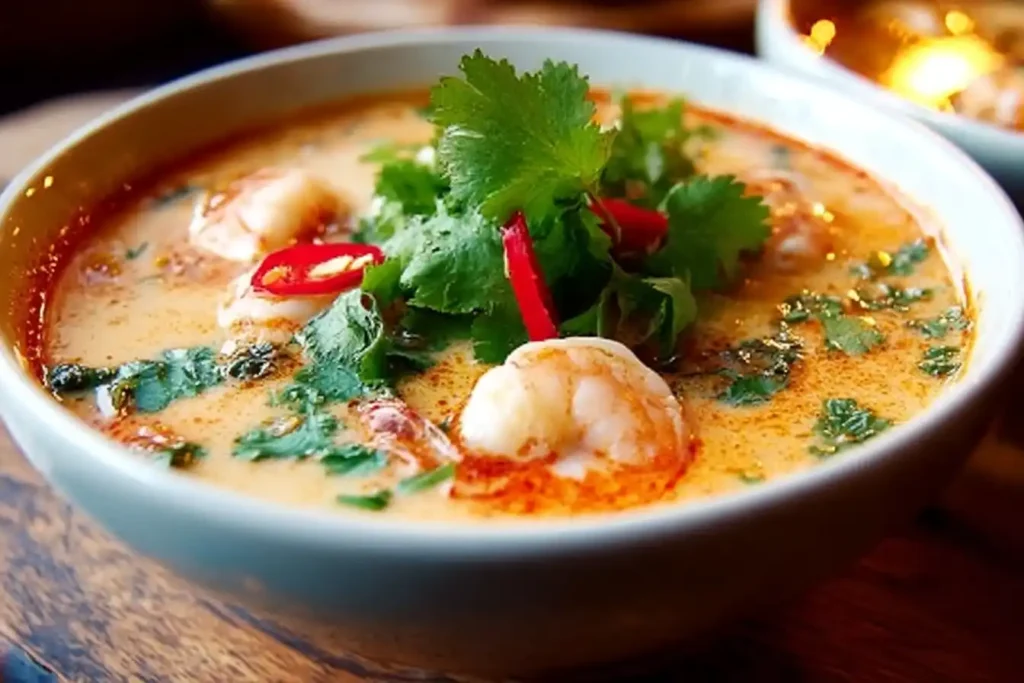
Few dishes in the culinary world command as much instant comfort and vibrant flavor as a steaming, fragrant bowl of authentic Thai Coconut Soup, known natively in Thailand as Tom Kha Gai. With its luxurious, velvety coconut base infused with bright lemongrass, peppery galangal, and floral kaffir lime leaves, this classic soup offers an unforgettable symphony of salty, sour, sweet, spicy, and creamy notes. It is a dish that manages to be simultaneously rich and remarkably light, soothing the soul while awakening every single taste bud on your palate.
When you lift the lid off a simmering pot of home-brewed Tom Kha Gai, the air fills with an incredible bouquet of citrusy herbs, earthy mushrooms, and tender chicken cooked to juicy perfection. Unlike heavy Western cream soups that rely on butter, flour, or heavy dairy, Tom Kha Gai achieves its silky texture purely through luscious full-fat coconut milk. This lush creaminess is impeccably balanced by the lightning-bright acidity of freshly squeezed lime juice and the savory depth of quality fermented fish sauce. It stands as a timeless masterclass in Thai culinary wisdom, proving that profound depth of flavor does not require endless hours of simmered reduction.
Whether you are seeking a quick 30-minute weeknight dinner that tastes like a luxury getaway, a comforting remedy for chilly winter evenings, or an impressive starter for your next dinner party, this definitive guide will walk you through every nuance. You will learn how to navigate Asian grocery store aisles or pivot with seamless pantry substitutions, master the golden ratio of aromatic herbs to coconut broth, and unlock the exact professional secrets needed to achieve restaurant-quality Thai flavor balance right in your own kitchen.
Why Make Thai Coconut Soup (Tom Kha Gai)
The Heritage and Cultural Soul of Traditional Thai Soup
To truly appreciate Tom Kha Gai, one must understand its origin and place within Thailand’s vast culinary landscape. The name itself reveals its core components: Tom translates to “boiled” or “soup,” Kha refers to the essential galangal root, and Gai means “chicken.” While Western palates are often most familiar with Tom Yum—a spicy, hot, and clear soup powered by chilies and tamarind—Tom Kha Gai represents its creamy, comforting counterpart. Originating from the central plains of Thailand, where coconut palms grow in tropical abundance, this soup was historically crafted to marry the soothing properties of coconut cream with the medicinal, invigorating qualities of local roots and citrus leaves.
In traditional Thai households, cooking soup is not merely about combining ingredients; it is an intuitive act of balancing nature’s wild aromatics. Galangal provides a warm, pine-like, earthy heat; lemongrass contributes a clean, woody lemon top note; and kaffir lime leaves bring a unique, sweet citrus perfume that cannot be replicated by standard limes alone. Together with fresh coconut milk, these herbs create a soothing broth traditionally valued for its ability to clear the sinuses, warm the body, and foster digestion.
The Five Pillars of Thai Flavor Balance
What sets Thai cuisine apart from almost all other global culinary traditions is its deliberate, harmonious integration of five foundational taste profiles: salty, sour, sweet, spicy, and creamy (or umami). A poorly executed soup might lean too heavily on lime, resulting in a harsh, astringent bite, or too heavily on sugar, creating a cloying dessert-like liquid. Tom Kha Gai is the ultimate expression of this five-pillar harmony:
- Creamy (Richness): Full-fat coconut milk provides a soft, coating warmth that coats the palate and dampens harsh chili burn.
- Sour (Acidity): Freshly squeezed lime juice cuts directly through the rich fats of the coconut milk, lifting the soup and making every sip refreshingly bright.
- Salty (Umami): Quality fish sauce delivers an intense, savory backbone that anchors the herbal highlights without leaving a fishy taste behind.
- Sweet (Balance): A subtle touch of palm sugar rounds off the sharp edges of the lime and chilies, tying the savory and sour notes together seamlessly.
- Spicy (Warmth): Freshly smashed Thai bird’s eye chilies release a vibrant, clean heat that gently warms the throat without overpowering the fragrant herbs.
A Quick Culinary Luxury That Belies Its Speed
Many traditional soups around the world demand hours of tedious prep, bone-roasting, and slow skimming to build flavor. Tom Kha Gai breaks this paradigm completely. Because the magic relies on volatile essential oils tucked inside fresh herbs and roots—rather than broken-down animal collagens—you can extract maximum, mind-blowing flavor in under 15 minutes of simmering. It is a true fast-casual luxury dish: an extraordinary soup that comes together in roughly 30 minutes from knife to bowl, making it one of the most efficient high-flavor recipes in your home repertoire.
Nourishing Simplicity for Modern Diets
Beyond its incredible flavor profile, Thai Coconut Soup is naturally accommodating to modern dietary needs. It is inherently gluten-free and dairy-free, relying on plant-based coconut fats rather than heavy milk fats. With simple swaps—such as replacing chicken with firm tofu or oyster mushrooms, and using tamari instead of fish sauce—it transforms into an equally satisfying vegetarian or vegan feast. It offers pure, unadulterated comfort food that leaves you feeling energized, nourished, and light rather than weighed down.
Why You’ll Love This Thai Coconut Soup (Tom Kha Gai)
1. Authentic Restaurant Quality at Home
If you have ever ordered Tom Kha Gai at a high-end Thai restaurant and wondered why homemade versions fall flat, this recipe unlocks the exact secret: properly bruising fresh aromatics and maintaining a gentle simmer. Following this method guarantees a broth that boasts the exact same silky texture, fragrant aroma, and multi-layered taste profile served in top Thai eateries.
2. Effortless 30-Minute Dinner Solution
Busy weeknights do not mean you have to sacrifice rich, home-cooked flavor. With basic knife prep and a single pot, you can have a complete, protein-packed meal on the table in half an hour. It is faster than ordering takeout and infinitely fresher.
3. Flexible Pantry and Fresh Substitutions
Can’t find fresh galangal or kaffir lime leaves at your local supermarket? Don’t panic! This guide provides detailed, tested substitutions—such as fresh ginger and lime zest—that keep the soup accessible and delicious no matter where you live or shop.
4. Soothing, Gut-Friendly Ingredients
Packed with fresh ginger or galangal, crushed lemongrass, garlic, chilies, and soothing coconut cream, this soup acts as a natural warm hug for your digestive system. It is the ultimate comfort remedy when you are feeling under the weather or simply need a cozy pick-me-up.
5. Easily Scalable for Meal Prep and Entertaining
Whether you are cooking a romantic dinner for two, feeding a hungry family, or hosting a multi-course dinner party, this recipe scales up smoothly. You can prepare the fragrant infused broth ahead of time and add the fresh chicken and lime juice just before serving for pristine texture and flavor.
Ingredients and Substitutions
To recreate an authentic Thai Coconut Soup, high-quality ingredients make all the difference. Below is your master ingredient shopping list, formatted for easy reference during your grocery runs.
- 2 cans full-fat coconut milk (13.5 oz each)
- 3 cups low-sodium chicken broth (or vegetable broth)
- 1 lb boneless, skinless chicken thighs, thinly sliced (or 14 oz firm tofu, cubed)
- 2 stalks lemongrass, trimmed and smashed (or 1 tablespoon lemongrass paste)
- 4-5 slices fresh galangal (or 1-inch piece fresh ginger, sliced)
- 4 leaves kaffir lime leaves, torn (or zest of 1 lime)
- 6-8 oz mushrooms (oyster, shiitake, or cremini), sliced
- 2-3 Thai bird’s eye chilies, lightly smashed (or 1 small jalapeño, sliced)
- 1 small shallot, thinly sliced (optional)
- 1/2 cup cherry tomatoes, halved (optional but tasty)
- 3 tablespoons fish sauce (or tamari/soy sauce for vegetarian)
- 2-3 tablespoons fresh lime juice, plus extra wedges
- 1 teaspoon palm sugar or brown sugar
- 1 drizzle neutral oil (optional for sautéing)
- 1 pinch salt, to taste
- Fresh cilantro and sliced scallions
Deep Dive: The Holy Trinity of Thai Aromatics
Lemongrass (Takrai)
Lemongrass is a tall, woody grass that imparts a bright, herbal, citrus flavor without the sharp acidity of lemon juice. When shopping for fresh lemongrass, look for stalks that are firm, heavy, and pale green at the base with tightly tightly layered husks. To unlock its flavorful oils, peel away the dry outer leaves, trim off the spiky top half, and crush the lower bulbous section firmly with the back of a chef’s knife or a rolling pin before dropping it into the broth. If fresh lemongrass is unavailable, high-quality frozen lemongrass stalks or refrigerated lemongrass tube paste work wonderfully as a practical backup.
Galangal (Kha)
Galangal is the absolute star of Tom Kha Gai—hence the name! Although it resembles ginger root visually, galangal possesses a distinctly different flavor profile: it is woody, peppery, slightly piney, and wildly aromatic, whereas ginger is hot, sharp, and sweet. Its skin is smoother and paler with distinct brown rings. If you have access to an Asian supermarket, seek out fresh or frozen galangal slices. If you cannot source galangal anywhere, fresh ginger root serves as a functional, delicious substitute. While ginger alters the traditional flavor slightly, it still creates a warming, invigorating soup base.
Kaffir Lime Leaves (Makrut)
These dark green, shiny, double-lobed leaves come from the kaffir lime tree and possess an unmistakable, heady citrus perfume that is virtually impossible to match perfectly. Tearing the leaves across their rib exposes their aromatic glands, releasing bursts of citrus scent directly into the simmering soup. You can often find fresh or frozen kaffir lime leaves at Asian markets, or dried leaves online. If they are impossible to source, fresh grated lime zest (from 1 whole lime) combined with a tiny squeeze of fresh lime juice can replicate that bright top note in a pinch.
The Liquid Foundation: Coconut Milk and Broth
Full-Fat Coconut Milk vs. Light Coconut Milk
For authentic Tom Kha Gai, full-fat canned coconut milk is non-negotiable. It creates the luxurious, velvety mouthfeel that defines this soup. Look for brands that list only coconut extract and water on their ingredient panels (such as Aroy-D, Chaokoh, or Native Forest). Avoid “light” canned coconut milk or coconut milk beverages sold in refrigerated cartons, as these are heavily watered down and contain stabilizers that yield a thin, watery broth devoid of rich satisfaction.
Chicken Broth Selection
Using a good-quality low-sodium chicken broth allows you to control the final salt level, ensuring that the fish sauce provides the dominant savory note. For a vegetarian version, swap the chicken broth for a delicate vegetable broth or a light mushroom broth to maintain depth without clouding the coconut base.
Protein Choices: Chicken, Seafood, or Tofu
Boneless, skinless chicken thighs are the gold standard for this recipe because they remain extraordinarily moist, tender, and juicy when gently poached in coconut milk. Chicken breast can certainly be used, but must be watched closely to avoid overcooking. For a seafood variation (Tom Kha Goong), substitute large peeled shrimp, dropping them in during the final 3 minutes of cooking until pink and opaque. For a plant-based alternative, pressed extra-firm tofu cut into bite-sized cubes absorbs the spiced broth like a sponge.
Mushrooms and Secondary Vegetables
Earthy mushrooms absorb the sweet-and-sour broth exceptionally well. Fresh oyster mushrooms or straw mushrooms are traditional in Thailand due to their soft, velvety texture. Cremini (baby bella) or sliced shiitake mushrooms are widely available substitutes that work beautifully. The addition of sliced shallots and halved cherry tomatoes is common in central Thai home cooking; the tomatoes pop pleasantly in the mouth, releasing sweet acidity that contrasts against the coconut broth.
Seasonings: Fish Sauce, Lime Juice, and Palm Sugar
Fish sauce provides essential saltiness along with deep, savory richness. Look for first-press fish sauces (such as Red Boat or Three Crabs) for a clean, non-fishy taste. For a gluten-free or vegan option, tamari or coconut aminos provide a great salty substitute. Freshly squeezed lime juice must always be added at the very end off the heat to preserve its vibrant, fresh acidity. Palm sugar (or dark brown sugar) delivers a mellow caramel-like sweetness that softens sharp edges.
How to Make Thai Coconut Soup (Tom Kha Gai)
Step-by-Step Cooking Instructions
Step 1: Smash lemongrass and chilies, slice galangal (or ginger), and tear kaffir lime leaves.
Step 2: In a pot, bring broth to a gentle simmer. Add lemongrass, galangal, chilies, and kaffir leaves. Simmer for 8-10 minutes to infuse.
Step 3: Pour in coconut milk. Add mushrooms (and shallot/tomatoes if using). Keep heat at a gentle simmer, not a hard boil, for 3-5 minutes.
Step 4: Add thin slices of chicken. Simmer gently for 5-7 minutes until just cooked. (For tofu, simmer for 3-4 minutes to warm through.)
Step 5: Stir in fish sauce (or tamari), sugar, and lime juice. Taste and adjust salt, lime, and fish sauce until it is bright and balanced.
Step 6: Remove lemongrass, galangal, and kaffir leaves if desired. Ladle into bowls and top with cilantro, scallions, and lime wedges.
Expanded Sensory Guide for Each Step
Step 1: Prep and Bruise the Aromatics
Preparation begins with liberating the fragrant essential oils trapped inside your fresh herbs. Place your trimmed lemongrass stalks on a wooden cutting board. Using the flat side of a heavy chef’s knife or a meat mallet, give the bulbous end a few firm smacks until the stalk cracks open slightly and turns soft. You should immediately smell a burst of fresh, woody citrus. Slice the galangal root into thin round coins; no need to peel it if it is clean. Take your kaffir lime leaves and tear them down the middle, ripping across the center vein to release their intense aromatic perfume. Lightly crush the Thai chilies with the side of your knife to split their skin, allowing their internal heat to seep into the liquid during infusion.
Step 2: Infuse the Broth
Pour the low-sodium chicken broth into a wide, heavy-bottomed Dutch oven or pot over medium-high heat. As soon as tiny bubbles begin rising to the surface, drop in the smashed lemongrass, galangal coins, cracked chilies, and torn kaffir lime leaves. Reduce the heat down to low so the liquid maintains a gentle, lazy simmer. Cover the pot with a lid and let the herbs steep for 8 to 10 minutes. During this period, your kitchen will fill with an enchanting citrus-and-herbal aroma as the boiling broth draws out the vibrant flavors from the roots and leaves. The liquid will turn slightly golden and deeply aromatic.
Step 3: Add the Coconut Milk and Mushrooms
Uncover the pot and pour in the two cans of full-fat coconut milk. Stir thoroughly with a wooden spoon to blend the clear infused broth with the thick coconut cream. Increase the heat slightly until small bubbles form around the perimeter of the pot, then immediately lower the heat to maintain a very gentle simmer. Never let the pot boil rapidly once the coconut milk is added; heavy boiling can cause natural coconut fats to separate, giving the soup an oily appearance rather than a silky, uniform texture. Slide in your sliced mushrooms, along with the sliced shallot and halved cherry tomatoes if using. Simmer gently for 3 to 5 minutes until the mushrooms begin to soften and absorb the creamy liquid.
Step 4: Poach the Chicken Delicately
Gently drop the thinly sliced chicken thigh pieces into the simmering broth, spreading them out with your spoon so they do not clump together. Keep the stove temperature low and steady. The chicken will poach gently in the coconut bath, cooking through without turning tough or rubbery. Watch the liquid carefully; it should register a bare simmer. After 5 to 7 minutes, cut a piece of chicken in half—it should be completely opaque, tender, and juicy throughout. If you are using cubed firm tofu instead of chicken,
More Comforting Soups You’ll Love
If you enjoyed this recipe, be sure to explore these cozy favorites from our soup collection:
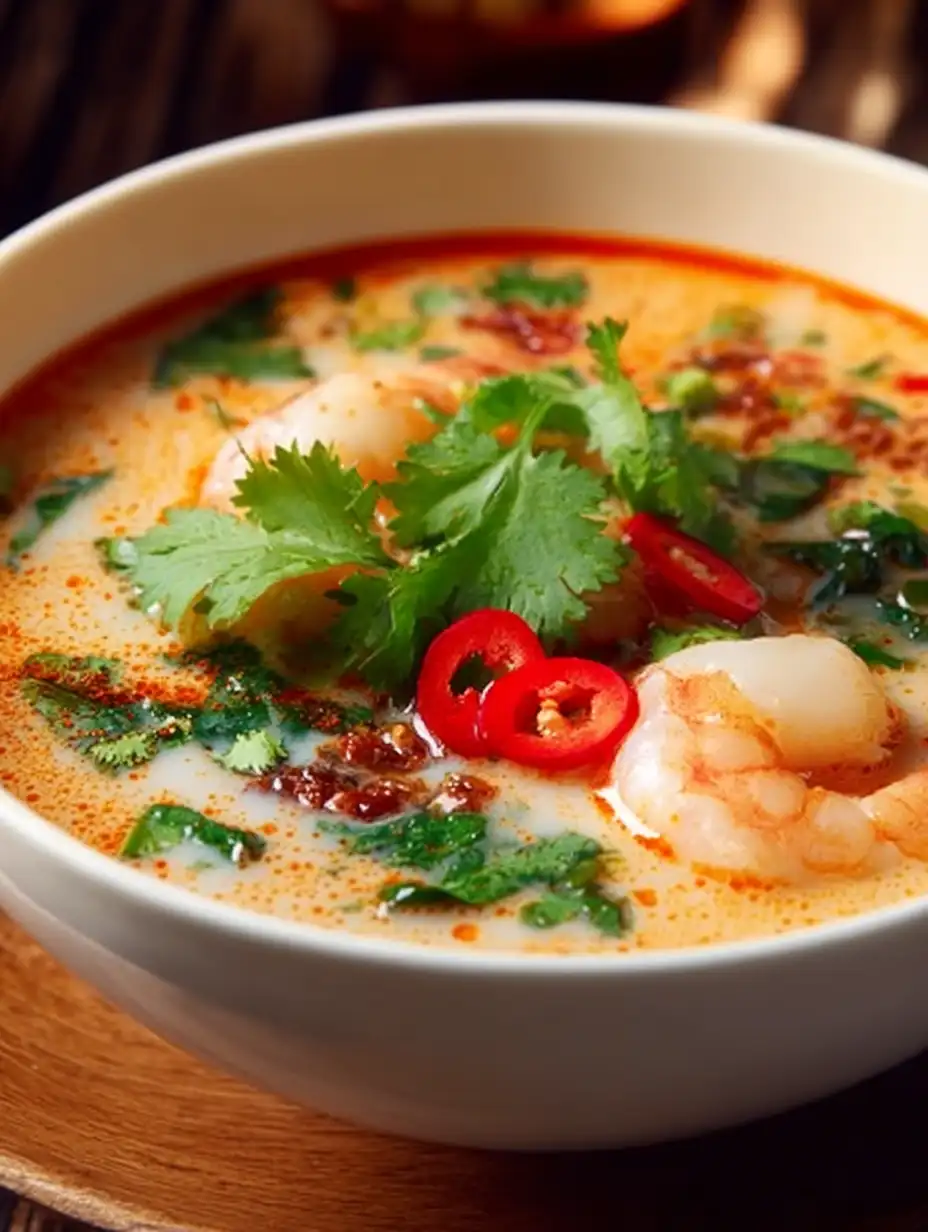
- Chicken Coconut Red Curry Soup – fragrant red curry chicken soup enveloped in velvety coconut broth with fresh herbs.
- Thai Coconut Curry Soup – rich, comforting coconut curry soup simmered to velvety golden perfection.
Thai Coconut Soup (Tom Kha Gai)
Ingredients
Method
- Smash lemongrass and chilies, slice galangal (or ginger), and tear kaffir lime leaves.
- In a pot, bring broth to a gentle simmer. Add lemongrass, galangal, chilies, and kaffir leaves. Simmer for 8-10 minutes to infuse.
- Pour in coconut milk. Add mushrooms (and shallot/tomatoes if using). Keep heat at a gentle simmer, not a hard boil, for 3-5 minutes.
- Add thin slices of chicken. Simmer gently for 5-7 minutes until just cooked. (For tofu, simmer for 3-4 minutes to warm through.)
- Stir in fish sauce (or tamari), sugar, and lime juice. Taste and adjust salt, lime, and fish sauce until it is bright and balanced.
- Remove lemongrass, galangal, and kaffir leaves if desired. Ladle into bowls and top with cilantro, scallions, and lime wedges.

2 thoughts on “Thai Coconut Soup (Tom Kha Gai)”