
Why Make Creamy Mushroom French Onion Soup
Combining two legendary soups into a single cohesive masterwork might sound like an ambitious task, but in reality, French onion soup and cream of mushroom soup were destined for each other. Classic French onion soup relies heavily on sweetness derived from the slow transformation of raw onions into jammy golden caramel, balanced by savory broth and acidic vinegar. On the other hand, classic cream of mushroom soup builds its profile on earthy, savory forest notes paired with smooth, rich dairy. When these two flavor worlds collide in a heavy Dutch oven, they elevate each other to extraordinary heights, correcting the minor flaws inherent in both original dishes.
Traditional onion soup can sometimes lean excessively sweet or thin if the broth lacks sufficient body, while cream of mushroom soup can occasionally feel monotonous or overly heavy after a few bites. By bringing them together, the earthy bitterness and savory meatiness of sliced cremini mushrooms temper the concentrated sugars of the caramelized onions. Meanwhile, the light swirl of heavy cream cuts through the sharp acidity of the vinegar and Dijon mustard, creating a rounded, balanced broth that keeps you reaching for the next bite. Every element serves a distinct structural purpose in creating a multi-dimensional bowl of soup.
The Culinary Art of Flavor Layering
The true genius of Creamy Mushroom French Onion Soup lies in its methodical approach to flavor building. Rather than throwing every ingredient into a pot and simmering them all at once, this recipe relies on building sequential layers of flavor. Each stage of the cooking process leaves behind savory residues on the bottom of the pot, known in French cooking as the fond. When these concentrated browned bits are lifted and dissolved with vinegar and broth, they infuse the entire liquid with incredible complexity.
Here is how the flavor architecture builds step by step during the cooking process:
- The Sweet Foundation: Yellow onions cook slowly in a combination of butter and oil, releasing their natural sugars and softening until they melt into a sweet, jammy texture.
- The Earthy Structure: Fresh cremini mushrooms enter the pot, absorbing the onion-scented fat before releasing their moisture and browning to a deep, savory mahogany hue.
- The Fragrant Aromatics: Minced garlic and fresh garden thyme release volatile oils into the shimmering butter, filling the air with sharp, herbal scents.
- The Bright Deglazing Accent: A splash of balsamic or sherry vinegar strips the browned bits from the pan bottom, adding an essential hit of bright acidity to balance the richness.
- The Savory Liquid Core: High-quality beef or dark vegetable broth simmers alongside a bay leaf, Dijon mustard, and a splash of Worcestershire sauce, weaving all components into a cohesive liquid balance.
- The Silky Dairy Finish: Heavy cream cools and smooths the simmering broth, softening harsh edges and creating an opulent, velvety mouthfeel.
- The Golden Gratin Crown: Toasting French bread topped with nutty, melted Gruyère cheese adds crucial texturing contrast—crisp, chewy, and gooey—making every bite an absolute delight.
A Feast for the Senses
Cooking this soup is as rewarding as eating it. The visual evolution in your pot is mesmerizing: watching brilliant white onion crescents slowly wilt, turn pale yellow, transition to light gold, and finally settle into a rich, dark amber paste over thirty minutes is a therapeutic culinary ritual. The sound of mushrooms sizzling in hot butter, releasing their water before crisping around the edges, creates an inviting kitchen atmosphere. The fragrance alone—a heady combination of caramelizing sugars, woodsy thyme, pungent garlic, and bubbling cheese—will draw family and guests straight into the kitchen long before dinner is served.
Why You’ll Love This Creamy Mushroom French Onion Soup
There are countless soup recipes circulating online, but this particular Creamy Mushroom French Onion Soup stands out for several distinct reasons that make it an instant favorite among home cooks and dinner guests alike. Here is why this recipe will quickly become one of your most requested dishes:
1. Incredible Flavor Complexity with Everyday Pantry Items
Despite tasting like a complex dish served at an upscale French bistro, this soup requires no obscure or wildly expensive ingredients. Onions, cremini mushrooms, butter, garlic, broth, thyme, and cream are readily available at virtually any local grocery store. By applying proper basic cooking techniques—such as patient onion caramelization and thorough mushroom browning—you transform these inexpensive staples into a dish that tastes extraordinarily opulent.
2. The Ultimate Texture Balance
One common complaint about simple pureed soups is a lack of textural interest. This soup solves that completely. You enjoy silky smoothness from the cream-infused broth, tender jammy bites from the cooked onions, meaty structure from the sautéed mushrooms, crunch from the oven-toasted baguette, and gooey stretchiness from the broiled cheese cover. Every single spoon provides an exciting mixture of textures that keeps the meal engaging from start to finish.
3. Perfect for Preparing Ahead of Time
Soup almost always tastes better the day after it is cooked, as the spices, aromatics, and liquids have ample time to intermingle and mature in the refrigerator. You can easily make the entire soup base up to three days in advance. When you are ready to serve, simply heat the soup on the stovetop, ladle it into oven-safe bowls, crown it with the toasted bread and cheese, and run it under the broiler for three minutes. This makes it an stress-free centerpiece for dinner parties, holiday gatherings, or meal prepping.
4. Highly Adaptable for Various Dietary Preferences
This recipe is wonderfully flexible. If you are serving vegetarians, you can seamlessly swap the traditional beef broth for a rich, dark roasted vegetable stock and substitute Worcestershire sauce with tamari or gluten-free soy sauce. Need a dairy-free version? Full-fat coconut milk or cashew cream combined with a plant-based melting cheese works surprisingly well without sacrificing the dish’s signature richness.
5. Restaurant Quality at a Fraction of the Cost
Ordering a traditional French onion soup alongside a mushroom tart or cream soup at a high-end restaurant can quickly rack up a substantial bill. Making a massive pot of this gourmet hybrid soup at home feeds an entire family for a tiny fraction of that cost, while delivering fresh, homemade flavor that commercial kitchens simply cannot replicate in mass production.
Ingredients and Substitutions
To achieve the absolute best results, selecting quality ingredients and understanding their specific roles in the recipe is key. Below is the exact ingredient list needed for this recipe, followed by a thorough discussion of each component, selecting the best options, and appropriate dietary substitutions.
- 3 tablespoons unsalted butter
- 2 tablespoons olive oil
- 3 large yellow onions, thinly sliced
- 1 pound cremini or baby bella mushrooms, sliced
- 3 cloves garlic, minced
- 2 teaspoons fresh thyme leaves (or 1 teaspoon dried)
- 1 teaspoon kosher salt (plus more to taste)
- 1 tablespoon balsamic or sherry vinegar
- 6 cups beef or vegetable broth
- 1 bay leaf
- 3/4 cup heavy cream
- 1/2 cup dry sherry or dry white wine (optional; or extra broth)
- 1 teaspoon Dijon mustard (optional, for depth)
- 1 teaspoon Worcestershire sauce (or 1 tablespoon soy sauce, optional)
- 1 to 1 1/2 cups grated Gruyère or Swiss cheese for optional gratin topping
- Baguette slices, toasted for optional gratin topping
Deep Dive into Key Ingredients and Selection Guide
The Cooking Fat (Butter and Olive Oil Blend)
Combining unsalted butter with extra virgin olive oil provides the best of both worlds. Butter offers unmatched creamy, rich dairy notes that are fundamental to classic French cooking. However, butter solids can easily burn when subject to extended cooking times. Adding olive oil raises the overall burning threshold of the cooking fat, allowing you to caramelize the onions and brown the mushrooms safely over medium heat without developing bitter, acrid scorched flavors.
The Onions
Yellow onions are the absolute gold standard for this soup. They contain a high concentration of natural sugars combined with a punchy sulfurous bite that softens and transforms into deep, complex sweetness as they cook down. Sweet onions (like Vidalia or Walla Walla) can be used, but keep in mind they contain higher water content and lower sulfur depth, which can result in a soup that leans slightly too sweet. Red onions will turn a murky dark purple-gray during a long cook, while white onions lack the natural sweetness required for proper jammy caramelization.
The Mushrooms
Cremini mushrooms (often sold as Baby Bella mushrooms) are ideal for this dish. They are simply mature white button mushrooms that offer a firmer texture, lower moisture retention, and a noticeably deeper woodsy flavor. If you want to elevate the dish even further, feel free to substitute half of the cremini mushrooms with sliced wild varieties such as chanterelles, shiitakes (stems removed), maitake (hen of the woods), or oyster mushrooms. Avoid using plain white button mushrooms if possible, as they tend to release excess water and provide less savory depth.
Fresh Garlic and Thyme
Fresh thyme leaves are a non-negotiable pairing for both mushrooms and caramelized onions. The floral, herbaceous notes of thyme cut through the rich fats and lift the broth. Fresh thyme is preferred, but if using dried thyme, remember to reduce the amount by half, as dried herbs are far more concentrated. Fresh minced garlic added right toward the end of sautéing provides aromatic warmth without scorching.
Vinegar and Optional Wine/Sherry Deglazing
Acidity is the secret tool that prevents rich, creamy soups from tasting flat or overly heavy. A single tablespoon of aged balsamic vinegar or dry sherry vinegar provides a pop of fruit acidity and sweetness that cuts right through the heavy cream. If you choose to deglaze with liquid, half a cup of dry sherry or dry white wine brings sophisticated complexity. If you prefer to avoid wine, simply replace it with an equal volume of extra broth mixed with a splash more vinegar.
Broth Base
For a traditional, savory depth, a rich beef broth or beef bone broth works exceptionally well. It builds an iconic dark background that mimics traditional French onion soup. However, if you are catering to vegetarians, a high-quality mushroom broth or dark roasted vegetable stock works equally well, offering a lighter, fragrant profile that highlights the fresh herbs and mushrooms beautifully.
Heavy Cream
Heavy whipping cream (containing at least 36% milkfat) gives the soup its velvety signature texture. Because heavy cream has high fat content, it incorporates smoothly into simmering hot broth without curdling or separating. Half-and-half or whole milk can be substituted in a pinch, but because they have lower fat content, they provide a significantly thinner texture and carry a slightly higher risk of splitting if boiled aggressively.
Cheese Selection for the Melted Top
Gruyère is the quintessential French onion soup cheese. It is a Swiss-type hard cheese with a rich, complex, nutty, and slightly sweet flavor profile that melts into smooth, stretchy strings under the broiler. Excellent alternatives include classic Swiss cheese, Emmental, Fontina, Provolone, or Gouda. For the best melting performance and flavor, always buy cheese in blocks and shred it yourself; pre-shredded bagged cheeses are coated in anti-caking starches that prevent smooth melting.
The Bread Base
A fresh French baguette sliced into thick rounds (about three-quarters of an inch thick) provides the perfect floating raft for the cheese gratin. Toasting the bread thoroughly in the oven before placing it on top of the soup is critical. Soft, fresh bread will immediately absorb liquid and turn into soggy mush, whereas thoroughly toasted bread retains structural integrity, remaining crispy on top while soaking up just enough delicious soup from beneath.
Dietary Substitutions Matrix
| Dietary Need | Ingredient to Replace | Best Recommended Substitution |
|---|---|---|
| Dairy-Free / Vegan | Butter & Heavy Cream | Use vegan plant butter or extra olive oil. Replace heavy cream with unsweetened full-fat coconut cream or cashew cream (blended soaked cashews with water). |
| Dairy-Free / Vegan | Gruyère Cheese | Use your favorite plant-based shredded mozzarella or Gouda substitute, mixed with 1 tablespoon of nutritional yeast for nuttiness. |
| Gluten-Free | All-Purpose Flour & Baguette | Use a 1:1 gluten-free cup-for-cup flour blend or cornstarch slurry (1 tbsp cornstarch + 2 tbsp cold water). Top with toasted gluten-free artisan bread. |
| Strict Vegetarian | Beef Broth & Worcestershire | Use rich mushroom broth or dark vegetable stock. Swap Worcestershire sauce for tamari, soy sauce, or coconut aminos. |
| Lower Sodium | Beef Broth & Salt | Use low-sodium or unsalted beef/vegetable stock. Adjust salt carefully at the very end of cooking to control total intake. |
How to Make Creamy Mushroom French Onion Soup
Creating this magnificent soup at home is an enjoyable, rewarding process. Success relies on patience, attention to visual and olfactory cues, and properly managing heat levels. Below is the step-by-step masterclass, including required equipment, exact step instructions, and detailed culinary advice to guide you to perfection.
Kitchen Equipment Checklist
- Heavy Dutch Oven or Enamel Pot: A thick-bottomed pot distributes heat evenly, preventing hot spots that cause onions or garlic to scorch during long caramelization.
- Sharp Chef’s Knife & Cutting Board: For slicing three large onions thin and uniform so they cook at an identical rate.
- Wooden Spoon or Heat-Safe Spatula: Ideal for continuously scraping up delicious browned fond from the bottom of the pan.
- Oven-Safe Ramekins or French Onion Soup Bowls: Thick ceramic or earthenware bowls capable of handling high broiler heat.
- Rimmed Baking Sheet: For catching potential cheese drips under the broiler and carrying the bowls safely into and out of the oven.
Step-by-Step Cooking Instructions
Step 1: Heat butter and oil in a large heavy pot over medium heat. Add onions and 1/2 teaspoon salt. Cook, stirring often, until deep golden and jammy, 25–35 minutes.
During these initial minutes, you will observe the onions releasing a large volume of steam as water evaporates. At first, the pot will seem completely overflowing with raw onions, but within ten minutes, they will drop significantly in volume. Adding the salt early draws out interior moisture, helping the onions soften gracefully. As time passes, the harsh onion smell transforms into a sweet aroma. Stir frequently to prevent onions caught at the bottom edges from darkening too rapidly compared to those on top.
Step 2: Lower heat if they start to scorch.
Caramelization requires patience, not high heat. If you notice dark black spots developing on the pot bottom or pan edges before the onions have turned a light golden brown, your stove flame is too high. Turn the heat down to medium-low immediately. If necessary, splash a single tablespoon of water into the pot to dissolve scorching hot spots and bring the temperature down safely. The final target texture is soft, jammy, dark golden ribbons of concentrated onion goodness.
Step 3: Add mushrooms to the pot. Cook over medium-high heat until they release liquid and then brown, 8–10 minutes.
Increase the heat slightly back to medium-high when adding the sliced cremini mushrooms. Mushrooms act like tiny sponges: they will initially soak up all available fat in the pot. Do not panic or add extra oil. After three to four minutes, the mushrooms will collapse and release their internal water content, creating a bubbling liquid in the pan bottom. Continue cooking until this moisture completely evaporates. Once the pot goes dry again, listen for a light sizzle—this indicates the mushrooms are actively browning and developing crisp, savory edges.
Step 4: Stir in garlic and thyme; cook for 1 minute.
Toss in the minced garlic and fresh thyme leaves. As soon as they hit the hot fat, you will experience an immediate burst of herbaceous fragrance. Stir constantly for sixty seconds. Garlic burns very easily, so keep it moving continuously. Once the garlic smells fragrant and warm, proceed immediately to the next step.
Step 5: Add wine (if using) and vinegar. Scrape up any browned bits, and let it reduce by half, 2–3 minutes.
Pour in your dry sherry or white wine along with the balsamic vinegar. The cold liquid will sizzle violently and produce a cloud of fragrant steam. Use your wooden spoon to firmly scrape the bottom and corners of the pot, lifting all the sticky dark browned residues (the fond) created by the onions and mushrooms. This lifts trapped flavor right into the liquid. Let the mixture simmer briskly until the pungent raw aroma cooks off and the total liquid volume drops by about half.
Step 6: Sprinkle in flour. Stir and cook for 1 minute.
Sprinkling all-purpose flour directly over the sautéed vegetables creates a simple roux structure right inside the pot. Stir vigorously for a full minute to ensure all raw flour coats the vegetables evenly. Cooking the flour for sixty seconds eliminates any raw chalky taste and toasts the flour lightly, preparing it to cleanly thicken the incoming liquid into a silky soup base.
Step 7: Add broth, bay leaf, Dijon, and Worcestershire or soy (if using). Bring to a simmer and cook for 15–20 minutes.
Gradually pour in the beef or vegetable broth while stirring continuously to dissolve the flour evenly without forming lumps. Drop in the bay leaf, whisk in the Dijon mustard, and add the Worcestershire sauce (or soy sauce). Bring the pot to a complete rolling boil over medium-high heat, then lower the burner flame to low. Cover the pot loosely with a tilted lid, allowing gentle bubbles to break the surface for fifteen to twenty minutes. This simmer step thoroughly infuses the broth with herb and vegetable notes.
Step 8: Remove bay leaf and stir in cream. Simmer for 2 minutes.
Turn off the heat briefly or set to ultra-low. Fish out and discard the spent bay leaf. Pour in the heavy cream in a steady stream, stirring gently as you pour. The dark mahogany soup will magically transform into a rich, velvety milk-chocolate hue. Allow the soup to simmer gently on low heat for two minutes to warm the cream through. Do not bring the soup to an aggressive boil after adding cream to ensure the dairy stays silky smooth.
Step 9: Taste and season with salt and pepper as needed.
This is the most crucial step for any home chef: tasting your work! Grab a clean spoon, let a bite cool slightly, and taste the soup carefully. Does it need a tiny touch more salt to bring out the mushroom flavor? A dash of freshly cracked black pepper for background heat? Another splash of vinegar to brighten up the heavy cream? Adjust your seasonings thoughtfully until the balance feels completely harmonious on your palate.
Step 10: Preheat broiler. Ladle soup into oven-safe bowls. Top with toasted baguette and cheese.
Turn your oven’s top broiler to High, placing the top rack about 6 inches beneath the heating elements. Arrange thick oven-safe ceramic soup bowls on a sturdy rimmed baking sheet. Ladle steaming hot soup into each bowl, leaving about half an inch of clearance at the rim. Float one or two thick, pre-toasted baguette slices right on top of the soup liquid. Generously mound grated Gruyère or Swiss cheese over the bread, letting cheese overlap onto the rim of the bowl to create that classic crispy cheesy crust.
Step 11: Broil until melted and bubbly, about 2–3 minutes.
Transfer the baking sheet with filled bowls carefully under the hot broiler. Keep your eye fixed on the oven door! Broilers work rapidly and unpredictably; cheese can go from perfectly melted to charred black in under thirty seconds. Once the cheese is violently bubbling, deeply melted, and showing spots of golden brown blister marks, immediately remove the tray from the oven. Let the bowls cool for three to five minutes before serving—the ceramic and broth remain extremely hot!
Pro Culinary Secrets for Success
- Slice
1
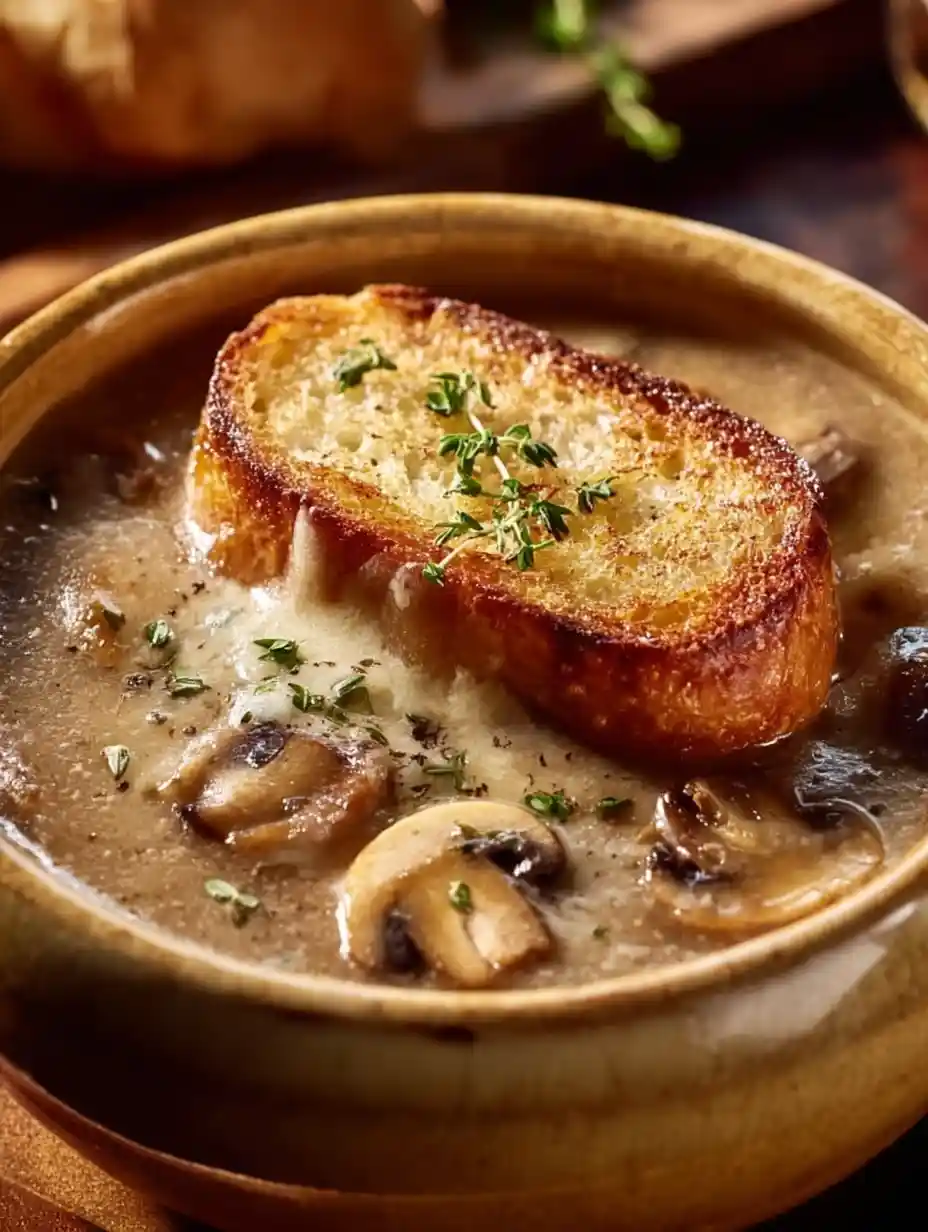 Creamy Mushroom French Onion SoupA comforting soup blending sweet caramelized onions, hearty mushrooms, and a splash of cream, perfect for weeknight dinners.Check out this recipe
More Comforting Soups You’ll Love
If you enjoyed this recipe, be sure to explore these cozy favorites from our soup collection:
- French Onion Chicken Soup – sweet slow-cooked onions and tender chicken crowned with molten bubbly cheese.
- Creamy Chicken and Rice Soup – hearty bowl of succulent chicken, fluffy rice, and tender vegetables in velvet cream.
Creamy Mushroom French Onion Soup
A comforting soup blending sweet caramelized onions, hearty mushrooms, and a splash of cream, perfect for weeknight dinners.Ingredients
Method
- Heat butter and oil in a large heavy pot over medium heat. Add onions and 1/2 teaspoon salt. Cook, stirring often, until deep golden and jammy, 25–35 minutes.
- Lower heat if they start to scorch.
- Add mushrooms to the pot. Cook over medium-high heat until they release liquid and then brown, 8–10 minutes.
- Stir in garlic and thyme; cook for 1 minute.
- Add wine (if using) and vinegar. Scrape up any browned bits, and let it reduce by half, 2–3 minutes.
- Sprinkle in flour. Stir and cook for 1 minute.
- Add broth, bay leaf, Dijon, and Worcestershire or soy (if using). Bring to a simmer and cook for 15–20 minutes.
- Remove bay leaf and stir in cream. Simmer for 2 minutes.
- Taste and season with salt and pepper as needed.
- Preheat broiler. Ladle soup into oven-safe bowls. Top with toasted baguette and cheese.
- Broil until melted and bubbly, about 2–3 minutes.
Notes
Chef’s Test Kitchen Note: For optimal flavor development, allow the soup to rest for 10 minutes off heat before serving. Store leftovers in airtight glass containers in the refrigerator for up to 4 days.