
There is a specific kind of magic that happens in a kitchen when a pot of soup begins to simmer on the stove. It is a sensory experience that transcends the simple act of cooking; it is the transformation of humble, everyday ingredients into a vessel of comfort and nostalgia. Imagine walking into a home where the air is thick with the sweet, slightly charred aroma of bell peppers, the savory depth of browning beef, and the herbal brightness of dried oregano and basil. This is the essence of Stuffed Pepper Soup. It takes all the beloved flavors of the traditional oven-baked stuffed pepper—the tender grain, the juicy meat, the vibrant vegetables—and reimagines them in a format that is more approachable, more shareable, and infinitely more soothing on a brisk evening.
For many of us, stuffed peppers were a childhood staple, a labor-intensive dish that required careful hollowing of vegetables, precise stuffing, and a long wait while they softened in the oven. While that classic version holds a special place in our culinary hearts, the modern home cook often craves that same flavor profile without the structural complexity. Stuffed Pepper Soup is the answer to that craving. It is a “deconstructed” masterpiece that allows the ingredients to mingle freely in a rich, tomato-based broth, ensuring that every spoonful contains the perfect balance of texture and taste. It is a dish that feels like a warm hug, a culinary blanket that wraps around you after a long day of work or school.
As a home educator and food writer, I have found that this particular recipe is one of the most successful “gateway” dishes for novice cooks. It teaches the fundamental skills of sautéing, browning, and simmering, all while remaining forgiving and adaptable. Whether you are using a heavy-bottomed Dutch oven that has been passed down through generations or a simple stockpot from your first apartment, this soup responds beautifully to the heat. It is a celebration of the harvest, a way to use up the bounty of the garden or the colorful offerings of the local farmer’s market. Each bowl is a kaleidoscope of colors, from the deep reds and bright greens of the peppers to the rustic brown of the protein and the pearly white of the rice.
The beauty of this soup lies in its versatility. It is a canvas upon which you can paint your own culinary preferences. Perhaps you prefer a leaner profile with ground turkey, or maybe you crave the hearty, traditional richness of ground beef. You might choose to keep the rice firm and distinct, or let it simmer until it thickens the broth into a stew-like consistency. No matter how you choose to customize it, the result is always the same: a satisfying, nutrient-dense meal that brings people together around the table. In the following pages, we will explore every nuance of this dish, from the selection of the perfect pepper to the final flourish of melted cheese, ensuring that your journey with Stuffed Pepper Soup is nothing short of extraordinary.
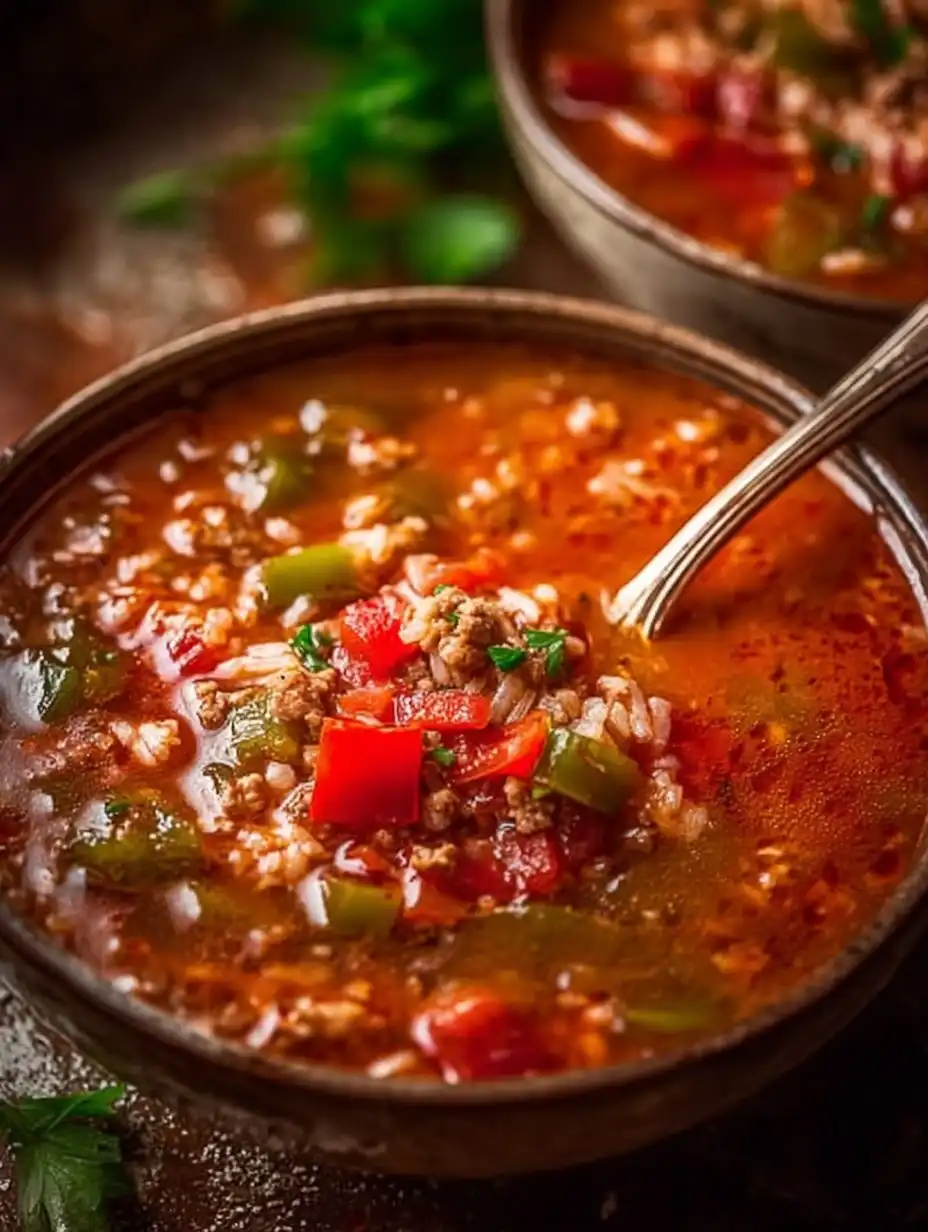
Why You Will Love This Easy Stuffed Pepper Soup
The appeal of Stuffed Pepper Soup extends far beyond its delicious flavor profile. One of the primary reasons this recipe has become a modern classic is its incredible efficiency. In the world of professional cooking, we often talk about the “ratio of effort to reward.” This soup sits at the absolute pinnacle of that ratio. You get all the complex, layered flavors of a dish that tastes like it spent all day on the stove, yet the active preparation time is remarkably short. By removing the need to par-boil peppers or carefully tuck filling into narrow cavities, you reclaim your evening without sacrificing the quality of your dinner.
Furthermore, this soup is a nutritional powerhouse. In an era where we are all trying to incorporate more vegetables into our diets, this recipe makes it easy and delicious. Bell peppers are famously high in Vitamin C—often containing more than citrus fruits—and when they are simmered in a tomato broth, they release their sweetness and nutrients into the liquid. The addition of kidney beans provides a double-down on fiber and plant-based protein, making this a truly “one-pot meal” that hits all the major food groups. You have your protein, your complex carbohydrates from the rice, your healthy fats from the olive oil, and an abundance of micronutrients from the vegetables.
Another reason to fall in love with this recipe is its “next-day” potential. Like many tomato-based stews and soups, Stuffed Pepper Soup actually improves with age. As the soup sits in the refrigerator overnight, the spices have more time to penetrate the meat and the peppers, and the acidity of the tomatoes mellows into a rich, savory sweetness. For the busy professional or the parent managing a hectic schedule, having a container of this soup ready to be reheated for lunch is a genuine luxury. It is a meal-prep dream, holding up beautifully to freezing and reheating, which we will discuss in detail later in this guide.
Lastly, we must talk about the emotional resonance of this dish. Cooking is an act of love, and serving a bowl of hearty soup is one of the most direct ways to communicate care. There is something inherently communal about a big pot of soup. It invites seconds, it encourages lingering at the table, and it fills the house with a scent that says “you are home, and you are safe.” Whether you are serving this to a group of hungry teenagers, a circle of close friends, or simply enjoying a quiet bowl by yourself, the Easy Stuffed Pepper Soup delivers a sense of satisfaction that few other dishes can match.
The Convenience Factor
In our fast-paced lives, convenience often comes at the cost of health or flavor. This soup breaks that cycle. By using pantry staples like canned diced tomatoes and boxed broth, you can pull this meal together even on those nights when you haven’t had time to visit the grocery store. The ability to use either pre-cooked rice (perhaps leftovers from a previous night’s stir-fry) or uncooked rice directly in the pot provides a level of flexibility that is rare in high-quality cooking. It adapts to your timeline, not the other way around.
Budget-Friendly Brilliance
From a financial perspective, Stuffed Pepper Soup is a masterclass in stretching a dollar. A single pound of ground meat is transformed into a massive pot of soup that can easily feed six to eight people when paired with a side of bread. By bulking out the protein with affordable ingredients like onions, peppers, beans, and rice, you are creating a high-volume, high-satisfaction meal on a modest budget. In an economy where food costs are rising, having a repertoire of “stretch” recipes like this one is an essential skill for any home cook.
Key Ingredients and Flavor Dynamics
To truly master any dish, one must understand the role of each ingredient. In Stuffed Pepper Soup, the ingredients are not just items on a list; they are the building blocks of a complex flavor architecture. Let us take a deep dive into the components that make this soup a success, exploring how they interact and how you can select the best versions of each.
The Protein: Ground Beef or Turkey
The choice of protein sets the tone for the entire soup. Ground beef is the traditional choice, offering a deep, umami richness that pairs perfectly with the acidity of the tomatoes. When selecting beef, I recommend an 80/20 or 85/15 lean-to-fat ratio. While you will drain the excess fat after browning, having that fat present during the initial cook ensures the meat stays tender and flavorful. If you opt for ground turkey, you are choosing a lighter, leaner profile. Turkey is an excellent canvas for the Italian seasoning, but because it is lower in fat, you must be careful not to overcook it during the browning phase. Some cooks even enjoy a 50/50 split of beef and pork for an even more traditional “meatball” flavor profile.
The Trinity of Aromatics: Onion and Olive Oil
Every great soup begins with aromatics. The medium onion, when finely chopped and sautéed in high-quality olive oil, provides the foundational sweetness. As the onion softens, it releases sugars that caramelize slightly, creating a base layer of flavor that supports the more aggressive notes of the peppers and tomatoes. Olive oil is the preferred fat here because of its fruity undertones and high smoke point, which allows for a gentle sauté without burning the delicate onions.
The Star of the Show: Bell Peppers
The bell peppers are the namesake of the dish, and their quality and variety matter immensely. I always recommend using a mix of colors—green, red, orange, and yellow. Green peppers offer a slightly bitter, earthy “crunch” that is quintessential to the stuffed pepper experience. Red and orange peppers, on the other hand, are fully ripe and bring a distinct sweetness that balances the acidity of the broth. By using a mix, you create a more complex flavor profile and a more visually stunning bowl of soup. When chopping your peppers, aim for bite-sized pieces that are uniform in size; this ensures they cook at the same rate and fit comfortably on a spoon.
The Liquid Base: Broth and Tomatoes
The broth is the medium through which all flavors travel. Beef broth provides a robust, dark base that complements ground beef, while chicken broth offers a lighter, more versatile foundation that works well with turkey. For the best results, look for low-sodium options so that you have total control over the final seasoning. The diced tomatoes add both texture and bright acidity. Using canned tomatoes is actually a benefit here, as they are processed at the peak of ripeness, ensuring a consistent flavor year-round. The juice from the cans should always be included, as it contains concentrated tomato flavor and natural pectins that help body the soup.
The Grains: Rice Selection
Rice provides the “heart” of the soup. Long-grain white rice is the standard, as it holds its shape well without becoming overly mushy. However, you can also use jasmine rice for a floral note or basmati for a nuttier flavor. If you are looking to increase the nutritional value, brown rice is an excellent substitution, though it will require a significantly longer simmering time if cooking from raw. The choice between using pre-cooked or uncooked rice is a matter of texture. Uncooked rice absorbs the flavorful broth as it expands, creating a more integrated taste, whereas pre-cooked rice is perfect for a quick-fix meal.
The Flavor Enhancers: Italian Seasoning, Salt, and Pepper
Italian seasoning is a powerhouse blend typically consisting of dried oregano, basil, rosemary, thyme, and sometimes marjoram or sage. This blend provides the “herbal backbone” of the soup. It is important to add the seasoning early in the simmering process to allow the dried herbs to rehydrate and release their essential oils. Salt and pepper are the final keys; salt doesn’t just make things salty—it acts as a flavor magnifier, making the tomatoes taste more like tomatoes and the beef taste more savory.
The Extra Mile: Kidney Beans and Cheese
While optional, kidney beans are a highly recommended addition. They add a creamy texture and a rustic aesthetic that elevates the soup into the realm of a hearty chili or stew. Finally, the shredded cheese—whether it be a sharp cheddar, a creamy Monterey Jack, or a salty Parmesan—provides a rich, velvety finish. As the cheese melts into the hot broth, it creates “cheese pulls” that make the eating experience interactive and indulgent.
Step-by-Step Cooking Guide and Culinary Techniques
Now that we understand our ingredients, let us walk through the process of bringing them together. Cooking is as much about timing and technique as it is about the recipe itself. Follow these steps closely to ensure a perfect result every time.
Step 1: Sautéing the Aromatics
Begin by placing your large pot or Dutch oven over medium heat. Add the tablespoon of olive oil and let it shimmer. This “shimmer” is your cue that the oil is hot enough to begin cooking but not so hot that it will burn the vegetables. Add your chopped onion. You are looking for the onion to become translucent and soft, which usually takes about 3 to 4 minutes. This process, known as “sweating,” draws out the moisture and sweetness of the onion without browning it too deeply. Use a wooden spoon or a heat-resistant spatula to move the onions around, ensuring they cook evenly.
Step 2: Browning the Protein
Once the onions are soft and fragrant, add your ground beef or turkey to the pot. This is a critical stage for flavor development. Use your spoon to break the meat into small, uniform crumbles. You want to cook the meat until no pink remains. As the meat browns, it will release fat and juices. If you find there is an excessive amount of liquid fat at the bottom of the pot, feel free to carefully tilt the pot and spoon it out, or use a turkey baster to remove it. Leaving a small amount of fat is fine, as it carries flavor, but too much can lead to a greasy soup. The goal here is a thorough brown, which provides the savory foundation for the entire dish.
Step 3: Integrating the Peppers
Add your colorful chopped bell peppers to the pot with the meat and onions. Sauté them for another 3 to 4 minutes. You aren’t trying to cook them all the way through at this point; rather, you are “blistering” the skins slightly and allowing them to mingle with the fats and juices of the meat. This short sautéing period helps the peppers retain their vibrant color and prevents them from becoming gray or overly mushy during the long simmer. You will notice the aroma of the kitchen change as the sweetness of the peppers begins to fill the air.
Step 4: The Great Merging
Now comes the assembly of the broth. Pour in the two cans of diced tomatoes (with their juices), the four cups of broth, and your choice of rice. Add the two teaspoons of Italian seasoning. If you are using kidney beans, add them now as well. Stir everything together thoroughly. This is the moment where the individual ingredients stop being separate items and start becoming a cohesive soup. Ensure that the rice is well-distributed and not clumped at the bottom of the pot, as it can stick and burn if not stirred properly.
Step 5: The Simmer and The Science of Texture
Bring the mixture to a gentle boil, then immediately reduce the heat to low to maintain a steady simmer. A simmer is characterized by small, lazy bubbles breaking the surface, rather than a violent rolling boil. If you are using uncooked rice, cover the pot and simmer for 18 to 20 minutes. The rice will act like a sponge, soaking up the seasoned broth and expanding. If you are using pre-cooked rice, you only need to simmer for 8 to 10 minutes—just long enough for the flavors to marry and the peppers to reach your desired level of tenderness. Keep an eye on the liquid levels; if the rice absorbs too much broth and the soup becomes too thick, simply splash in a little more broth or water to reach your preferred consistency.
Step 6: Seasoning and Serving
The final step is the most important for any chef: the taste test. Using a clean spoon, sample the broth. Does it need more salt to make the flavors “pop”? Does it need a bit more black pepper for a gentle heat? Adjust the seasonings to your preference. Once you are satisfied, turn off the heat. If you are using shredded cheese, you can either stir it directly into the pot for a rich, uniform finish, or sprinkle it over individual bowls as you serve. Serve the soup piping hot, perhaps with a garnish of fresh parsley or a dollop of sour cream if you’re feeling adventurous.
Variations, Make-Ahead Strategies, and Storage
One of the marks of a master home cook is the ability to adapt a recipe to different circumstances. Stuffed Pepper Soup is incredibly flexible, allowing for numerous variations that cater to different dietary needs and lifestyle demands.
Vegetarian and Vegan Adaptations
To make this soup vegetarian, simply swap the ground meat for a plant-based crumble or increase the amount of kidney beans. You can also add black beans or chickpeas for more texture. Use vegetable broth instead of beef or chicken broth. To make it vegan, ensure your Italian seasoning doesn’t contain any hidden dairy and skip the cheese garnish, or use a high-quality vegan cheese alternative. Adding a handful of chopped mushrooms during the onion-sautéing phase can provide the “meaty” umami flavor that is characteristic of the original version.
Spicy Variations
If your family enjoys a bit of heat, there are several ways to kick this soup up a notch. You can add a finely diced jalapeño or serrano pepper along with the bell peppers. Alternatively, a teaspoon of red pepper flakes added with the Italian seasoning will provide a consistent, warming heat throughout the broth. Some cooks also like to use “Zesty” or “Chili-style” canned tomatoes for an extra layer of spice and complexity.
Slow Cooker and Instant Pot Methods
While the stovetop method is traditional, this soup is a prime candidate for modern kitchen appliances. For a slow cooker, brown the meat and onions in a skillet first, then transfer them to the slow cooker with all other ingredients (except the cheese). Cook on low for 6 to 7 hours or on high for 3 to 4 hours. If using an Instant Pot, use the sauté function for the meat, onions, and peppers, then add the remaining ingredients and cook on high pressure for 5 minutes with a natural release. Note: If using a pressure cooker, it is often better to add pre-cooked rice at the end to prevent it from disintegrating.
The Perfect Accompaniments
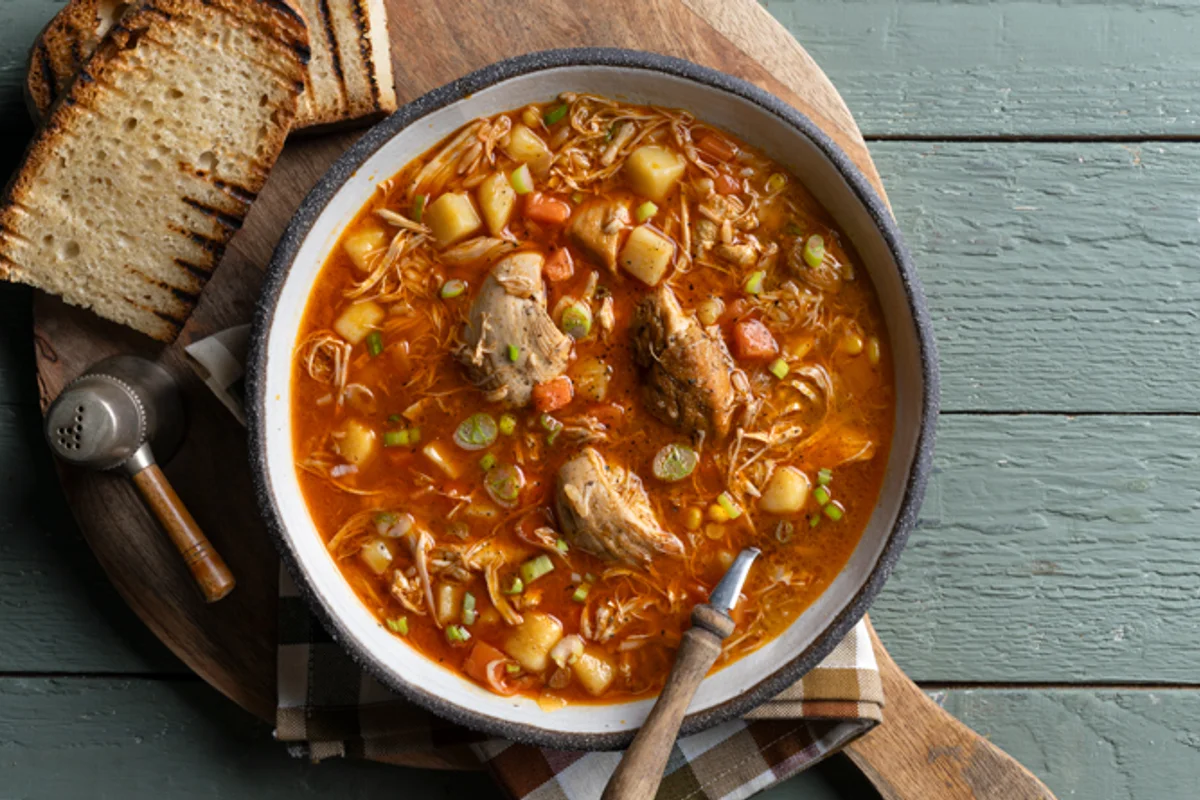
While this soup is a complete meal on its own, the right side dish can elevate the entire experience. A thick slice of artisanal sourdough bread, lightly toasted and slathered with salted butter, is the perfect tool for mopping up the last drops of tomato broth. For something crunchier, a crusty baguette or even garlic bread provides a wonderful textural contrast. If you want to keep things light, a fresh garden salad with a sharp lemon-vinaigrette can cut through the richness of the soup. I also highly recommend a side of cooling herb yogurt—simply mix Greek yogurt with some dried dill or fresh parsley—to dollop on top for a creamy, tangy finish.
Storage and Freezing Instructions
As mentioned, this soup is an excellent candidate for storage. It will keep in an airtight container in the refrigerator for up to 4 to 5 days. When reheating, you may find that the rice has continued to absorb liquid, making the soup thicker. Simply add a splash of water or broth before microwaving or heating on the stove.
For long-term storage, Stuffed Pepper Soup freezes beautifully. Allow the soup to cool completely before transferring it to freezer-safe bags or containers. It will maintain its quality for up to 3 months. To serve, thaw it overnight in the refrigerator and then reheat gently. One pro-tip: If you know you are making a batch specifically for the freezer, you might want to slightly undercook the rice or the peppers, as the freezing and reheating process will soften them further.
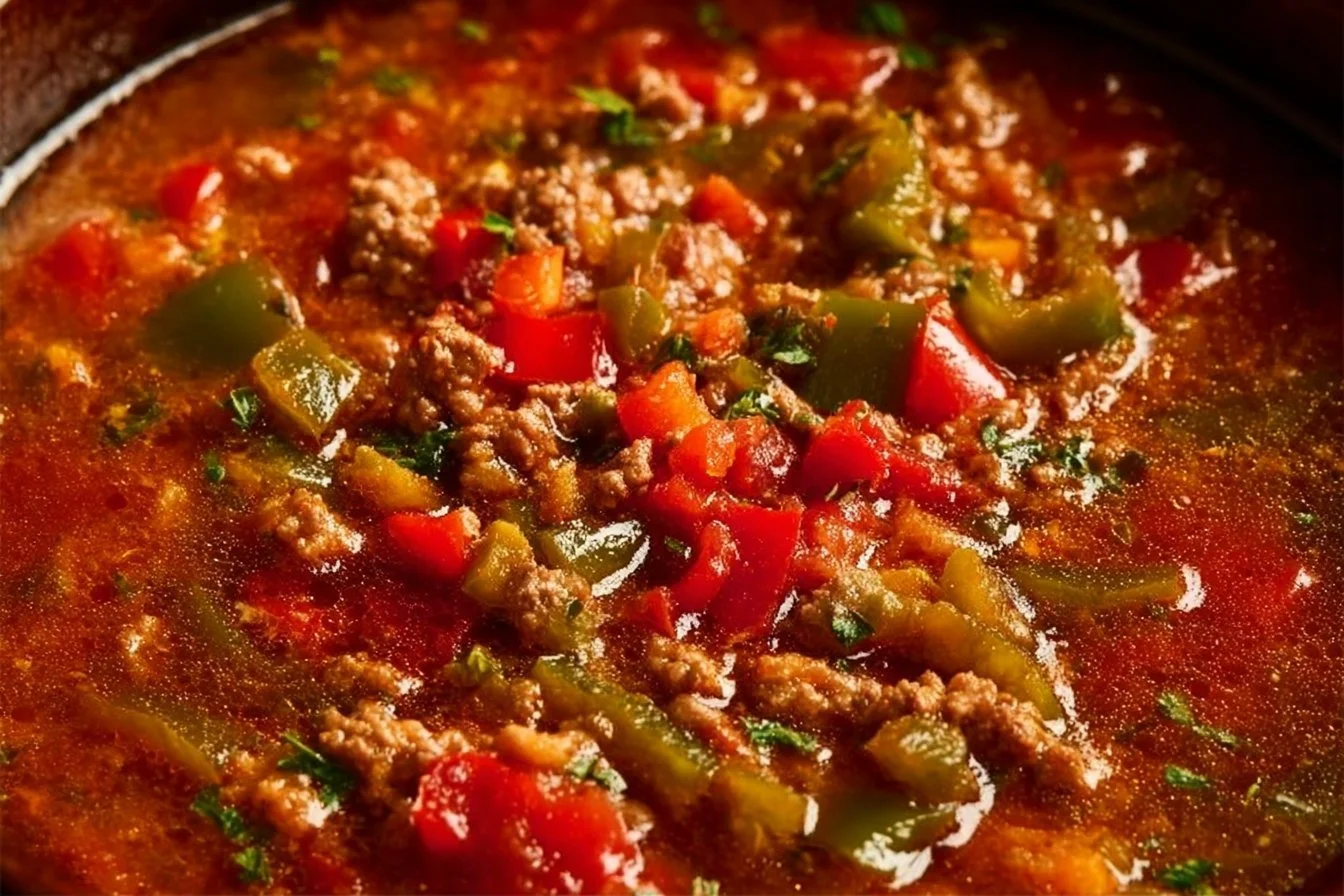
Easy Stuffed Pepper Soup
Ingredients
Method
- Heat a tablespoon of olive oil in a large pot over medium heat. Add chopped onion and cook until soft, about 3–4 minutes.
- Add ground beef and break it up. Cook until browned, draining excess fat if needed.
- Stir in chopped bell peppers and cook for another 3–4 minutes until slightly soft.
- Add diced tomatoes, broth, cooked rice (or uncooked rice), and Italian seasoning. Stir well.
- Bring to a simmer. If rice was uncooked, simmer for 18–20 minutes until rice is tender. If rice was cooked, simmer 8–10 minutes to blend flavors.
- Taste and add salt and pepper as needed. Serve hot.
Notes
🍲 More Cozy Homemade Soups to Try:
- Winter Minestrone – robust, vegetable-loaded hearty Italian soup with pasta and beans
- Vegetable Minestrone Soup – nourishing garden vegetable minestrone simmered in an herb broth
(FAQs)
Even with a detailed guide, questions often arise in the kitchen. Here are some of the most common queries I receive about Stuffed Pepper Soup, along with expert advice to help you troubleshoot any issues.
Can I use brown rice instead of white rice?
Yes, you certainly can! Brown rice adds a wonderful nutty flavor and extra fiber. However, keep in mind that brown rice takes much longer to cook—usually about 40 to 45 minutes of simmering. If you use uncooked brown rice, you will need to add more broth (about an extra cup) because it absorbs more liquid over its longer cooking time. Alternatively, using pre-cooked brown rice is a great way to save time while still getting the nutritional benefits.
My soup turned out too thick, almost like a casserole. What happened?
This is a common occurrence, especially if the soup is allowed to simmer for too long or if it sits in the fridge overnight. Rice is incredibly absorbent and will continue to drink up the liquid even after the heat is turned off. The solution is very simple: just add more broth or water until you reach your desired “soupy” consistency. Taste the soup after adding the extra liquid, as you might need to add a tiny pinch more salt to maintain the flavor balance.
What is the best way to chop the peppers?
For the best eating experience, you want the peppers to be in uniform pieces that are roughly the size of a thumbnail. Start by cutting off the top and bottom of the pepper, then slice down one side to open it up. Remove the seeds and the white ribs (the pith), as the pith can be slightly bitter. Lay the pepper flat and cut it into long strips, then turn the strips and cut across them to create neat squares. This ensures that every spoonful of soup has a manageable, perfectly cooked piece of pepper.
Can I use fresh herbs instead of dried Italian seasoning?
Absolutely. Fresh herbs provide a bright, vibrant flavor that dried herbs cannot match. However, the ratio is different. Generally, you want to use three times the amount of fresh herbs as you would dried. So, instead of 2 teaspoons of dried seasoning, you would use about 2 tablespoons of chopped fresh herbs. Use a mix of basil, oregano, and parsley. Add the fresh herbs toward the very end of the cooking process (the last 2 to 3 minutes) to preserve their delicate oils and bright green color.
Why does my ground turkey sometimes taste bland in this soup?
Ground turkey is much leaner than beef and doesn’t have the same inherent fat-driven flavor. To make turkey shine, you need to be a bit more aggressive with your seasoning. Don’t be afraid to add an extra half-teaspoon of Italian seasoning, or perhaps a dash of Worcestershire sauce or even a teaspoon of tomato paste during the browning stage. These additions provide the “umami” punch that turkey lacks on its own.
Is this soup kid-friendly?
In my experience, this is one of the most kid-friendly soups out there. The sweetness of the bell peppers and the familiar presence of rice and meat make it very approachable. If you have particularly “picky” eaters who are wary of vegetables, you can chop the peppers and onions very finely so they almost melt into the broth. The addition of a generous amount of melted cheese on top is usually the ultimate selling point for children!
Can I make this in a very large batch for a party?
Yes, this recipe scales up perfectly. Just ensure you have a large enough stockpot. When doubling the recipe, you may find that you don’t need to double the oil for sautéing—just enough to coat the bottom of the larger pot will do. This is a fantastic dish for potlucks or large family gatherings because it stays warm well and is easy to serve with a ladle.
Mastering the Easy Stuffed Pepper Soup is a journey into the heart of home cooking. It is a lesson in how simple ingredients, when treated with care and cooked with patience, can create something truly spectacular. As you stand over your steaming pot, stirring the colorful peppers and fragrant beef, take a moment to appreciate the craft. You aren’t just making a meal; you are creating a moment of comfort, a memory of flavor, and a nourishing gift for yourself and those you love. Happy cooking!
Easy Stuffed Pepper Soup
Ingredients
Method
- Heat a tablespoon of olive oil in a large pot over medium heat. Add chopped onion and cook until soft, about 3–4 minutes.
- Add ground beef and break it up. Cook until browned, draining excess fat if needed.
- Stir in chopped bell peppers and cook for another 3–4 minutes until slightly soft.
- Add diced tomatoes, broth, cooked rice (or uncooked rice), and Italian seasoning. Stir well.
- Bring to a simmer. If rice was uncooked, simmer for 18–20 minutes until rice is tender. If rice was cooked, simmer 8–10 minutes to blend flavors.
- Taste and add salt and pepper as needed. Serve hot.

1 thought on “Easy Stuffed Pepper Soup”