Imagine a late afternoon when the sun begins to dip below the horizon, casting long, amber shadows across your kitchen floor. The air outside has turned crisp, carrying the unmistakable scent of woodsmoke and damp earth. In moments like these, the soul craves a specific kind of sanctuary—one that can be found in the bottom of a heavy-bottomed pot, simmering with the promise of warmth, nourishment, and vibrant flavor. This Ginger Sweet Potato Soup is not merely a recipe; it is a restorative experience, a golden elixir designed to soothe the senses and invigorate the spirit. It represents the perfect marriage of earthy sweetness and spicy brightness, a culinary hug that wraps around you with every spoonful.
As you begin to prep your ingredients, the kitchen transforms into a laboratory of aromatics. The sharp, clean scent of fresh ginger fills the air, cutting through the heavy, comforting sweetness of the roasting potatoes. There is something deeply meditative about the process: the rhythmic sound of the knife against the cutting board as you cube the orange-fleshed tubers, the sizzle of onions hitting warm oil, and the slow, rhythmic stirring as the broth begins to bubble. This soup is a celebration of simple, whole ingredients that, when treated with care and patience, elevate themselves into something truly extraordinary. It is a dish that feels both humble and luxurious, suitable for a quiet solo dinner by the fire or a sophisticated starter for a festive gathering with friends.
The beauty of this soup lies in its texture and balance. When blended to perfection, it achieves a silkiness that rivals the finest velvet, yet it carries a complex depth of flavor that keeps the palate engaged. The coconut milk adds a tropical richness that rounds out the sharp edges of the ginger, while a final squeeze of citrus provides a necessary spark of acidity to wake up the earthy notes of the sweet potato. Garnished with the crunch of toasted pumpkin seeds and the freshness of cilantro, it becomes a multi-sensory masterpiece. This is more than just a meal; it is a lesson in how a few well-chosen ingredients can create a symphony of flavor that lingers long after the bowl is empty.
Why You Will Love This Ginger Sweet Potato Soup
The Ultimate Comfort Food
In the world of home cooking, comfort often comes in the form of heavy creams and starchy pastas. However, this Ginger Sweet Potato Soup redefines what it means to be comforted. It provides that deep, belly-warming satisfaction without the heaviness that often accompanies traditional comfort foods. The natural sugars in the sweet potatoes provide a gentle, slow-burning energy, while the ginger acts as a natural digestive aid, making this a meal that leaves you feeling light yet completely satisfied. It is the kind of soup that you reach for when you are feeling under the weather, when the weather itself is gloomy, or when you simply need a moment of culinary peace in a busy week.
Nutritional Powerhouse in a Bowl
As a master home-cooking educator, I always emphasize that we eat with our eyes first, and the vibrant orange hue of this soup is a testament to its nutritional density. Sweet potatoes are famously high in beta-carotene, which the body converts into Vitamin A, essential for immune function and skin health. When combined with the anti-inflammatory properties of fresh ginger and the healthy fats found in coconut milk, you aren’t just making a soup; you are crafting a wellness tonic. It is a rare dish that manages to be gluten-free, dairy-free, and vegan while still tasting like an absolute indulgence. This soup proves that eating for health does not mean sacrificing flavor or luxury.
Accessibility and Simplicity
One of the most compelling reasons to fall in love with this recipe is its accessibility. You do not need exotic ingredients or specialized equipment to achieve professional-grade results. Most of the components are likely already sitting in your pantry or vegetable bin. The techniques involved—sautéing, simmering, and blending—are fundamental skills that every home cook can master. This recipe is forgiving; if you have an extra carrot, throw it in. If you like more heat, double the ginger. It is a canvas for your own culinary intuition, making it an excellent “confidence builder” for novice cooks and a reliable “back-pocket” staple for seasoned pros.
Versatility for Every Occasion
This soup is a chameleon in the kitchen. Served in small espresso cups, it makes for a sophisticated and colorful appetizer at a dinner party. Poured into a large, rustic ceramic bowl and served alongside a thick slice of artisanal sourdough bread, it becomes a hearty and fulfilling main course. It packs beautifully in a thermos for a winter hike or a workday lunch, and it actually tastes better the next day as the flavors have more time to meld. Whether you are looking for a quick weeknight fix or a centerpiece for a plant-based feast, this soup rises to the occasion with grace and style.
Key Ingredients and Flavor Dynamics
The Sweet Potato: The Heart of the Soup
Not all sweet potatoes are created equal, and for this soup, variety matters. When you walk into the produce section, you will likely see a few different types. For this recipe, I highly recommend the “Jewel” or “Garnet” varieties. These are the ones with the copper-colored skin and deep orange flesh. They possess a high sugar content and a moist, creamy texture when cooked, which is essential for achieving that signature velvety consistency. Avoid the “Jersey” or white-fleshed sweet potatoes for this specific dish, as they tend to be starchier and more crumbly, which can result in a grainier soup. When selecting your potatoes, look for ones that are firm to the touch, free of soft spots or sprouts, and feel heavy for their size—a sign of high moisture content.
The Magic of Fresh Ginger
Ginger is the soul of this dish. It provides a “top note” of spice that is distinctly different from the heat of a chili pepper. It is citrusy, pungent, and slightly woody. While ground ginger can be used in a pinch, I cannot stress enough how much better the results will be with fresh ginger root. Fresh ginger contains essential oils that provide a bright, aromatic punch that ground ginger simply cannot replicate. When buying ginger, look for pieces with smooth, taut skin. If the skin is wrinkled, the ginger is old and will be fibrous and less flavorful. To prep it, use the edge of a small spoon to scrape away the skin—this allows you to get into all the nooks and crannies without wasting any of the precious flesh.
Aromatics: The Foundation of Flavor
Every great soup begins with a strong foundation, and here, that foundation is built on onions and garlic. The onion provides a savory depth that balances the sweetness of the potatoes. I prefer a standard yellow onion for its balanced sugar-to-sulfur ratio, but a white onion will work for a sharper bite, or a leek for a more delicate, buttery flavor. The garlic adds a subtle pungency that rounds out the aromatics. When mincing your garlic, try to do it just before adding it to the pot to prevent it from becoming bitter. Together, these ingredients create a “base layer” of flavor that supports the more prominent notes of ginger and sweet potato.
The Optional Carrot: A Secret Weapon
You might wonder why a single carrot is listed as optional. In culinary terms, the carrot acts as a bridge. It shares the sweetness of the potato but adds a different dimension of earthiness and a boost of beta-carotene for an even more intense orange color. If you find your sweet potatoes are a bit pale, the carrot will save the day visually. It also adds a layer of complexity to the sweetness, ensuring the soup doesn’t taste “one-note.” If you have one in the crisper drawer, I strongly encourage you to include it.
Liquid Assets: Broth and Coconut Milk
The choice of liquid is where you can truly customize the richness of your soup. A high-quality vegetable broth is the standard, providing a savory, herbaceous background. If you aren’t strictly vegan, a low-sodium chicken broth adds a certain “body” and umami that is very satisfying. Then comes the coconut milk. This is what transforms the soup from a simple puree into a luxurious bisque. Full-fat canned coconut milk will give you the creamiest, most indulgent result, while light coconut milk offers a thinner consistency and fewer calories. The coconut milk doesn’t just add fat; it adds a subtle floral sweetness that complements the ginger perfectly.
The Finishing Touches: Acid and Garnish
Flavor is all about balance. Because sweet potatoes and coconut milk are both quite sweet and rich, the soup needs a “brightener” to keep it from feeling flat. This is where the lemon or lime juice comes in. A splash of acid at the very end of cooking acts like a volume knob for all the other flavors, making the ginger pop and the salt taste “saltier.” Finally, the garnishes are not just for show. Fresh cilantro or parsley adds a hit of chlorophyll and freshness, while toasted pumpkin seeds (pepitas) provide a necessary textural contrast. Without that crunch, the palate can grow tired of the smooth texture; with it, every bite is a new experience.
Step-by-Step Cooking Guide and Culinary Techniques
Step 1: Preparing the Pot and Heating the Oil
Begin by selecting a large, heavy-bottomed pot, such as a Dutch oven or a high-quality stainless steel stockpot. The weight of the pot is important because it ensures even heat distribution, preventing the onions from scorching in one spot while remaining raw in another. Place the pot over medium heat and add your two tablespoons of oil. Whether you choose a high-quality extra virgin olive oil for its peppery notes or a neutral oil like avocado or grapeseed, ensure the oil is shimmering before you add your vegetables. You can test the heat by dropping a single piece of onion into the oil; if it sizzles immediately, you are ready to proceed. This initial heat is crucial for “sweating” the vegetables, a process that draws out their moisture and concentrates their flavors.
Step 2: Sweating the Onions to Perfection
Add your chopped onions to the pot. You aren’t looking to brown them deeply; instead, you want to “sweat” them. This means cooking them slowly until they become translucent, soft, and sweet. Use a wooden spoon or a silicone spatula to stir them occasionally, ensuring they cook evenly. This process usually takes about 5 to 6 minutes. If you notice the onions starting to turn brown too quickly, turn the heat down slightly. The goal here is to build a savory, mellow base. As the onions soften, they release their natural sugars, which will eventually harmonize with the sweetness of the potatoes. This is the stage where patience pays off—don’t rush the onions, as they are the backbone of your soup’s flavor profile.
Step 3: Activating the Aromatics
Once the onions are soft and translucent, it is time to add the garlic and the grated ginger. This is a pivotal moment in the cooking process. Garlic and ginger are delicate; they contain volatile oils that can burn easily, turning bitter and ruining the delicate balance of the soup. Stir them into the onions and cook for only about 60 seconds. You will know they are ready when the kitchen suddenly fills with an incredible, spicy, and pungent aroma. This brief “blooming” of the aromatics in the warm oil helps to release their fat-soluble flavor compounds, ensuring that the ginger and garlic notes permeate the entire batch of soup rather than just sitting on the surface.
Step 4: Coating the Root Vegetables
Now, add your cubed sweet potatoes and the chopped carrot to the pot. At this stage, you aren’t trying to cook the potatoes through; rather, you are “toasting” them slightly and coating them in the flavored oil and aromatics. Stir the vegetables vigorously for a minute or two. This ensures that every cube of potato is kissed by the ginger, garlic, and onion mixture. This step also helps to slightly soften the exterior of the vegetables, which will lead to a smoother puree later on. Observe the beautiful contrast of the orange vegetables against the translucent onions—it is a preview of the vibrant soup to come.
Step 5: The Simmering Liquid
Pour in your three cups of vegetable or chicken broth. The liquid should just barely cover the vegetables. If you find that your potatoes are particularly large and aren’t quite submerged, you can add an extra half-cup of broth or water. Turn the heat up to medium-high and bring the mixture to a gentle boil. As soon as you see large bubbles breaking the surface, immediately reduce the heat to low or medium-low. You want a “lazy simmer”—a state where small bubbles occasionally rise to the surface. This gentle cooking method ensures that the sweet potatoes cook evenly all the way through without falling apart or losing their flavor to the broth too aggressively.
Step 6: The Path to Tenderness
Cover the pot with a lid, leaving it just slightly ajar to allow a small amount of steam to escape. Let the soup simmer for 15 to 20 minutes. The exact time will depend on how small you cut your potato cubes. You are looking for “fork-tender” potatoes—meaning a fork or a paring knife should slide into a potato cube with absolutely no resistance. If the potato feels firm or “crunchy” in the center, give it another 5 minutes. This is a great time to tidy up your workspace or prepare your garnishes. Remember, the softer the vegetables are now, the silkier your final soup will be. Do not rush this step; undercooked potatoes will result in a grainy, unpleasant texture.
Step 7: The Art of the Puree
Once the vegetables are completely tender, remove the pot from the heat. Now comes the transformation. If you have an immersion blender (a “stick” blender), you can puree the soup right in the pot. Submerge the blender head completely before turning it on to avoid splashing hot liquid. Move it in a slow, circular motion, ensuring you catch every piece of potato and carrot. If you are using a traditional stand blender, work in small batches. Never fill a blender more than halfway with hot liquid, as the steam can build up pressure and blow the lid off. Hold the lid down with a folded kitchen towel for safety. Blend until the soup is completely smooth and looks like liquid gold. This is the moment where the soup truly becomes a masterpiece of texture.
Step 8: Incorporating the Creaminess
Return the pureed soup to the pot if you used a stand blender. Now, stir in the can of coconut milk. As the white cream swirls into the orange puree, it creates a beautiful marble effect before settling into a soft, creamy peach color. Place the pot back over low heat. You want to warm the soup through so the coconut milk is fully integrated, but be very careful not to let it come to a boil. Boiling coconut milk can sometimes cause it to “break” or separate, which affects the smoothness of the soup. Stir gently and consistently until the soup is steaming and uniform in color and texture.
Step 9: The Final Balancing Act
This is the most important step for any home cook: the final tasting. Dip a spoon in and really think about what you are tasting. Does it need more salt to make the flavors “pop”? Does it need more black pepper for a bit of back-of-the-throat warmth? Now is the time to add your lemon or lime juice. Start with a small squeeze, stir, and taste again. You will be amazed at how the acidity cuts through the richness of the coconut milk and highlights the brightness of the ginger. Adjust the seasonings incrementally until the flavor is exactly where you want it. This is your chance to make the recipe your own.
Step 10: Presentation and Garnish
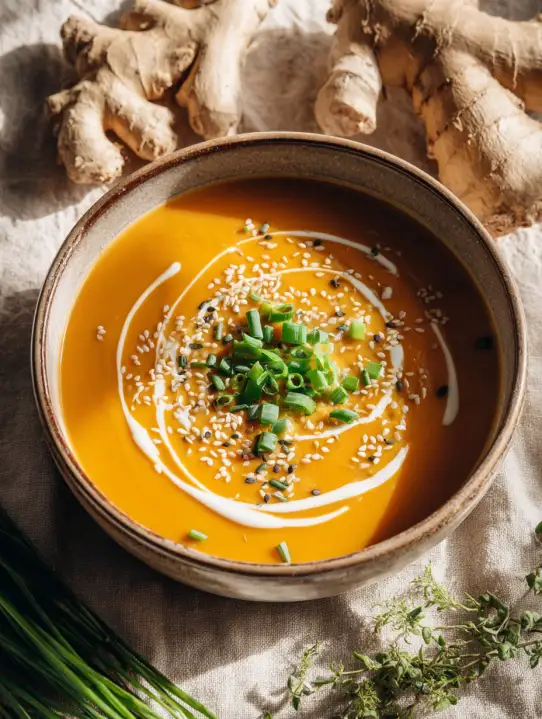
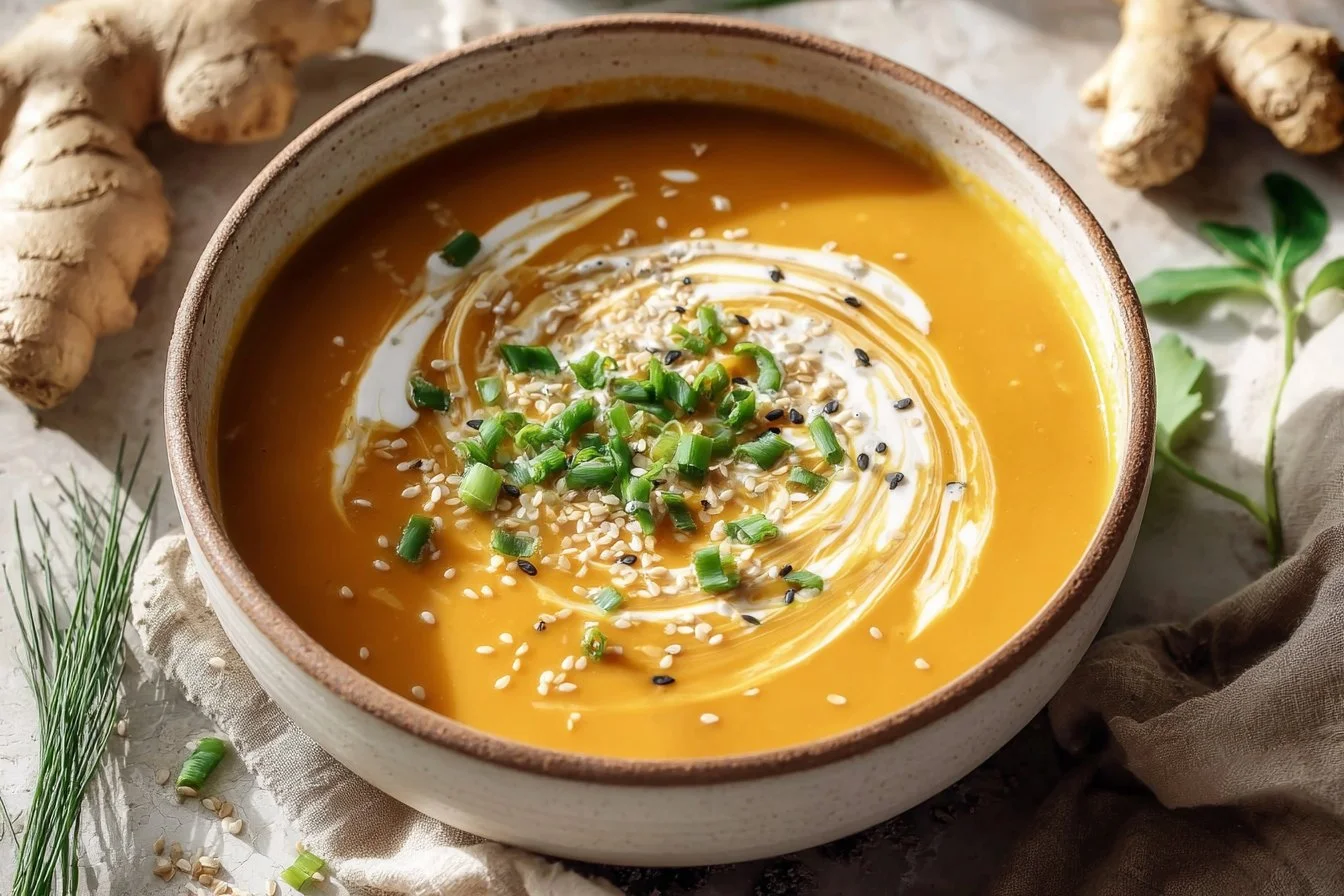
Ladle the hot soup into warmed bowls. Presentation is the final ingredient in a great meal. For a professional touch, take a tablespoon of coconut milk (if you saved a little from the can) and drizzle it in a swirl over the top. Sprinkle a generous amount of toasted pumpkin seeds in the center for crunch, and finish with a scatter of fresh cilantro or parsley for a pop of green color. Serve immediately while the soup is steaming. Encourage your guests (or yourself!) to stir the garnishes into the soup, creating a perfect bite of creamy, crunchy, spicy, and sweet in every spoonful.
Variations, Make-Ahead Strategies, and Storage
Flavor Variations to Suit Your Palate
While the base recipe is spectacular, it is also highly adaptable. For those who love a bit of heat, consider adding a tablespoon of Thai red curry paste at the same time you add the garlic and ginger. This introduces notes of lemongrass, galangal, and chili that pair beautifully with sweet potato. If you prefer a smokier profile, a teaspoon of smoked paprika or a finely chopped chipotle pepper in adobo sauce can add a “roasted” depth to the soup. For a boost of protein, you can add half a cup of red lentils along with the broth; they will break down during the simmer and add even more body and nutrition to the final puree. If you want to lean into the autumnal vibes, a pinch of cinnamon or nutmeg can enhance the natural sweetness of the potatoes.
The Perfect Accompaniments
No bowl of soup is complete without something for dipping or a fresh side to balance the meal. An artisanal sourdough bread, lightly toasted and brushed with olive oil, is the classic choice. The tanginess of the sourdough provides a brilliant contrast to the sweet soup. If you want something lighter, a crisp garden salad with a simple lemon-tahini dressing works wonders. For a cooling element, a dollop of fresh herb yogurt (plain Greek yogurt mixed with mint and cilantro) can be swirled into the soup at the table. If you are serving this as part of a larger meal, it pairs exceptionally well with roasted cauliflower or a quinoa pilaf studded with dried cranberries and toasted almonds.
Make-Ahead and Meal Prep Tips
This Ginger Sweet Potato Soup is a meal-prepper’s dream. In fact, many people find that the flavor actually improves after 24 hours in the refrigerator, as the ginger has more time to infuse into the potato base. You can easily double or triple the recipe to have lunches ready for the entire week. If you are making this for a dinner party, you can prepare the soup up to Step 7 (the pureeing stage) a day in advance. Store the puree in the fridge, and then perform Step 8 (adding the coconut milk) and Step 9 (seasoning) just before serving. This ensures the coconut milk stays fresh and the flavors are bright and vibrant for your guests.
Storage and Reheating Instructions
To store, allow the soup to cool to room temperature before transferring it to airtight containers. It will keep beautifully in the refrigerator for up to 5 days. For longer storage, this soup freezes exceptionally well. Because it is a pureed soup, it maintains its texture much better than soups with chunks of vegetables or pasta. Store it in freezer-safe bags or containers for up to 3 months. When you are ready to enjoy it, thaw it overnight in the refrigerator. To reheat, place the soup in a pot over low heat, stirring occasionally. If the soup has thickened too much during storage, simply whisk in a splash of broth or water to return it to your desired consistency. Avoid the microwave if possible, as it can heat the soup unevenly; the stovetop is always the best way to maintain that silky texture.
Troubleshooting Common Issues
Sometimes, despite our best efforts, things don’t go exactly as planned. If your soup feels too thin, you can let it simmer uncovered for an extra 10 minutes to reduce the liquid, or blend in an extra boiled potato. If it feels too thick, simply whisk in more broth until it reaches the perfect “pourable” consistency. If the ginger is too overwhelming, add a bit more coconut milk or a teaspoon of maple syrup to mellow the spice. If the soup tastes “flat” even after adding salt, it almost always needs more acid—don’t be afraid of that lemon juice! It is the secret weapon that brings the whole dish to life.
Ginger Sweet Potato Soup
Ingredients
Method
- Heat the oil in a large pot over medium heat.
- Add the chopped onion and cook until soft, about 5–6 minutes.
- Stir in the garlic and grated ginger. Cook 1 minute until fragrant.
- Add the sweet potato cubes and chopped carrot. Stir to coat them in the aromatics.
- Pour in the vegetable broth so the vegetables are mostly covered. Bring to a simmer.
- Reduce heat and simmer until the sweet potatoes are very tender, about 15–20 minutes.
- Remove from heat. Use an immersion blender to puree until smooth, or carefully transfer in batches to a blender.
- Return the soup to the pot. Stir in the coconut milk and warm gently; do not boil.
- Taste and season with salt, pepper, and lemon or lime juice to balance the flavors.
- Serve hot with herbs and seeds or a swirl of coconut milk.
Notes
🍲 More Cozy Homemade Soups to Try:
- Sweet Potato Apple Coconut Soup – luscious sweet potatoes paired with crisp orchard apples and silky coconut
- Spiced Sweet Potato and Carrot Soup – aromatic warming spices blended with sweet root vegetables
(FAQs)
Can I use frozen sweet potatoes or canned puree?
While fresh is always best for the most nuanced flavor, you can certainly use frozen cubed sweet potatoes. Since they are often blanched before freezing, they may cook slightly faster than fresh ones. I would generally avoid using canned sweet potato puree, as it often has a different consistency and may contain added sugars or preservatives that can throw off the savory balance of the soup. If you must use canned, ensure it is 100% pure sweet potato and skip the simmering steps, moving straight to the aromatics and then combining everything before heating.
Is there a substitute for fresh ginger?
If you cannot find fresh ginger, you can use ground ginger, but use it sparingly. A general rule of thumb is 1/2 to 1 teaspoon of ground ginger for every tablespoon of fresh. Keep in mind that ground ginger is much more concentrated and has a “warmer,” more dried-spice flavor rather than the “bright” and “zingy” flavor of fresh ginger. If you find yourself frequently wanting to make this soup, you can buy a large knob of ginger, peel it, and store it in a freezer bag in the freezer. It grates beautifully while frozen, and you’ll always have it on hand!
Can I make this in a slow cooker or Instant Pot?
Absolutely! For an Instant Pot: Sauté the onions, garlic, and ginger using the “Sauté” function. Add the potatoes, carrots, and broth. Seal the lid and cook on “High Pressure” for 8 minutes. Manually release the pressure, then proceed with pureeing and adding the coconut milk. For a Slow Cooker: Sauté the aromatics in a pan first (this is important for flavor!), then transfer them to the slow cooker with the potatoes, carrots, and broth. Cook on “Low” for 6-7 hours or “High” for 3-4 hours until the potatoes are tender. Puree and stir in the coconut milk at the end.
What is the difference between light and full-fat coconut milk?
Full-fat coconut milk is made from the first pressing of coconut meat and contains a higher percentage of coconut fat, which gives it a thick, creamy consistency. Light coconut milk is essentially full-fat coconut milk that has been diluted with water. For this soup, full-fat is the gold standard because it provides a luxurious mouthfeel that makes the soup feel like a treat. However, if you are watching your calorie or fat intake, light coconut milk still provides that lovely coconut aroma and flavor, though the soup will be thinner and less “velvety.”
How can I make this soup more filling for a main course?
To turn this soup into a more substantial meal, consider adding texture. You could top it with a scoop of cooked brown rice or quinoa. Adding a can of drained and rinsed chickpeas during the simmering stage provides a nice boost of protein and fiber. Another great option is to serve it with “croutons” made from roasted chickpeas or cubes of pan-fried tofu. Of course, never underestimate the power of a side of thick, buttered crusty bread or a side salad with some healthy fats like avocado or nuts to make the meal feel more complete.
My soup is grainy; what did I do wrong?
A grainy texture usually comes down to one of two things: undercooked vegetables or the type of potato used. If the sweet potatoes weren’t completely soft before blending, tiny firm bits will remain. Always test multiple cubes with a fork before pureeing. Secondly, if you used a starchy, white-fleshed sweet potato (like a Jersey sweet potato), it naturally has a more fibrous and crumbly texture. Using an immersion blender can also sometimes be less effective than a high-speed stand blender. If your soup is already grainy, you can try passing it through a fine-mesh sieve (a “chinois”) to remove the solids and achieve a perfectly smooth liquid.
What can I use instead of coconut milk if I have an allergy?
If you need to avoid coconut, you have a few great options. For a similar creaminess, you can use heavy cream (if you aren’t vegan) or a high-quality oat milk (the “extra creamy” versions work best). Another fantastic professional trick is to blend in half a cup of raw cashews that have been soaked in water for a few hours. When pureed with the soup, the cashews create an incredibly rich, dairy-free creaminess that is very similar to coconut milk but with a more neutral, nutty flavor. Even a splash of half-and-half can work in a pinch for those who consume dairy.
By following these steps and understanding the “why” behind every ingredient and technique, you are well on your way to creating a Ginger Sweet Potato Soup that is far superior to anything you could find in a restaurant. This is the essence of home cooking: taking simple, wholesome ingredients and transforming them through care, heat, and seasoning into a meal that nourishes both the body and the soul. Enjoy the process, trust your senses, and most importantly, enjoy every golden, spicy spoonful.
Ginger Sweet Potato Soup
Ingredients
Method
- Heat the oil in a large pot over medium heat.
- Add the chopped onion and cook until soft, about 5–6 minutes.
- Stir in the garlic and grated ginger. Cook 1 minute until fragrant.
- Add the sweet potato cubes and chopped carrot. Stir to coat them in the aromatics.
- Pour in the vegetable broth so the vegetables are mostly covered. Bring to a simmer.
- Reduce heat and simmer until the sweet potatoes are very tender, about 15–20 minutes.
- Remove from heat. Use an immersion blender to puree until smooth, or carefully transfer in batches to a blender.
- Return the soup to the pot. Stir in the coconut milk and warm gently; do not boil.
- Taste and season with salt, pepper, and lemon or lime juice to balance the flavors.
- Serve hot with herbs and seeds or a swirl of coconut milk.