
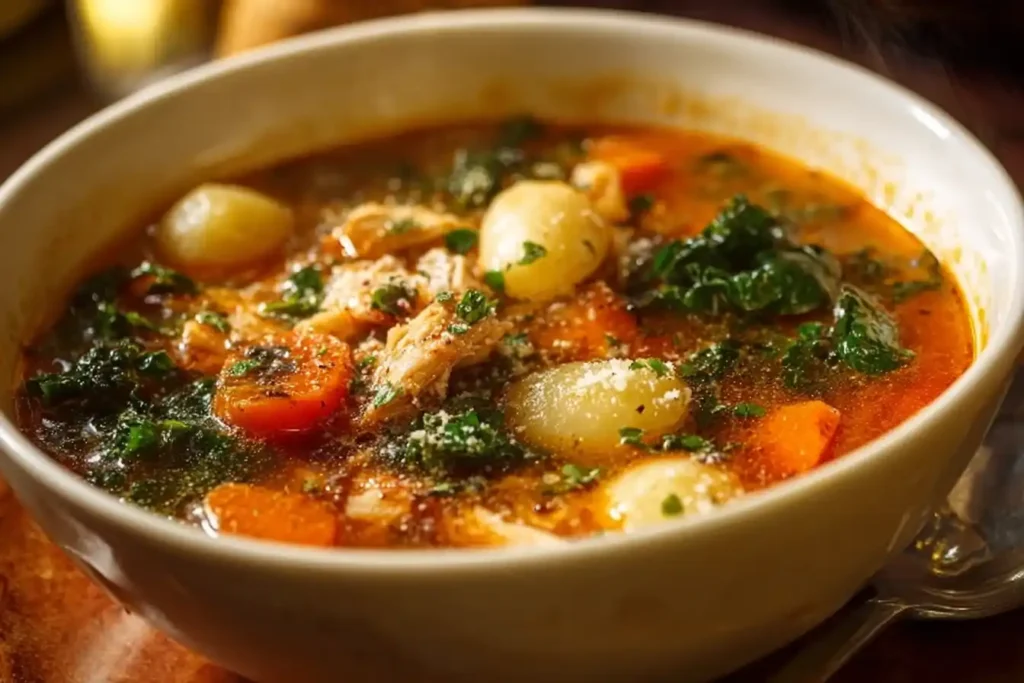
Why Make Italian Chicken and Veggie Soup
In an era dominated by convenient takeaway options and processed canned foods, the act of making soup from scratch stands out as one of the most rewarding and therapeutic kitchen rituals. Italian chicken and veggie soup captures the very spirit of traditional Mediterranean cookery—a philosophy built around honoring simple, unpretentious ingredients and allowing them to harmonize through thoughtful layer-by-layer cooking. Making this soup at home elevates a standard evening routine into a genuine culinary event. First and foremost, this soup is a powerhouse of balanced nutrition. Unlike heavy cream-based chowders or salt-laden commercial soups, this recipe offers a clean, broth-based foundation rich in lean protein, complex carbohydrates, essential vitamins, and hydrating minerals. The combination of leafy green spinach, beta-carotene-rich carrots, hydrating zucchini, and lycopene-packed tomatoes provides a vibrant spectrum of antioxidants that bolster your immune system and keep you feeling energized. It is the ultimate feel-good food—nourishing, light on the stomach, yet deeply satisfying. Furthermore, this dish represents remarkable kitchen efficiency and economic practicality. A single pot of this soup can easily feed a family of four to six, with leftovers that taste even better the following day as the herbs, aromatics, and rich broth meld together. It is an ideal vessel for using up leftover produce sitting in your crisping drawer, turning stray carrots, half-used onions, or extra summer squash into a comforting feast. By crafting this soup at home, you maintain total command over the quality of your ingredients, controlling sodium levels, avoiding unwanted preservatives, and tailoring the texture to your family’s exact preference. Finally, there is an undisputed emotional quality to broth-based chicken soups. Across cultures worldwide, chicken soup is recognized as a panacea for the body and spirit. The subtle heat, aromatic steam, and familiar savoriness trigger instant memories of home, care, and comfort. Whether you are nursing a winter cold, preparing meal-prep containers for a busy week ahead, or hosting friends for a casual Sunday supper alongside a fresh garden salad and garlic-rubbed crostini, this Italian variation brings an inviting, rustic charm that standard soups simply cannot replicate.Why You’ll Love This Italian Chicken and Veggie Soup
Cozy Flavor with Everyday Ingredients
The true genius of Italian chicken and veggie soup lies in its ability to transform everyday grocery staples into a rich, complex flavor profile. You do not need exotic spices, expensive cuts of meat, or specialized techniques to achieve a restaurant-worthy bowl. The base relies on a traditional Italian soffritto—a slow-sweated blend of diced onion, carrots, and celery cooked gently in extra virgin olive oil. This foundation releases sweet, earthy, and aromatic compounds into the oil, establishing a savory bedrock upon which the rest of the soup is built. Adding a single tablespoon of tomato paste at the right moment deepens the color and introduces a warm, savory undertone, while diced tomatoes bring a pleasant, sun-ripened acidity that cuts through the richness of the chicken broth. Dried Italian seasoning—a classic combination of oregano, basil, thyme, and rosemary—infuses the liquid with floral, herbaceous top notes that evoke the sun-drenched hillsides of Tuscany. As the chicken poaches directly in this aromatic bath, it absorbs these herbal nuances while simultaneously releasing its natural juices into the broth, creating an interconnected web of deliciousness where every spoon delivers a perfectly balanced bite.Quick to Make, Easy to Love
While some authentic soups require hours of tedious simmering to build character, this Italian chicken and veggie soup is designed with the busy home cook in mind. From start to finish, you can have a steaming pot ready on the dinner table in under forty-five minutes. Because the chicken breasts or thighs are gently cooked right inside the simmering soup broth, there is no need for pre-roasting or washing extra pans. Everything happens in a single pot, keeping cleanup quick and stress-free. This recipe is also remarkably forgiving and versatile. It adapts seamlessly whether you are using fresh, raw chicken cutlets or leftover shredded roast chicken from the night before. If you are short on time, pre-chopped vegetables from the supermarket can shave off prep work, making this an ideal 30-to-40-minute meal for busy weeknights. Children love the tender small pasta shapes and gentle flavors, while adults appreciate the complex herb notes, vibrant colors, and options for custom toppings like aged Parmigiano-Reggiano, red pepper flakes, or a quick drizzle of peppery extra virgin olive oil.Ingredients and Substitutions
To achieve soup perfection, understanding the role of each ingredient and how to select the best produce is key. Each element brings a distinct textural contrast, aromatic lift, or structural background to the pot. The bedrock of the soup begins with extra virgin olive oil. A high-quality oil provides a fruity, slightly peppery carrier for the aromatic vegetables. The classic triad of onion, carrot, and celery forms the vegetable core. Medium yellow or sweet onions offer a sweet, warm aromatic base, while firm, deep-orange carrots and crisp celery ribs provide color, natural sweetness, and structured bite. Minced fresh garlic cloves introduce a pungent sharpness that mellows into warm background flavor during the gentle sweat. Optional additions like zucchini and tomato paste elevate the soup’s body and color. Summer zucchini adds a light, buttery soft texture that absorbs the herbaceous broth, while concentrated tomato paste adds a rich visual red tone and deep savory essence. Italian seasoning—whether a pre-mixed pantry blend or a custom mix of dried oregano, basil, thyme, and marjoram—delivers classic Mediterranean herb notes. A single bay leaf adds a subtle woodsy, herbal background aroma that gently anchors the broth as it simmers. For the liquid core, low-sodium chicken broth is highly recommended. Using low-sodium broth grants you complete control over the final seasoning level, ensuring the soup never becomes overly salty as it concentrates. Canned diced tomatoes with their juices supply light acidity and sweet tomato flavor; you can opt for fire-roasted canned tomatoes for a subtle smoky twist. When it comes to protein, boneless, skinless chicken breasts offer a lean, tender bite, whereas boneless, skinless chicken thighs provide a richer flavor and stay exceptionally juicy even during extended simmering. Alternatively, store-bought rotisserie chicken or pre-cooked leftover shredded chicken cuts down cooking time significantly. For the starch, small pasta shapes like ditalini, orzo, or small shells add delightful chew and comforting substance. Alternatively, a can of creamy cannellini beans or Great Northern beans yields a velvety, fiber-dense, traditional Tuscan touch. Tender baby spinach leaves or chopped, destemmed Tuscan kale introduce vibrant green color and high nutritional value at the final moment. Finally, a touch of kosher salt, freshly cracked black pepper, a splash of fresh lemon juice, grated Parmigiano-Reggiano, and chopped fresh flat-leaf parsley tie the entire dish together into an extraordinary sensory experience.What You’ll Need for This Recipe
Below is the complete list of ingredients and precise quantities required to assemble this classic soup: 2 tablespoons extra virgin olive oil: Used to sweat the aromatics and carry fat-soluble flavors. 1 medium yellow onion: Chopped into small, uniform pieces. 2 medium carrots: Peeled and cut into thin, round slices or half-moons. 2 ribs celery: Sliced into clean, thin crescents. 3 cloves garlic: Finely minced or crushed. 1 medium zucchini (optional): Chopped into bite-sized half-moons or quarters. 1 tablespoon tomato paste (optional): Cooked down to add color and savory depth. 1 teaspoon Italian seasoning: Or an equal mix of dried oregano, basil, and thyme. 1 dried bay leaf (optional): Simmered in the broth for herbal depth. 6 cups low-sodium chicken broth: The principal flavorful liquid foundation. 1 can (14.5 oz) diced tomatoes: Un-drained, including their flavorful natural juices. 1 pound boneless, skinless chicken breasts or thighs: Raw, or 2 cups cooked shredded chicken. 1 cup small pasta: Ditalini, orzo, or small shells (or 1 can 15 oz cannellini beans, rinsed and drained). 2 cups baby spinach or chopped Lacinato kale: Stems removed, leaves roughly chopped. To taste salt and freshly ground black pepper: For precision seasoning throughout the cooking process. To serve (optional): Freshly grated Parmesan cheese, fresh flat-leaf parsley, and fresh lemon wedges.Smart Swaps for Dietary Needs
One of the greatest virtues of this rustic Italian soup is how effortlessly it can be adapted to accommodate various dietary preferences, allergen restrictions, or pantry constraints without sacrificing flavor: Gluten-Free: Swap traditional wheat pasta with your favorite gluten-free small pasta (such as corn, rice, or chickpea ditalini). Alternatively, skip the pasta entirely and use a can of drained cannellini beans or wild rice to build satisfying bulk without gluten. Dairy-Free: This soup is naturally dairy-free in its core broth! Simply omit the grated Parmesan cheese topping at the end, or substitute it with a sprinkle of nutritional yeast or a quality plant-based aged cheese alternative. Vegan/Vegetarian: Replace the chicken broth with a rich, roasted vegetable broth. Omit the chicken entirely and double up on beans—combining red kidney beans and cannellini beans—or introduce diced extra-firm tofu or brown lentils for a robust, plant-based protein hit. Low-Sodium: Ensure you use strictly homemade or no-salt-added vegetable or chicken stock. Rely on fresh lemon juice, extra minced garlic, and fresh herbs to boost flavor without relying heavily on added sodium. Low-Carb / Keto: Omit the pasta and beans completely. Increase the volume of non-starchy vegetables by adding diced yellow squash, green beans, or cauliflower florets to keep the net carbohydrate count exceptionally low while maintaining full volume and texture.Smart Variation (Optional)
If you wish to put a unique creative spin on this classic baseline recipe, consider these delicious regional Italian-inspired variations: Creamy Tuscan Parmigiano Soup: Stir in 1/2 cup of heavy cream or unsweetened full-fat coconut milk along with 1/2 cup of freshly grated Parmigiano-Reggiano during the final step. This turns the light tomato-chicken broth into a velvety, silky rich soup. Spicy Calabrian Chili Warm-Up: Add 1 to 2 teaspoons of crushed Calabrian chili paste or 1/2 teaspoon of dried red pepper flakes into the oil along with the garlic. This introduces a subtle, warming kick that beautifully cuts through the sweet carrots and tomatoes. Pesto Garden Blast: Right before serving, swirl 2 tablespoons of store-bought or homemade fresh basil pesto directly into the pot. The concentrated basil, pine nut, and garlic oil will create an intoxicating aroma and a gorgeous emerald sheen across the top of the soup.How to Make Italian Chicken and Veggie Soup
Creating this soup is an intuitive, highly rewarding step-by-step process. Following these detailed instructions will guarantee that your vegetables remain perfectly tender rather than mushy, your chicken stays moist and tender, and your broth develops an ideal balance of herbs and seasoning.Step 1: Set a large, heavy-bottomed Dutch oven or soup pot over medium heat and pour in 2 tablespoons of extra virgin olive oil. Allow the oil to warm for roughly one minute until it shimmers gently across the bottom of the pan, but ensure it does not smoke. Heating the oil properly before adding ingredients ensures that the vegetables sizzle immediately and do not absorb excess unheated oil.
Step 2: Add the chopped yellow onion, sliced carrots, and sliced celery to the shimmering oil. Stir well to coat all the vegetables evenly in the hot oil. Cook over medium heat, stirring occasionally with a wooden spoon, for 5 to 6 minutes. You are looking for the onions to become soft, fragrant, and translucent, and for the carrots and celery to begin softening around the edges without taking on heavy dark brown coloring.
Step 3: Stir in the minced garlic and chopped zucchini (if using), stirring continuously for about 1 minute until the garlic becomes highly aromatic. Next, clear a small opening in the center of the pot, add 1 tablespoon of tomato paste, 1 teaspoon of Italian seasoning, 1/2 teaspoon of salt, and 1/4 teaspoon of black pepper. Stir the paste and herbs directly against the bottom of the pot for 30 seconds to blossom the dried herbs and lightly cook the tomato paste, turning it a shade darker red.
Step 4: Pour in the 6 cups of low-sodium chicken broth and the entire 14.5-ounce can of diced tomatoes along with all of its juices. Drop in the dried bay leaf. Use your wooden spoon to scrape up any flavorful brown bits stuck to the bottom of the pot, incorporating them directly into the liquid base.
Step 5: If you are using raw chicken breasts or thighs, lower them carefully directly into the liquid so they are fully submerged. Increase the heat under the pot to high and bring the liquid to a rolling boil. As soon as full boiling is achieved, immediately turn the heat down to low, cover the pot partially with a lid, and let it simmer gently for 12 to 15 minutes. The liquid should maintain a gentle, rolling bubble. Once cooked through (registering an internal temperature of 165°F on a meat thermometer), carefully remove the chicken pieces with tongs, transfer them to a clean cutting board, shred the meat using two forks, and set aside on a plate.
Step 6: If you are using pre-cooked or shredded rotisserie chicken instead of raw chicken, skip adding chicken during Step 5. Keep the soup simmering softly covered for 10 minutes to allow the vegetables and herbs to meld, and prepare your cooked chicken to add later in Step 8.
Step 7: With the cooked chicken sitting safely on the cutting board, stir 1 cup of small pasta (or your drained cannellini beans) directly into the gently bubbling broth. Simmer uncovered for 8 to 10 minutes, stirring occasionally to prevent the small pasta shapes from sticking to the bottom of the pot, until the pasta is tender to the bite (al dente).
Step 8: Return the warm, shredded chicken back into the bubbling pot (or add your pre-cooked shredded chicken now). Toss in the 2 cups of fresh baby spinach or chopped kale. Stir everything together continuously over low heat for 1 to 2 minutes. The heat of the broth will instantly wilt the green leaves into bright, tender ribbons without overcooking them.
Step 9: Turn off the heat completely. Remove and discard the dried bay leaf. Taste the broth carefully with a spoon. Adjust the flavor by adding additional salt and freshly ground black pepper to taste. If the soup tastes slightly heavy or flat, add a fresh splash (about 1 to 2 teaspoons) of freshly squeezed lemon juice to brighten the overall flavor balance instantly.
Step 10: Ladle generous portions of hot soup into deep serving bowls. Top each portion with a dusting of freshly grated Parmigiano-Reggiano cheese and a sprinkle of chopped fresh flat-leaf parsley. Serve immediately alongside slices of warm crusty bread for dipping.
Tips for Texture, Timing & Tools
To achieve ideal results every single time you cook this recipe, keep these professional kitchen guidelines in mind: Pot Selection: Utilize a thick, heavy-bottomed enamel Dutch oven or heavy stainless steel stockpot. Heavy cookware distributes heat evenly across the entire surface, preventing scorch spots when sweating vegetables or cooking pasta. Uniform Chopping: Cut your onions, carrots, celery, and zucchini into consistent, bite-sized shapes. Uniformity guarantees that every vegetable cooks at the exact same rate, preventing mushy zucchini alongside hard carrots. Preventing Soft Pasta: If you plan on having leftover soup for several days, consider cooking the pasta in a separate small pot of salted water. Strain the cooked pasta and place a small spoonful directly into individual bowls before pouring hot soup over top. This keeps the pasta from continuing to absorb broth and expanding into mush in the refrigerator overnight. The Lemon Trick: Never skip tasting the soup right before serving! A final splash of fresh acid—like lemon juice or a tiny splash of white balsamic vinegar—wakes up all the cooked earthy flavors, balancing natural vegetable sweetness and rich chicken savory notes without adding extra salt.Storage & Reheating
Soup is notoriously famous for being even more delicious the day after it is prepared, as the herbs, seasonings, and broth components continue to settle and combine. Proper storage and thoughtful reheating techniques ensure that your leftovers retain their fresh appeal.How to Store It Right
Allow the soup to cool down close to room temperature before packing it away—never place a scalding hot, large covered pot directly into your refrigerator, as this can warm up the internal temperature of your fridge. Divide the cooled soup into airtight glass or food-grade plastic container systems. Refrigeration: Sealed in an airtight container, the soup will remain fresh and delicious in the refrigerator for up to 4 to 5 days. Freezing Instructions: This soup freezes wonderfully if made without pasta, as pasta tends to break down and turn soft when frozen and thawed in liquid. If freezing, make the soup base through all steps except adding the pasta. Freeze the cooled soup in freezer-safe containers or silicone freezing blocks for up to 3 months. Thaw overnight in the refrigerator, bring the soup to a boil on the stove, and drop in fresh pasta to cook right before serving!Reheating Without Losing Flavor
When reheating individual portions or an entire batch of stored soup, follow these steps to preserve ideal texture and moisture: Stovetop Reheating (Recommended): Pour the desired amount of soup into a small saucepan set over medium-low heat. Because cooked pasta or beans will absorb some of the liquid while sitting in the fridge, add a splash (1/4 cup) of extra chicken broth or water to restore the soup’s velvety liquid consistency. Heat gently until hot and steaming, stirring occasionally. Avoid boiling rapidly, which can overcook delicate spinach and chicken. Microwave Reheating: Transfer a portion to a microwave-safe bowl and cover it loosely with a paper towel to prevent splattering. Heat on medium-high power in 60-second intervals, stirring in between, until heated thoroughly. * Refreshing Flavor: Right after reheating, give the bowl a fresh sprinkle of newly grated Parmesan cheese, a drop of extra virgin olive oil, and a dash of fresh pepper to restore that straight-from-the-stove aroma.A Dish Worth Making Again and Again
Mastering a well-balanced, wholesome, one-pot Italian chicken and veggie soup is a fundamental skill for any passionate home cook. It bridges the gap between quick weeknight utility and slow, heart-warming culinary satisfaction. Once you experience the depth of flavor created by sweating fresh aromatics, poaching juicy chicken, and brightening the bowl with fresh greens and lemon, this standard Italian basic will quickly earn a permanent spot in your weekly dinner rotation.
Italian Chicken and Veggie Soup
Ingredients
Method
- Heat olive oil in a large pot over medium heat.
- Add onion, carrots, and celery. Cook for 5–6 minutes until soft.
- Stir in garlic and zucchini; cook for 1 minute. Add tomato paste, Italian seasoning, salt, and pepper. Cook for another 30 seconds.
- Pour in the broth and diced tomatoes. Add bay leaf.
- If using raw chicken, add it now. Bring to a boil, then lower heat and simmer for 12–15 minutes. Remove chicken, shred, and set aside.
- If using cooked chicken, wait to add it in Step 7.
- Stir in pasta (and beans if using). Simmer for 8–10 minutes, until pasta is tender.
- Return shredded chicken to the pot (or add cooked chicken now) and stir in spinach. Cook for 1–2 minutes until greens wilt.
- Taste and adjust salt and pepper. Add a splash of lemon juice if desired.
- Ladle into bowls and top with Parmesan and parsley.
Notes
🍲 More Cozy Homemade Soups to Try:
- Vegetable Minestrone Soup – classic slow-simmered vegetable soup with white beans and fragrant herbs
- Anti-Inflammatory Creamy Chicken Soup – nourishing ginger-turmeric broth with lean shredded chicken and vegetables
(FAQs)
Can I make this soup in a slow cooker or Crock-Pot?
Yes, this recipe adapts effortlessly to a slow cooker. To do so, add the extra virgin olive oil, diced onion, carrots, celery, garlic, zucchini, tomato paste, Italian seasoning, bay leaf, low-sodium chicken broth, diced tomatoes, and raw chicken breasts into your slow cooker insert. Cover and cook on LOW for 6 to 7 hours or on HIGH for 3 to 4 hours. Remove the chicken, shred it with two forks, and return it to the slow cooker. Stir in the small pasta (or canned beans) and cook on HIGH for an additional 20 to 25 minutes until the pasta is tender. Stir in the spinach during the final 5 minutes until wilted, adjust seasoning with salt, pepper, and lemon juice, and serve hot!What can I use instead of small pasta if I am low-carb?
If you are sticking to a low-carb or keto lifestyle, simply omit the pasta completely. You can double the amount of fresh zucchini, or add non-starchy vegetables like fresh cauliflower florets, chopped green beans, or sliced yellow squash during Step 3. Another fantastic alternative is stirring in cooked zoodles (zucchini noodles) or miracle konjac noodles directly into the serving bowls right before ladling the hot soup.Why did my chicken turn out tough, and how can I keep it moist?
Chicken breasts become tough when they are cooked at an excessively high temperature for too long. To guarantee juicy, tender chicken every time, ensure that once the soup comes to a initial boil in Step 5, you immediately turn the heat down to low so the broth maintains a gentle, soft simmer rather than a furious boil. Poaching chicken gently at lower temperatures preserves its delicate structure. Alternatively, switching from chicken breasts to boneless, skinless chicken thighs provides more forgiving meat that remains moist even during longer simmers.Can I use pre-cooked rotisserie chicken for this recipe?
Absolutely! Using store-bought or leftover pre-cooked rotisserie chicken is a brilliant time-saver. Simply skip Step 5 (poaching the raw chicken). Follow the instructions for sweating vegetables, blooming spices, and adding liquid. Proceed to simmer the broth with vegetables for 10 minutes, cook your pasta in the broth, and then fold in 2 cups of shredded rotisserie chicken during Step 8 along with the fresh baby spinach to warm through.My soup broth tastes a bit bland. How can I boost the flavor?
If your soup broth feels like it lacks depth, it usually needs acid or salt to lift the existing flavors. First, add a pinch or two of kosher salt—low-sodium broth combined with unsalted vegetables often needs proper salting to wake up flavors. Second, stir in a teaspoon of fresh lemon juice or red wine vinegar; bright acid cuts through neutral liquid and makes herbal notes pop. Finally, consider adding a dash of soy sauce or Worcestershire sauce, or simmering a leftover hard Parmesan cheese rind directly in the broth during Step 5 to infuse a rich background savoriness.How do I stop the pasta from absorbing all my soup broth in leftovers?
Pasta acts like a sponge, continuing to absorb liquid even after the pot is removed from the stove. If you are cooking a large batch meant specifically for multi-day meal prep, cook your pasta separately in a small pot of boiling salted water according to package directions. Drain the pasta, toss it with a tiny drop of olive oil so it does not stick together, and store it in a separate container in the fridge. When serving, place a spoonful of cooked pasta into individual bowls and pour the hot soup over top.Can I substitute fresh tomatoes for the canned diced tomatoes?
Yes, you can substitute canned tomatoes with fresh produce! Use about 2 cups of peeled, diced fresh vine-ripened tomatoes or sweet Roma tomatoes. If fresh tomatoes are out of season or under-ripe, add an extra tablespoon of tomato paste along with a pinch of sugar to compensate for the lower natural sweetness and acidity found in off-season store tomatoes.What are the best side dishes to serve alongside this Italian soup?
This soup is a complete meal on its own, but it pairs wonderfully with classic Mediterranean accompaniments. Serve it with warm, thick slices of crusty garlic bread, artisanal sourdough, or warm ciabatta for dipping into the flavorful broth. On the side, a crisp green garden salad dressed with a simple lemon-herb vinaigrette, or a classic Caesar salad with crunchy croutons, offers a fresh, satisfying crunch that complements the warm soup perfectly.Italian Chicken and Veggie Soup
Ingredients
Method
- Heat olive oil in a large pot over medium heat.
- Add onion, carrots, and celery. Cook for 5–6 minutes until soft.
- Stir in garlic and zucchini; cook for 1 minute. Add tomato paste, Italian seasoning, salt, and pepper. Cook for another 30 seconds.
- Pour in the broth and diced tomatoes. Add bay leaf.
- If using raw chicken, add it now. Bring to a boil, then lower heat and simmer for 12–15 minutes. Remove chicken, shred, and set aside.
- If using cooked chicken, wait to add it in Step 7.
- Stir in pasta (and beans if using). Simmer for 8–10 minutes, until pasta is tender.
- Return shredded chicken to the pot (or add cooked chicken now) and stir in spinach. Cook for 1–2 minutes until greens wilt.
- Taste and adjust salt and pepper. Add a splash of lemon juice if desired.
- Ladle into bowls and top with Parmesan and parsley.

2 thoughts on “Italian Chicken and Veggie Soup”