
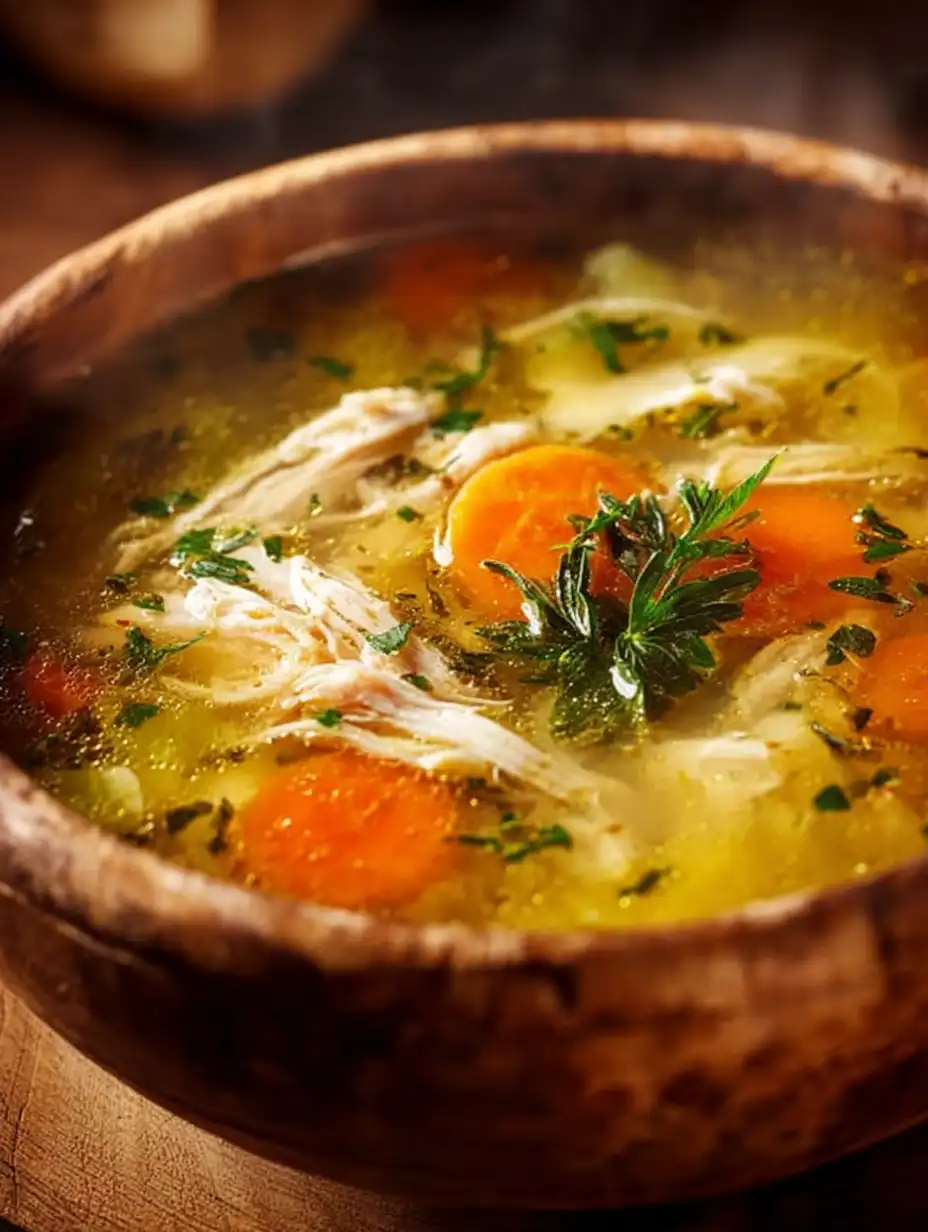
There is a specific kind of magic that happens in a kitchen when a pot of soup begins to simmer on the stove. It starts with the gentle hiss of onions meeting warm fat, a sound that signals the beginning of something restorative. As the heat works its way through the mirepoix—that classic trinity of carrots, celery, and onion—the air fills with a scent that is the very definition of home. It is a fragrance that promises warmth, a scent that seems to reach out and wrap you in a soft, culinary blanket. This Comforting Chicken and Potato Soup is not just a meal; it is a ritual of wellness, a testament to the power of simple ingredients transformed by time and care into a bowl of pure liquid gold.
Imagine, if you will, a chilly afternoon where the wind rattles the windowpanes and the light begins to fade early. You stand in the kitchen, the steam from the pot rising in gentle curls, fogging up your glasses just enough to make the world feel soft and blurred. Each spoonful of this soup offers a symphony of textures: the velvety give of a perfectly cooked potato, the tender chew of shredded chicken, and the slight, pleasant resistance of a carrot slice that has softened but kept its integrity. The broth, enriched by the natural starches of the potatoes and the deep savory notes of the chicken stock, coats the back of your spoon with a richness that belies its humble origins. It is the kind of dish that makes you slow down, inviting you to savor every drop and find peace in the rhythm of the meal.
What makes this particular recipe so special is its incredible balance. It sits right in the sweet spot between a light, clear broth and a heavy, cream-laden chowder. It is hearty enough to satisfy the hungriest of appetites after a long day of work or play, yet it remains light enough that you don’t feel weighed down after finishing a second bowl—and trust me, you will want a second bowl. The addition of fresh herbs at the end, coupled with a bright splash of lemon juice, elevates the earthy tones of the poultry and root vegetables, creating a vibrant finish that dances on the palate. This is a recipe that honors tradition while embracing the practicalities of the modern home cook, utilizing leftover chicken or rotisserie birds to create a masterpiece in under an hour.
As we embark on this culinary journey together, we will explore the nuances of every ingredient and the “why” behind every step. Whether you are a seasoned home chef looking to refine your technique or a beginner seeking a reliable victory in the kitchen, this guide is designed to be your companion. We will delve into the secrets of the perfect potato, the art of the simmer, and the small, artisanal touches that turn a simple soup into a signature dish. So, tie on your apron, sharpen your favorite knife, and let the comforting aroma of chicken and potatoes fill your home. Your journey toward the ultimate bowl of comfort starts right here, right now.
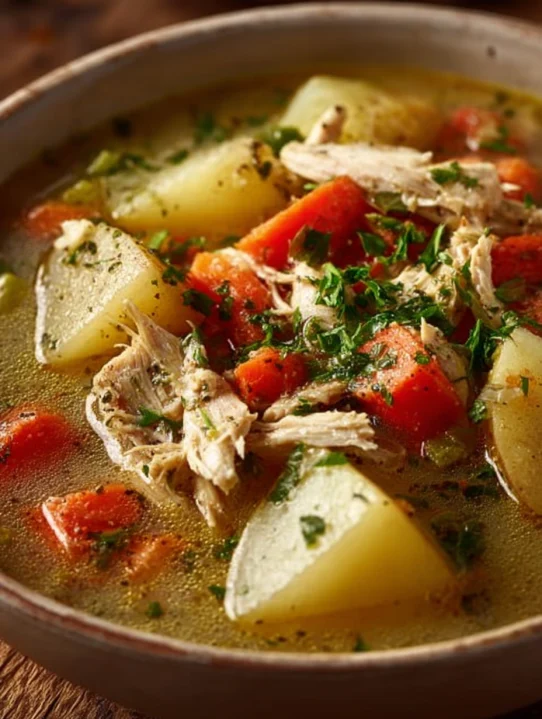
Why You Will Love This Comforting Chicken and Potato Soup
A Universal Language of Comfort
In every culture across the globe, there is a version of chicken soup that serves as the ultimate panacea for what ails the soul. This version, bolstered by the rustic, grounding presence of potatoes, speaks a language of universal comfort. You will love this recipe because it taps into a deep-seated nostalgia. For many of us, chicken and potato soup was the dish served by a parent or grandparent when we were under the weather or when the world felt a bit too heavy. It is a “hug in a bowl,” providing a sense of security and well-being that few other foods can replicate. The combination of protein and complex carbohydrates provides a steady release of energy, making it as physically sustaining as it is emotionally fulfilling.
The Perfect Texture Profile
Texture is often the unsung hero of a great soup, and this recipe masters it beautifully. Unlike pureed soups which can sometimes feel one-dimensional, this chicken and potato soup offers a delightful variety of mouthfeel. The potatoes are the stars here; when cooked just right, they develop a creamy exterior that slightly thickens the broth while maintaining a firm, buttery center. The shredded chicken provides a rustic, fibrous contrast, while the vegetables offer a gentle crunch. This interplay of textures keeps the palate engaged from the first spoonful to the last, ensuring that every bite feels like a discovery rather than a repetition.
Unbeatable Versatility and Efficiency
In the busy life of a modern home cook, efficiency is just as important as flavor. One of the primary reasons you will fall in love with this recipe is how beautifully it adapts to what you have on hand. Do you have half a rotisserie chicken left over from last night? This soup is its perfect destination. Do you have a bag of potatoes that needs using before they start to sprout? They are the heart of this dish. This soup is a masterclass in “fridge foraging,” allowing you to use up various vegetables and proteins while still producing a result that tastes like it was planned for days. Furthermore, it is a one-pot wonder, meaning less cleanup and more time to enjoy your evening.
Nutritional Density in Every Bite
While we often focus on the flavor, the nutritional profile of this soup is another reason it deserves a permanent spot in your rotation. It is a powerhouse of vitamins and minerals. Carrots provide beta-carotene, celery offers antioxidants, and onions and garlic are renowned for their immune-boosting properties. Potatoes are an excellent source of potassium and Vitamin C, and the chicken provides high-quality lean protein. When you use a high-quality chicken stock, you are also benefiting from the amino acids and minerals extracted from the bones. It is a complete, balanced meal that nourishes your body without the need for heavy fats or processed additives.
Key Ingredients and Flavor Dynamics
The Foundation: Olive Oil or Butter
The choice between olive oil and butter is your first opportunity to customize the flavor profile. Olive oil offers a lighter, more Mediterranean feel with its fruity and slightly peppery notes. It is an excellent choice if you want the vegetables to shine with a clean finish. Butter, on the other hand, adds a layer of luxurious richness and a nutty undertone that complements the potatoes perfectly. If you want the best of both worlds, many professional chefs use a combination of both—the oil prevents the butter from browning too quickly, while the butter provides that unmistakable “French bistro” depth. Whichever you choose, this fat is the vehicle that will carry the flavors of your aromatics throughout the entire pot.
The Aromatic Trio: Onion, Carrots, and Celery
Known in French cooking as a mirepoix, this combination is the backbone of almost every great soup and stew. The onion provides a sweet, foundational base that mellows as it cooks. The carrots add a natural sugar and a vibrant pop of color, while the celery offers a subtle, earthy saltiness and a refreshing “green” note. When these three are sautéed together, they undergo a transformation, their individual flavors melding into a complex, savory base that supports all the other ingredients. Cutting them into uniform sizes is key—not just for aesthetics, but to ensure they all soften at the same rate, providing a consistent experience in every spoonful.
The Power of Garlic and Thyme
Garlic is the “bass note” of the soup, providing a pungent, savory depth that lingers. By adding it later in the sauté process, we ensure it softens and scents the oil without becoming bitter or burnt. Thyme is the perfect herbal partner for chicken and potatoes. Whether you use dried thyme for its concentrated, woody warmth or fresh thyme for its bright, lemony-herbal notes, it acts as a bridge between the earthy vegetables and the savory poultry. Thyme has an incredible ability to make a soup taste like it has been simmering for hours, even if it only took thirty minutes.
The Star Player: The Potatoes
Choosing the right potato is crucial for the success of this soup. Yukon Gold potatoes are widely considered the gold standard (pun intended) for soups. They have a medium starch content, which means they hold their shape well while still releasing enough starch to give the broth a silky, slightly thickened body. Their naturally buttery flavor and golden color make the soup look and taste richer. Red potatoes are another excellent choice; they are “waxy,” meaning they hold their shape perfectly even with extended simmering, though they won’t thicken the broth as much as Yukon Golds. Avoid high-starch Russet potatoes unless you want them to break down completely and create a thick, mashed-potato style soup.
The Protein: Cooked Chicken
This recipe is designed for convenience, utilizing already-cooked chicken. This is not just a time-saver; it’s a flavor strategy. Using roasted chicken—especially a rotisserie chicken from the market—introduces seasoned, savory notes that you don’t get from raw poaching. The skin and seasoning from the roast chicken permeate the broth as it reheats. If you prefer a cleaner flavor, poached chicken breast is excellent. Shredding the chicken by hand creates a rustic, homemade feel and allows the broth to get into all the nooks and crannies of the meat, while dicing creates a more formal, uniform look. Both are delicious; it simply depends on the mood you want to set.
The Liquid Gold: Chicken Stock
The quality of your stock will determine the ceiling of your soup’s flavor. A high-quality, low-sodium chicken stock provides a rich, savory canvas. If you have homemade stock in the freezer, this is the time to use it! If using store-bought, look for “bone broth” or “unsalted” versions so you have total control over the seasoning. Mixing stock with a bit of water can sometimes be helpful if your stock is particularly concentrated or salty. The stock isn’t just a liquid; it’s a flavor delivery system that ties the vegetables, herbs, and meat into a cohesive whole.
The Finishing Brightness: Lemon and Parsley
Never underestimate the power of the “finish.” After simmering, a soup can sometimes feel “heavy” or “flat.” This is where the lemon juice and fresh parsley come in. Lemon juice provides acidity, which acts like a spotlight, highlighting the individual flavors of the chicken and thyme. It cuts through the richness of the potatoes and butter, making the whole dish feel vibrant and fresh. Parsley adds a burst of color and a clean, grassy finish that signals to the palate that the meal is fresh and thoughtfully prepared. These two ingredients transform the soup from “good” to “restaurant-quality.”
Step-by-Step Cooking Guide and Culinary Techniques
Step 1: Sautéing the Aromatic Base
Begin by placing your large heavy-bottomed pot or Dutch oven over medium heat. Add your olive oil or butter, allowing it to shimmer or melt and foam slightly. Once the fat is hot, add your diced onion, sliced carrots, and sliced celery. This is one of the most important steps in the process. You aren’t just heating the vegetables; you are “sweating” them. Cook them for about 6 to 8 minutes, stirring occasionally. You want the onions to become translucent and the carrots to lose their rigidity. By cooking them slowly in the fat, you are releasing their natural sugars and creating a deep flavor base. If the vegetables start to brown too quickly, turn the heat down slightly. The goal here is softness and sweetness, not a dark char.
Step 2: Infusing Garlic and Thyme
Once the vegetables are soft and fragrant, create a small well in the center of the mixture and add your minced garlic and thyme. Use your spoon to stir the garlic and herbs directly into the oil or butter for about 30 to 45 seconds. You will immediately notice a change in the aroma—the scent will become intensely savory and herbaceous. This brief “blooming” of the garlic and dried herbs in the fat unlocks fat-soluble flavor compounds that wouldn’t be released if you simply dumped them into the liquid later. Be careful not to let the garlic turn brown, as burnt garlic can impart a bitter taste to the entire pot of soup.
Step 3: Building the Broth and Adding Potatoes
Now, add your cubed potatoes to the pot. Give them a good stir so they are coated in the aromatic fat and herbs. Next, pour in your 6 cups of chicken stock. If you find your stock is very dark or salty, you can use 4 cups of stock and 2 cups of filtered water. Add the bay leaf at this stage; as the liquid heats up, the bay leaf will slowly release its subtle, tea-like aroma which adds a sophisticated layer of complexity. Increase the heat to medium-high just until the liquid begins to reach a gentle boil. This is the moment where all the individual components begin to introduce themselves to one another.
Step 4: The Gentle Simmer
Once the soup has reached a boil, immediately turn the heat down to low or medium-low. You want a “lazy simmer”—where small bubbles occasionally break the surface, rather than a rolling boil. Cover the pot with a lid. Simmering the potatoes gently for 12 to 15 minutes ensures that they cook through evenly without falling apart. A hard boil can cause the outside of the potato to disintegrate into mush before the inside is tender. Around the 12-minute mark, take a fork and pierce a potato cube. If it slides in easily with no resistance, your potatoes are ready. This controlled heat is the secret to a clear, beautiful broth and perfectly textured vegetables.
Step 5: Integrating the Chicken and Final Seasoning
Since your chicken is already cooked, it only needs to be heated through. Add the shredded or diced chicken to the pot. Stir gently so you don’t break the tender potatoes. Let the soup continue to simmer, uncovered now, for another 5 to 7 minutes. This allows the chicken to absorb some of the herb-infused broth and ensures the entire dish is piping hot. This is also the time for the “Chef’s Taste.” Take a small spoonful of the broth (be careful, it’s hot!) and taste it. Does it need more salt? A crack of black pepper? Remember that potatoes absorb salt, so you may need a bit more than you think. Season in small increments, tasting after each addition until the flavors “pop.”
Step 6: The Artisanal Finish
Turn off the heat. Remove the bay leaf and discard it. Now, add your fresh, chopped parsley and that optional squeeze of lemon juice. The lemon juice is a game-changer—start with a small squeeze, stir, and taste. You’ll notice the soup suddenly tastes “brighter” and more defined. The parsley adds a beautiful green contrast to the golden broth and orange carrots. Ladle the soup into deep bowls, ensuring everyone gets a generous portion of chicken and potatoes. Serve it immediately while the steam is still rising, perhaps with a side of crusty bread for dipping.
Variations, Make-Ahead Strategies, and Storage
Flavor Variations to Keep Things Exciting
While the base recipe is a classic, it is also a fantastic canvas for creativity. If you want a Creamy Chicken and Potato Soup, you can stir in half a cup of heavy cream or whole milk at the very end of Step 5. For a dairy-free creamy version, you can take one cup of the cooked potatoes and a bit of the broth, blend them until smooth, and stir them back into the pot. If you’re craving something with a bit of a kick, add a pinch of red pepper flakes or a diced jalapeño during the sauté stage. For a Mediterranean Twist, swap the thyme for oregano, add some chopped kale or spinach in the last 5 minutes of cooking, and finish with a sprinkle of feta cheese. The possibilities are truly endless, allowing you to tailor the soup to your specific cravings or the season.
The Art of the “Make-Ahead”
Soup is famously better the next day, and this recipe is no exception. As the soup sits in the refrigerator, the flavors continue to meld and deepen. The potatoes will absorb more of the savory broth, becoming even more flavorful. If you are a meal prepper, this is a dream recipe. You can make a double batch on Sunday and have incredible lunches for the entire week. When reheating, you may find that the potatoes have absorbed some of the liquid, making the soup thicker. Simply add a splash of water or stock when reheating on the stove to bring it back to your desired consistency. This soup is a “gift to your future self,” providing a quick, healthy meal when you’re too tired to cook during the week.
Storage and Freezing Guidelines
To store your soup, allow it to cool to room temperature (but don’t leave it out for more than two hours). Transfer it to airtight containers and refrigerate for up to 4 days. If you wish to freeze the soup, it is certainly possible, though there is a small caveat regarding potatoes. Potatoes can sometimes change texture when frozen and thawed, becoming slightly grainy. To minimize this, ensure the potatoes are fully cooked but not overcooked before freezing. Freeze the soup in freezer-safe bags or containers for up to 3 months. When you’re ready to eat, thaw the soup overnight in the refrigerator and reheat it gently on the stove. If the texture of the potatoes has changed slightly, a quick pulse with an immersion blender can turn it into a delicious “creamy” potato soup!
Perfect Pairings: Completing the Meal
While this soup is a meal in itself, the right side dish can elevate the experience. A thick slice of artisanal sourdough bread, toasted and rubbed with a clove of raw garlic, is the perfect vessel for soaking up the last drops of broth. A crusty baguette with plenty of salted butter is another classic choice that never fails. If you want something lighter, a fresh garden salad with a simple lemon-truffle vinaigrette provides a crisp, cool contrast to the warm, savory soup. For a more rustic feel, serve the soup alongside a wedge of warm cornbread or a savory herb scone. The goal is to provide a crunchy or zesty element that balances the soft, comforting nature of the soup.
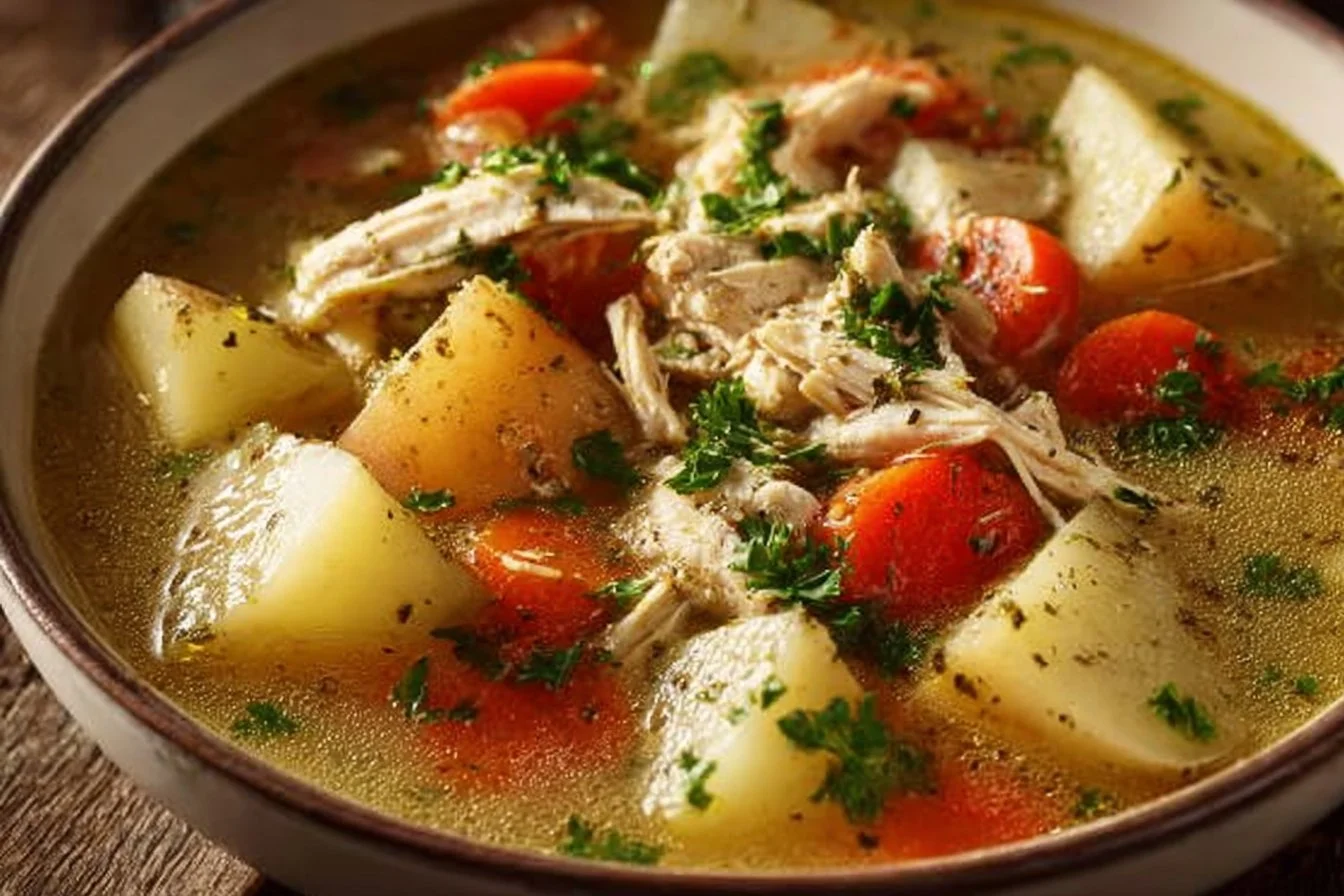
Comforting Chicken and Potato Soup
Ingredients
Method
- Heat oil or butter in a large pot over medium heat. Add onion, carrot, and celery. Cook 6–8 minutes until softened.
- Stir in garlic and thyme. Cook 30 seconds until fragrant.
- Add cubed potatoes and pour in chicken stock. Add bay leaf. Bring to a simmer.
- Cover and simmer 12–15 minutes, until potatoes are tender.
- Add cooked chicken. Heat through 5–7 minutes. Taste and salt and pepper as needed.
- Finish with parsley and a squeeze of lemon if using. Serve hot.
(FAQs)
Can I use raw chicken instead of cooked chicken?
Absolutely! If you only have raw chicken on hand, you can still make this soup. Simply cut raw chicken breast or thighs into bite-sized pieces and add them to the pot after the garlic and thyme (Step 2). Sauté the chicken for a few minutes until the outside is no longer pink, then proceed with adding the potatoes and stock. Alternatively, you can add whole raw chicken breasts to the stock in Step 3, simmer them until cooked through (about 12-15 minutes), remove them to shred, and then add them back in at the end. Both methods work perfectly; using raw chicken will actually infuse the broth with even more poultry flavor.
What are the best potatoes to use if I can’t find Yukon Golds?
If Yukon Golds aren’t available, your best bet is any “all-purpose” or “waxy” potato. Red Bliss or New Potatoes are excellent because they hold their shape beautifully. If you only have Russet potatoes (the kind usually used for baking or fries), you can use them, but be aware that they are very starchy. They will likely break down and make the broth much thicker and cloudier. If you use Russets, cut them into slightly larger chunks and keep a close eye on them during the simmer so they don’t turn into mashed potatoes in your soup pot.
How can I make this soup thicker without using flour?
One of the best ways to thicken this soup while keeping it gluten-free and natural is to use the potatoes themselves. Once the potatoes are tender, take a potato masher or a large fork and gently crush a few of the potato cubes directly in the pot. The released starches will naturally thicken the broth. Alternatively, you can remove a cup of the soup (veggies and broth), blend it in a blender or with an immersion blender, and stir it back in. This creates a luxurious, “creamy” mouthfeel without the need for heavy cream or a flour-based roux.
Can I make this in a Slow Cooker or Instant Pot?
Yes, this recipe is very adaptable to modern appliances. For a Slow Cooker, sauté the aromatics in a pan first (for the best flavor), then add everything except the cooked chicken, parsley, and lemon to the crockpot. Cook on Low for 6-7 hours or High for 3-4 hours. Stir in the chicken at the end just to heat through. For the Instant Pot, use the “Sauté” function for the vegetables and garlic. Add the potatoes and stock, then seal and cook on “Manual High Pressure” for 5 minutes. Do a quick pressure release, stir in the chicken, parsley, and lemon, and you’re ready to serve. Both methods produce a delicious result with even less hands-on time.
How do I prevent the chicken from becoming tough or dry?
The secret to keeping the chicken tender is to avoid overcooking it once it’s in the soup. Since the chicken is already cooked, it only needs to reach the temperature of the broth. This is why we add it at the very end (Step 5). By simmering it for just 5 to 7 minutes, you ensure it is hot and has absorbed flavor without the protein fibers tightening up and becoming “stringy” or dry. If you are using leftover chicken that was already a bit dry, shredding it into smaller pieces will help it absorb more of the broth, making it feel much more moist and tender in the final dish.
Is this soup freezer-friendly?
As mentioned in the storage section, yes, it is freezer-friendly with a small note on potato texture. If you plan to freeze the entire batch, you might consider undercooking the potatoes slightly (so they are just barely tender). This helps them maintain a better structure through the freezing and thawing process. Always ensure the soup is completely cold before freezing to prevent ice crystals from forming, which can degrade the quality of the vegetables. When reheating, a gentle touch on the stove is better than a high-heat microwave blast to preserve the integrity of the ingredients.
What can I use if I don’t have fresh herbs?
While fresh parsley and thyme are ideal, dried herbs are a perfectly acceptable substitute. The rule of thumb is to use one-third the amount of dried herbs as you would fresh (since dried herbs are more concentrated). For this recipe, if you don’t have fresh parsley, you can omit it or use a small amount of dried parsley (though dried parsley is more for color than flavor). If you don’t have thyme, dried oregano or even a “Poultry Seasoning” blend can work well. The key is to add dried herbs earlier in the process (Step 2) so they have time to rehydrate and release their oils.
Ultimately, this Comforting Chicken and Potato Soup is a celebration of the home kitchen. It is a dish that proves you don’t need expensive ingredients or complicated techniques to create something truly extraordinary. It is about the patience of the sauté, the gentleness of the simmer, and the joy of sharing a warm meal with those you love. Every bowl is a reminder that the best flavors are often the simplest ones, brought to life with a little bit of time and a lot of heart. Enjoy the process, savor the aroma, and most importantly, enjoy every single comforting spoonful.

1 thought on “Comforting Chicken and Potato Soup”