
Imagine a cold, blustery evening where the wind rattles the windowpanes and the chill of the day seems to have settled deep into your bones. You step into the kitchen, the heart of the home, and begin the rhythmic dance of preparation. There is a specific kind of magic that happens when a heavy-bottomed pot meets the heat of the stove, and the first pat of butter begins to sizzle and foam. This is the beginning of a culinary journey that transforms humble, everyday ingredients into a bowl of pure, unadulterated comfort. The Creamy Steak and Potato Soup is more than just a meal; it is a warm embrace, a savory sanctuary, and a testament to the power of simple, high-quality ingredients treated with respect and care.
As the steak hits the hot surface of the pot, a rich, savory aroma fills the air—a scent that promises satisfaction and nourishment. This isn’t just any soup; it is a robust, hearty blend that bridges the gap between a classic beef stew and a velvety potato chowder. The steak provides a tender, meaty bite, while the potatoes offer a soft, buttery contrast that melts into a luxurious, cream-infused broth. Each spoonful is a symphony of textures and flavors, from the earthy notes of dried thyme to the sharp, sweet bite of sautéed onions and the pungent warmth of fresh garlic. It is a dish that feels sophisticated enough for a weekend dinner party yet remains grounded in the rustic charm of home-style cooking.
For the home cook, this recipe is a masterclass in building layers of flavor. It teaches the importance of browning meat to lock in juices, the patience required to soften aromatics until they release their hidden sweetness, and the delicate art of simmering until every component reaches its peak tenderness. There is a deep sense of accomplishment in watching a clear broth transform into a rich, golden velvet as the heavy cream is stirred in, swirling like a storm cloud of deliciousness. This soup is designed to be shared, to be ladled into deep ceramic bowls, and to be enjoyed slowly with a side of crusty bread to soak up every last drop of the savory liquid.
In the pages that follow, we will explore every nuance of this magnificent dish. We will dive into the selection of the perfect cut of beef, the science of choosing the right potato for the desired texture, and the subtle techniques that elevate a good soup to a truly great one. Whether you are a seasoned chef or a beginner in the kitchen, this guide will provide you with the knowledge and inspiration to create a Creamy Steak and Potato Soup that will become a legendary staple in your household. So, tie on your apron, sharpen your favorite knife, and let us embark on this delicious adventure together.
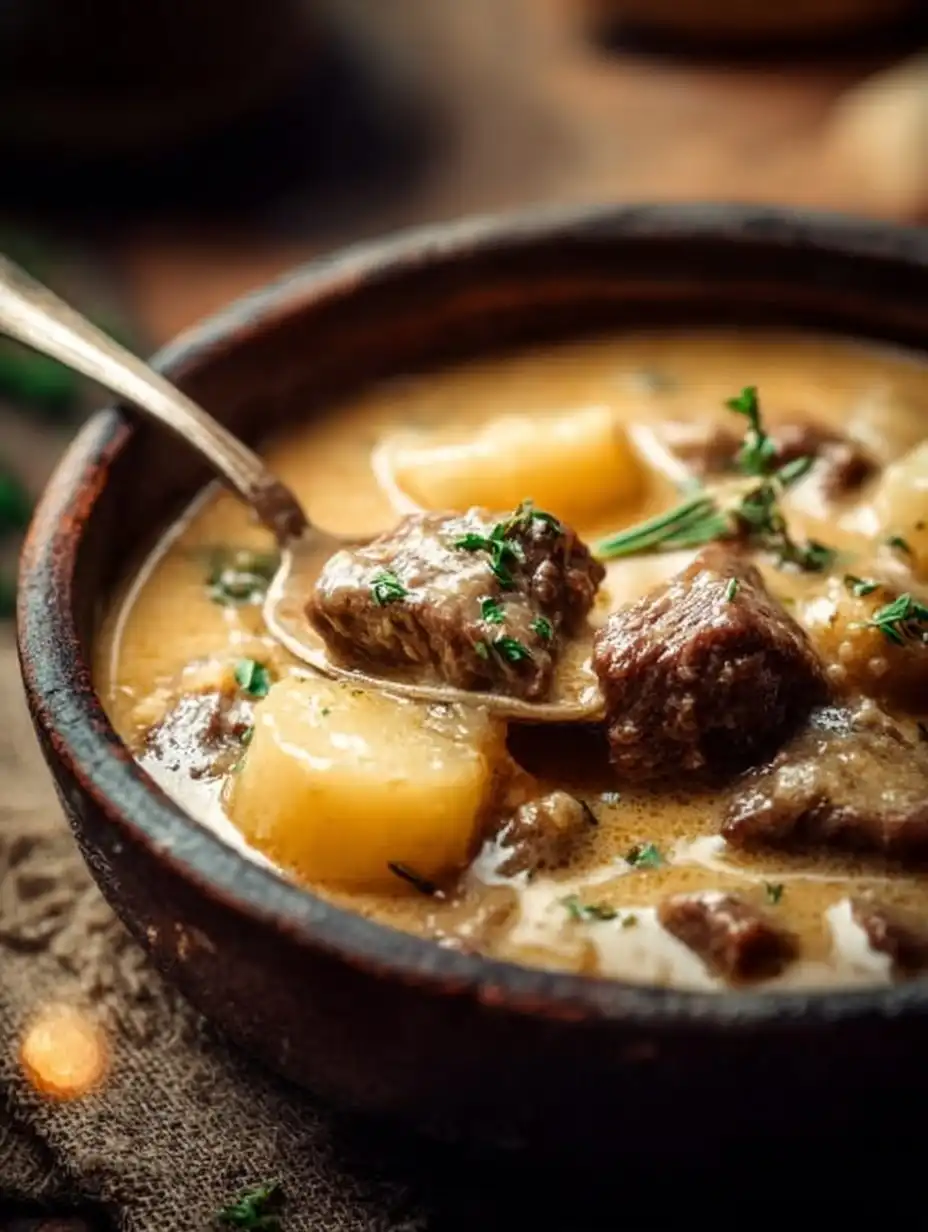
Why You Will Love This Creamy Steak and Potato Soup
The Ultimate Comfort Food Experience
In the world of culinary delights, few things offer the same level of emotional and physical satisfaction as a bowl of hot, creamy soup. This Creamy Steak and Potato Soup is the quintessential “hug in a bowl.” It taps into a deep-seated human need for warmth and nourishment. The combination of protein-rich steak and energy-giving potatoes creates a meal that is not only filling but also deeply grounding. Unlike lighter broths that might leave you searching for a snack an hour later, this soup is a complete, well-rounded experience that satisfies the appetite and soothes the soul. It is the kind of meal that makes you want to curl up on the sofa with a blanket and forget the stresses of the outside world.
A Perfect Balance of Textures
One of the primary reasons this soup is so beloved is the incredible interplay of textures. You have the firm yet tender bite of the seared steak pieces, which provide a satisfying chew. Then, there are the potatoes, which, depending on how long you simmer them, can range from holding their shape with a slight resistance to being so soft they almost dissolve into the liquid. The broth itself is a silky, velvety medium that ties everything together. When you add a garnish of fresh, crisp parsley or perhaps a few crunchy homemade croutons, you create a multi-dimensional eating experience that keeps your palate engaged from the first bite to the very last.
Versatility and Adaptability
While the base recipe is spectacular on its own, this soup is a wonderful canvas for culinary creativity. It is incredibly forgiving and highly adaptable to whatever you might have in your pantry or garden. If you want to add more vegetables, carrots and celery fit in seamlessly. If you prefer a bit of a kick, a pinch of red pepper flakes or a dash of hot sauce can transform the flavor profile. It is also a fantastic way to use up different cuts of meat or even leftovers from a previous night’s roast. This versatility makes it a reliable “go-to” recipe for busy weeknights or for those days when you want to clear out the refrigerator without sacrificing quality or taste.
Family-Friendly and Crowd-Pleasing
It is a rare dish that can please toddlers, teenagers, and adults alike, but the Creamy Steak and Potato Soup does exactly that. The flavors are classic and approachable, lacking any aggressive spices that might deter pickier eaters, yet they are deep and complex enough to satisfy a sophisticated palate. It is a fantastic dish for family gatherings, potlucks, or casual dinner parties. Because it is so hearty, you don’t need to worry about preparing a massive array of side dishes; a simple salad or some good bread is all it takes to turn this soup into a feast. Plus, the sight of a big pot of steaming soup in the center of the table naturally encourages conversation and a sense of communal dining.
Efficiency and Ease of Preparation
Despite its rich flavor and “slow-cooked” feel, this soup is surprisingly efficient to prepare. It doesn’t require hours of simmering on the stove like a traditional bone broth or a complex beef bourguignon. By cutting the steak and potatoes into bite-sized pieces, you significantly reduce the cooking time, making it a viable option for a weeknight dinner. The process is straightforward and logical, moving from searing to sautéing to simmering in a single pot. This “one-pot” approach not only streamlines the cooking process but also means fewer dishes to wash at the end of the night—a win-way for any home cook.
Key Ingredients and Flavor Dynamics
Selecting the Right Cut of Steak
The star of the show is, of course, the steak. The choice of cut will significantly impact the final texture and flavor of your soup. Sirloin is a fantastic all-around choice; it is relatively lean but has enough fat to remain tender during the quick searing and subsequent simmering process. It offers a clean, beefy flavor that doesn’t overwhelm the other ingredients. Skirt steak, on the other hand, is known for its intense, robust beef flavor and its unique grain. If you choose skirt steak, it is crucial to cut it across the grain into very small pieces to ensure it remains tender. Other options include ribeye for a richer, fattier experience, or even tenderloin if you want the ultimate in tenderness, though many find tenderloin almost too soft for a hearty soup like this. The key is to look for good marbling—those tiny flecks of white fat within the muscle—which will melt during cooking and provide moisture and flavor.
The Potato: Starchy vs. Waxy
Potatoes are not all created equal, and the type you choose will dictate the consistency of your soup. For a soup that is naturally thick and creamy, Russet potatoes are an excellent choice. They have a high starch content, which means they tend to break down slightly during the simmering process, releasing their starches into the broth and acting as a natural thickener. If you prefer a soup where the potato chunks remain distinct and firm, Yukon Gold potatoes are the gold standard. They have a medium starch content and a beautiful buttery flavor and yellow hue that adds a visual richness to the dish. Waxy potatoes, like Red Bliss, will hold their shape the best but won’t contribute as much to the creaminess of the base. Many cooks like to use a combination of Russet and Yukon Gold to get the best of both worlds: a thick, velvety base with some intact, buttery chunks.
The Importance of Aromatics: Onion and Garlic
Onions and garlic are the unsung heroes of the culinary world, providing the foundational “bass notes” of flavor. For this soup, a medium yellow or white onion is ideal. As it sautés in the beef drippings, it undergoes a transformation, losing its sharp raw bite and becoming sweet and translucent. This sweetness balances the savory saltiness of the beef and broth. Garlic adds a layer of pungent warmth and complexity. The key with garlic is timing; adding it too early can cause it to burn and become bitter, which is why we add it only after the onions have softened. The aroma of garlic hitting the hot pan is one of the greatest joys of cooking and serves as a signal that the dish is truly coming together.
The Liquid Base: Broth and Cream
The broth is the medium that carries all the other flavors, so quality matters. A high-quality beef broth will provide a deep, resonant flavor that complements the steak. If you prefer a slightly lighter profile, vegetable broth is a perfectly acceptable substitute and can actually allow the flavor of the thyme and cream to shine a bit more. When it comes to the “creamy” aspect, heavy cream is the traditional choice for maximum luxury. It provides a thick, coating mouthfeel and a rich dairy sweetness. Half-and-half is a lighter alternative that still provides a lovely creaminess but with fewer calories and a thinner consistency. The interaction between the savory broth and the sweet cream is what gives this soup its addictive, sophisticated character.
Herbs and Seasoning: The Finishing Touches
Thyme is the primary herb in this recipe, and for good reason. Its woody, slightly minty, and lemony notes are the perfect partner for beef and potatoes. Dried thyme is potent and convenient, but if you have access to fresh thyme, the bright, herbal top notes it provides are unparalleled. Salt and black pepper are not just additives; they are flavor enhancers. Salt unlocks the flavors of the beef and potatoes, while black pepper adds a subtle heat and a floral aroma. Don’t be afraid to season at multiple stages of the cooking process—seasoning the steak before searing is just as important as the final adjustment before serving. Finally, fresh parsley as a garnish provides a necessary pop of color and a fresh, grassy finish that cuts through the richness of the cream.
Step-by-Step Cooking Guide and Culinary Techniques
Step 1: Preparation and Searing the Steak
The first step in creating a world-class soup is proper preparation. Begin by cutting your steak into uniform, bite-sized pieces, roughly half an inch to three-quarters of an inch square. This ensures that every piece cooks at the same rate and fits comfortably on a spoon. Pat the meat dry with paper towels; moisture is the enemy of a good sear. If the meat is wet, it will steam rather than brown. Once dried, season the steak generously with salt and black pepper. In your large pot or Dutch oven, heat your oil or butter over medium-high heat. You want the fat to be shimmering and hot. Carefully add the steak pieces in a single layer. If your pot isn’t large enough to hold all the meat without crowding, work in batches. Crowding the pan drops the temperature and causes the meat to release its juices, preventing that beautiful brown crust from forming. Let the steak sit undisturbed for a minute to develop a deep color, then toss them around for another minute or two until they are browned on all sides. They don’t need to be cooked through at this stage; we just want that intense flavor that comes from the browning process. Remove the steak and set it aside on a plate, making sure to save any juices that collect.
Step 2: Building the Aromatic Base
With the steak removed, you will notice a layer of dark, flavorful bits stuck to the bottom of the pot. Do not wash these away! This is concentrated flavor. If the pot looks a bit dry, add another small knob of butter or a splash of oil. Add your finely chopped onions to the pot. As the onions cook, they will release moisture, which you can use to gently scrape up those flavorful bits from the bottom of the pan. This process integrates the beef flavor into the very foundation of the soup. Cook the onions over medium heat, stirring occasionally, until they become soft, translucent, and just start to turn a pale golden color. This usually takes about 4 to 5 minutes. Now, add your minced garlic. Garlic is delicate and can burn in seconds, so stir it constantly for just about 30 seconds until you can smell its incredible fragrance. The goal here is to soften the garlic and release its oils without letting it brown too much.
Step 3: Integrating Potatoes and Simmering
Now it’s time to add the bulk of the soup. Toss in your diced potatoes. The size of the dice should be similar to the steak pieces for a consistent look and feel. Stir the potatoes for a minute so they get coated in the flavored fats and aromatics. Next, pour in your four cups of broth. As the liquid hits the hot pan, it will deglaze any remaining bits from the bottom. Turn the heat up to high and bring the mixture to a rolling boil. Once it reaches a boil, immediately turn the heat down to a low simmer. Cover the pot with a lid, but leave it slightly ajar to allow a small amount of steam to escape. Let the potatoes simmer gently for 12 to 15 minutes. You’ll know they are ready when you can easily pierce a piece with a fork, but it doesn’t completely fall apart. This simmering stage is crucial because it allows the potatoes to release some of their starch, which begins to thicken the broth naturally.
Step 4: The Return of the Steak
Once the potatoes are tender, it’s time to bring the steak back into the fold. Gently slide the seared steak pieces and any accumulated juices back into the pot. By adding the steak back toward the end of the cooking process, you ensure that it remains tender and succulent rather than becoming tough and overcooked from a long simmer. Stir the meat into the potato and broth mixture, allowing the flavors to begin to mingle. The residual heat from the broth will finish cooking the steak to a perfect medium or medium-well doneness within just a few minutes.
Step 5: Adding the Cream and Thyme
This is the moment the soup transforms from a rustic stew into a luxurious, creamy masterpiece. Turn the heat down to low. You want the soup to be warm but not boiling. Pour in your cup of heavy cream or half-and-half. As you stir, you will see the broth turn a beautiful, pale, creamy color. Add your dried or fresh thyme at this stage as well. Adding the herbs toward the end of the cooking process preserves their delicate aromatic oils, ensuring the flavor is bright and present. Continue to heat the soup gently for another 2 to 3 minutes, stirring occasionally. It is vital that you do not let the soup come to a hard boil after the cream has been added. High heat can cause the dairy to “break” or curdle, resulting in a grainy texture rather than a smooth, silky one. You are simply looking to warm everything through and allow the flavors to harmonize.
Step 6: Final Seasoning and Presentation
The final step is the most important for any chef: the taste test. Take a small spoonful of the soup (be careful, it’s hot!) and evaluate the flavors. Does it need more salt to bring out the beefiness? Does it need more black pepper for a bit of a bite? This is your chance to fine-tune the seasoning to your exact preference. Once you are satisfied, ladle the soup into warm bowls. The warmth of the bowl helps keep the creamy soup at the perfect temperature as it’s being eaten. Sprinkle a generous amount of freshly chopped parsley over the top. The bright green color provides a beautiful visual contrast against the creamy white and brown of the soup, and the fresh flavor provides a lovely counterpoint to the richness of the dish. Serve immediately while it is steaming and fragrant.
Variations, Make-Ahead Strategies, and Storage
Flavor Variations and Add-Ins
Once you have mastered the basic recipe, you may find yourself wanting to experiment. For a “Loaded Steak and Potato” experience, you can stir in some shredded sharp cheddar cheese at the very end until it melts, and top each bowl with crispy bacon bits and a dollop of sour cream or a cooling herb yogurt. If you want to increase the vegetable content, adding sliced mushrooms during the onion-sautéing stage is a brilliant move; mushrooms and steak are a classic pairing, and the fungi add a wonderful earthy depth. Sliced carrots, peas, or even chopped kale can be added during the simmering stage for extra color and nutrition. For those who enjoy a bit of smokiness, a teaspoon of smoked paprika added with the garlic can transform the soup’s character entirely.
The Art of the Side Dish
While this soup is a meal in itself, the right accompaniment can elevate the dining experience. A thick slice of artisanal sourdough bread, toasted and slathered with salted butter, is the perfect tool for wiping the bowl clean. A crusty baguette or even warm garlic bread also works beautifully. If you’re looking for something a bit lighter to balance the richness of the cream, a crisp garden salad with a simple lemon vinaigrette provides a refreshing acidity that cleanses the palate between spoonfuls. For a more rustic touch, consider serving the soup alongside a plate of roasted root vegetables or a simple bowl of steamed green beans tossed in olive oil and sea salt.
Make-Ahead and Meal Prep
This soup is an excellent candidate for meal prep, as the flavors often deepen and improve after a night in the refrigerator. If you are planning to make this ahead of time, you might consider undercooking the potatoes slightly, as they will continue to soften as they sit in the liquid and when they are reheated. You can prepare the entire soup up to the point of adding the cream, store it, and then add the cream and thyme when you are ready to serve. This ensures the freshest possible dairy flavor and texture. If you do make the whole thing ahead of time, just be sure to reheat it gently on the stove over low heat, stirring frequently to prevent the cream from separating.
Storage and Reheating Guidelines
Leftover soup should be cooled to room temperature before being transferred to airtight containers and placed in the refrigerator. It will stay fresh and delicious for 3 to 4 days. When reheating, the stove is your best friend. Place the desired amount in a small pot and heat over medium-low, stirring occasionally. If the soup has thickened too much in the fridge (which potatoes often cause it to do), simply stir in a splash of broth or water to loosen it up. Avoid using the microwave if possible, as it can heat the soup unevenly and cause the cream to separate. If you must use a microwave, use a medium power setting and stir every 30 seconds.
A Note on Freezing
Freezing creamy soups can be a bit tricky. Both potatoes and dairy products change their texture when frozen and thawed. Potatoes can become somewhat grainy or mealy, and the cream can separate, leading to a thin, watery consistency with clumps of fat. However, if you must freeze it, the best method is to freeze the soup before adding the cream. When you are ready to eat it, thaw the soup in the refrigerator overnight, bring it to a simmer on the stove, and then stir in the fresh cream and thyme. This will give you a result that is much closer to the freshly made version. If you have already added the cream and find yourself with leftovers you can’t finish, you can still freeze it, but be prepared to give it a very vigorous whisking or even a quick pulse with an immersion blender after reheating to help re-emulsify the dairy.
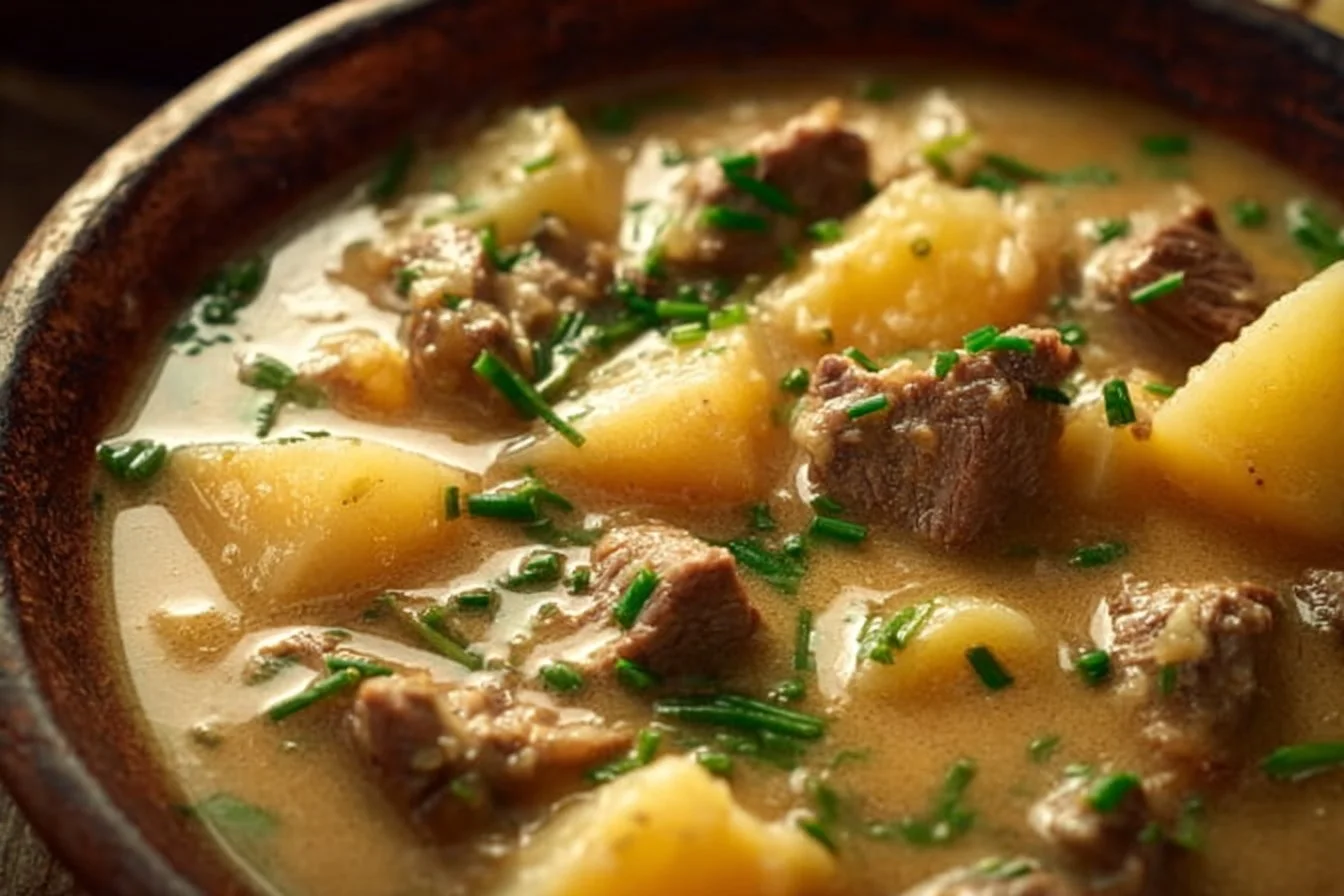
Creamy Steak and Potato Soup
Ingredients
Method
- Heat oil or butter in a large pot over medium-high heat. Season steak with salt and pepper.
- Sear the steak pieces in the hot pot until browned on all sides, about 2–3 minutes. Remove and set aside.
- In the same pot, add the chopped onion. Cook until soft, about 4–5 minutes. Add garlic and cook 30 seconds more.
- Add diced potatoes and pour in the broth. Bring to a boil, then reduce heat and simmer until potatoes are tender, about 12–15 minutes.
- Return the seared steak to the pot. Stir in the cream and thyme. Heat gently until warmed through, but do not boil hard after adding cream.
- Taste and adjust salt and pepper. Serve hot with chopped parsley on top.
Notes
🍲 More Cozy Homemade Soups to Try:
- Comforting Chicken and Potato Soup – tender chicken and soft potatoes in a nourishing rustic broth
- Creamy Potato and Lentil Soup – silky pureed potato soup blended with hearty lentils
(FAQs)
Can I use leftover steak for this recipe?
Absolutely! Using leftover steak is a brilliant way to reduce food waste and save time. Since the steak is already cooked, you can skip the initial searing step. Simply follow the recipe through the simmering of the potatoes. Once the potatoes are tender, add your pre-cooked steak pieces to the pot along with the cream and thyme. Heat it just long enough to warm the steak through. This is actually a great way to use up steak that might have been slightly overcooked the first time around, as the creamy broth will help moisten and tenderize the meat.
How can I make the soup thicker without adding more potatoes?
If you find your soup is a bit thinner than you’d like, there are several ways to add body. One of the easiest methods is to take a potato masher or a large fork and gently crush a few of the potato chunks right in the pot. This releases more starch and instantly thickens the liquid. Alternatively, you can create a “slurry” by mixing a tablespoon of cornstarch with two tablespoons of cold water or broth until smooth. Stir this into the simmering soup (before adding the cream) and let it cook for a minute or two until thickened. Another chef’s trick is to stir in a bit of instant mashed potato flakes—they dissolve instantly and act as a perfect, flavor-neutral thickener.
What is the best way to prevent the cream from curdling?
Curdling happens when the proteins in the dairy are shocked by high heat or acidity. To prevent this, always turn your heat down to low before adding the cream. You can also “temper” the cream by stirring a small amount of the hot soup broth into the cold cream in a separate measuring cup before pouring the whole mixture into the pot. This gradually raises the temperature of the cream, making it less likely to react poorly to the heat. Most importantly, once the cream is in the pot, never let the soup reach a full, rolling boil again.
Can I use milk instead of heavy cream?
You can use milk, but keep in mind that the soup will be significantly less rich and the consistency will be much thinner. Whole milk is the best substitute if you’re avoiding heavy cream. If you use a lower-fat milk like 1% or skim, the risk of curdling increases significantly, and the soup may feel a bit “weak.” If you do use milk and want to regain some of that thickness, you will almost certainly need to use one of the thickening methods mentioned above, such as a cornstarch slurry or mashing some of the potatoes.
Is it necessary to peel the potatoes?
Peeling is largely a matter of personal preference. If you use thin-skinned potatoes like Yukon Gold or Red Bliss, the skins are quite tender and can add a nice rustic look and extra nutrients to the soup. However, Russet potato skins are quite thick and tough and can be unpleasant to find in a creamy soup. If you prefer a very smooth, refined aesthetic, peeling is the way to go. If you like a more “country-style” or rustic feel, feel free to leave the skins on—just be sure to scrub the potatoes thoroughly before dicing them.
How do I know when the steak is “seared” properly?
A proper sear is characterized by a deep, brown color—not grey. When you put the steak in the pan, it should make a loud sizzling sound. If it doesn’t, your pan isn’t hot enough. Let the meat sit without moving it for at least 60 to 90 seconds. If you try to flip it and it sticks to the pan, it’s not ready yet; meat naturally “releases” from the surface once a good crust has formed. The goal of the sear is not to cook the steak through, but to create a complex layer of flavor that will permeate the entire soup.
Can I make this soup in a slow cooker or Crock-Pot?
Yes, this recipe can be adapted for a slow cooker. You should still sear the steak and sauté the onions and garlic in a pan first, as this builds essential flavor that a slow cooker cannot replicate. After that, add the seared meat, aromatics, potatoes, and broth to the slow cooker. Cook on low for 6 to 7 hours or on high for 3 to 4 hours. Stir in the cream and thyme during the last 30 minutes of cooking. This is a great “set it and forget it” version for busy days, though the texture of the potatoes might be slightly softer than the stovetop version.
What if I don’t have fresh or dried thyme?
If you’re out of thyme, don’t worry! Other herbs can work beautifully in this soup. Rosemary offers a stronger, more pine-like flavor that pairs excellently with beef (just use a bit less, as it can be overpowering). Oregano can give the soup a slightly more Mediterranean feel, while a bay leaf simmered with the broth adds a subtle, floral depth. Even a bit of dried Italian seasoning can work in a pinch. The key is to use something that provides an earthy or herbal counterpoint to the rich, savory flavors of the meat and cream.
Creating this Creamy Steak and Potato Soup is a rewarding experience that culminates in a meal that is truly greater than the sum of its parts. It is a dish that celebrates the beauty of home cooking—the transformation of simple, raw ingredients into something that provides genuine comfort and joy. Whether you are serving it to your family on a Tuesday night or sharing it with friends on a special occasion, this soup is sure to leave everyone feeling nourished, satisfied, and perhaps a little bit more in love with the art of cooking. Enjoy every spoonful, and remember that the best ingredient in any recipe is the care and passion you bring to the kitchen.
Creamy Steak and Potato Soup
Ingredients
Method
- Heat oil or butter in a large pot over medium-high heat. Season steak with salt and pepper.
- Sear the steak pieces in the hot pot until browned on all sides, about 2–3 minutes. Remove and set aside.
- In the same pot, add the chopped onion. Cook until soft, about 4–5 minutes. Add garlic and cook 30 seconds more.
- Add diced potatoes and pour in the broth. Bring to a boil, then reduce heat and simmer until potatoes are tender, about 12–15 minutes.
- Return the seared steak to the pot. Stir in the cream and thyme. Heat gently until warmed through, but do not boil hard after adding cream.
- Taste and adjust salt and pepper. Serve hot with chopped parsley on top.

1 thought on “Creamy Steak and Potato Soup”