There is a specific kind of magic that happens in the kitchen when the air turns crisp and the evening shadows stretch long across the floor. It is the season of the simmer, a time when our culinary instincts pull us toward the stove to create something that offers more than just sustenance. Among the pantheon of comfort foods, few dishes possess the radiant warmth and velvety elegance of a perfectly executed sweet potato soup. It is a dish that seems to capture the very essence of a golden sunset in a bowl, glowing with a vibrant orange hue and offering a fragrance that balances earthy sweetness with a gentle, spicy kick. As you stand over the pot, the steam rises in fragrant plumes, carrying the scent of ginger, garlic, and the deep, caramelized notes of softened onions, promising a meal that is as nourishing to the soul as it is to the body.
Imagine, for a moment, the first spoonful. It is silky and luxurious, coating the palate with a richness that feels indulgent yet remains remarkably light. The natural sugars of the sweet potatoes have been coaxed out through gentle heat, then balanced by the savory depth of vegetable broth and the tropical creaminess of coconut milk. Just as the sweetness begins to peak, a hint of smoked paprika provides a whisper of campfire warmth, while a final squeeze of fresh lemon juice cuts through the density, making every flavor pop with newfound clarity. This is not just a soup; it is a sensory experience designed to ground you, to warm your hands as you cradle the bowl, and to provide a moment of quiet peace in a busy world.
The beauty of this recipe lies in its sophisticated simplicity. While the final result looks like something served in a high-end bistro, the process is incredibly approachable, relying on humble root vegetables and pantry staples that transform into something extraordinary. Whether you are a seasoned home cook or someone just beginning to explore the wonders of the kitchen, this soup offers a canvas for creativity. It invites you to play with textures—the crunch of a toasted pumpkin seed, the cooling swirl of yogurt, or the fresh bite of cilantro—allowing you to tailor each bowl to your specific cravings. It is a celebration of the harvest, a testament to the power of fresh ingredients, and a reminder that the best meals are often those made with patience and love.
As we dive into the details of this recipe, we will explore not just the “how” but the “why” behind every choice. We will talk about the nuances of selecting the perfect sweet potato, the secret to extracting maximum flavor from your aromatics, and the techniques that ensure your soup achieves that coveted, professional-grade smoothness. By the time you reach the end of this guide, you won’t just have a recipe; you will have a deep understanding of the harmony of flavors that makes this sweet potato soup a timeless classic. So, tie on your apron, clear your counter, and let’s begin the journey of creating a bowl of pure, liquid sunshine.
Why You Will Love This Sweet Potato Soup
The Ultimate Comfort Food
In the world of culinary delights, “comfort food” is a term often reserved for heavy, carb-laden dishes that leave us feeling sleepy. However, sweet potato soup redefines this category. It provides that same sense of emotional warmth and physical satisfaction without the heavy “food coma” that often follows a rich meal. The natural creaminess of the sweet potatoes, combined with the healthy fats in coconut milk, creates a satiating texture that feels like a hug from the inside out. It is the perfect antidote to a rainy afternoon, a long workday, or a chilly winter evening.
A Nutrient-Dense Powerhouse
One of the most compelling reasons to fall in love with this soup is its incredible nutritional profile. Sweet potatoes are famed for their high levels of beta-carotene, which the body converts into Vitamin A, essential for immune function and eye health. They are also packed with fiber, Vitamin C, and potassium. By incorporating fresh ginger and garlic, you are adding anti-inflammatory and immune-boosting properties to your meal. This soup isn’t just delicious; it’s a bowl of wellness that supports your body’s natural defenses, making it a fantastic choice during the colder months when we all need a little extra vitality.
Versatility for Every Lifestyle
Whether you follow a vegan, gluten-free, or dairy-free lifestyle, this recipe fits seamlessly into your diet without requiring any complex substitutions. It is naturally plant-based, relying on the inherent creaminess of the vegetables and coconut milk rather than heavy cream or butter. This makes it a “crowd-pleaser” in the truest sense—you can serve it at a dinner party knowing that almost everyone at the table can enjoy it. Furthermore, it is incredibly kid-friendly; the natural sweetness of the potatoes is often a hit with younger palates, making it a clever way to introduce more vegetables into a family’s diet.
Minimal Effort, Maximum Reward
Despite its complex flavor profile, this soup is remarkably easy to prepare. It requires very little active “hands-on” time. Once the vegetables are chopped and the pot is simmering, the stove does most of the work for you. This makes it an ideal candidate for meal prepping on a Sunday or a quick weeknight dinner when you want something homemade but don’t have hours to spend in the kitchen. The return on investment is high: for about 15 minutes of prep work, you get a pot of soup that can provide multiple meals throughout the week.
Key Ingredients and Flavor Dynamics
The Star: Sweet Potatoes
To make an exceptional soup, you must start with exceptional sweet potatoes. In the grocery store, you might see them labeled as “yams,” but in North America, most of what we find are actually sweet potatoes. For this soup, look for varieties with deep orange flesh, such as Jewel or Garnet potatoes. These varieties have a higher sugar content and a moister texture than the tan-skinned, pale-fleshed varieties, which can be somewhat starchy and dry. When selecting your potatoes, look for ones that are firm to the touch, free of soft spots or sprouts, and have relatively smooth skin. The deeper the orange color, the more beta-carotene and sweetness you’ll bring to the final dish.
The Aromatic Foundation: Onion, Garlic, and Ginger
Every great soup begins with a strong aromatic base. The medium onion, when sautéed slowly, provides a foundational sweetness and savory depth that balances the sugar of the potatoes. Garlic adds a pungent, earthy bite that rounds out the flavor profile. But the real “secret ingredient” here is the fresh ginger. Ginger provides a bright, zingy heat that contrasts beautifully with the creamy elements of the soup. It adds a layer of complexity that keeps the soup from feeling one-dimensional. If you can, always use fresh ginger—the difference in flavor compared to the ground version is like night and day. Grating it finely ensures it melts into the soup, leaving behind its essence without any fibrous bits.
The Liquid Gold: Vegetable Broth and Coconut Milk
The choice of liquid is crucial for the soup’s final consistency and taste. A low-sodium vegetable broth allows you to control the saltiness of the dish while providing a savory backbone. If you have homemade stock on hand, even better! The coconut milk is what transforms this from a simple puree into a luxurious bisque. Canned coconut milk (full-fat is recommended for the best texture) adds a subtle tropical note and a velvety mouthfeel. It provides the fat necessary to carry the flavors of the spices and aromatics across your taste buds. If you prefer a lighter version, you can use light coconut milk or even an unsweetened almond or cashew milk, though the result will be slightly less rich.
The Flavor Enhancers: Smoked Paprika and Citrus
Smoked paprika is the “X-factor” in this recipe. Just a half-teaspoon adds a hint of smokiness that mimics the flavor of a slow-roasted vegetable, adding depth and a “cooked-all-day” feel to the soup. It also complements the natural sweetness of the potatoes perfectly. Finally, never underestimate the power of a finishing acid. A squeeze of fresh lemon or lime juice at the very end acts as a flavor “brightener.” It lifts the heavy, sweet, and creamy notes, making the whole dish feel vibrant and fresh. It is the difference between a good soup and a spectacular one.
The Texture Play: Toppings
A pureed soup can sometimes feel a bit monotonous in texture, which is why toppings are so important. Pumpkin seeds (pepitas) add a delightful crunch and a nutty flavor. A dollop of plain yogurt or a drizzle of extra coconut milk adds a cool, creamy contrast. Fresh cilantro brings a herbal brightness that cuts through the richness. These garnishes aren’t just for show; they are integral to the eating experience, providing variety in every bite.
Step-by-Step Cooking Guide and Culinary Techniques
Step 1: Sautéing the Aromatics
Begin by placing your large pot or Dutch oven over medium heat. Add your tablespoon of olive oil or avocado oil. Once the oil is shimmering, add the chopped onion and a generous pinch of salt. The salt isn’t just for seasoning; it helps draw the moisture out of the onions, allowing them to soften more quickly without browning too fast. Cook the onions for about 5 to 7 minutes. You are looking for them to become “translucent”—meaning they turn from opaque white to a soft, see-through appearance. This process builds a sweet, savory foundation for your soup. If they start to turn brown too quickly, turn the heat down slightly; you want them soft and sweet, not crispy.
Step 2: Releasing the Fragrance
Once the onions are soft, add your minced garlic and grated fresh ginger. This is a critical moment in the cooking process. Garlic and ginger can burn easily, and burnt garlic will impart a bitter flavor to the entire pot of soup. Cook these for only 1 to 2 minutes. You’ll know they are ready when the aroma suddenly fills your kitchen—it should smell incredibly fragrant and slightly spicy. By sautéing them briefly in the oil before adding the liquid, you are “blooming” their flavors, ensuring they are evenly distributed throughout the soup.
Step 3: Coating the Sweet Potatoes
Now, add your cubed sweet potatoes and the smoked paprika to the pot. Stir everything together so that the potatoes are well-coated in the aromatic oil and the paprika. This brief “toasting” of the potatoes and spices helps to lock in the flavor. The paprika will coat the potatoes in a beautiful reddish hue, and the heat from the pan will begin to awaken the smoky oils in the spice. Spend about 2 minutes stirring them around; you’re not trying to cook the potatoes through yet, just getting them acquainted with the other flavors in the pot.
Step 4: The Gentle Simmer
Pour in your 4 cups of vegetable broth. Increase the heat to medium-high and bring the liquid to a boil. Once it reaches a rolling boil, immediately reduce the heat to low or medium-low. You want a “gentle simmer”—look for small, lazy bubbles breaking the surface. Cover the pot with a lid. This slow simmer is essential because it allows the sweet potatoes to soften completely without the liquid evaporating too quickly. Let it simmer for 20 to 25 minutes. To test if they are ready, pierce a larger cube with a fork; it should slide in with absolutely no resistance, almost falling apart.
Step 5: Achieving the Perfect Puree
Remove the pot from the heat. Now comes the transformation. If you have an immersion blender (a “stick” blender), you can blend the soup directly in the pot. This is the easiest and safest method. Simply submerge the blender and whiz away until the soup is completely smooth and no chunks remain. If you are using a countertop blender, be very careful. Hot liquids expand when blended. Fill the blender only halfway, remove the small center piece from the lid to allow steam to escape, and cover it with a folded kitchen towel. Blend in batches. The goal is a texture that is as smooth as silk, with no graininess at all.
Step 6: The Creamy Finish
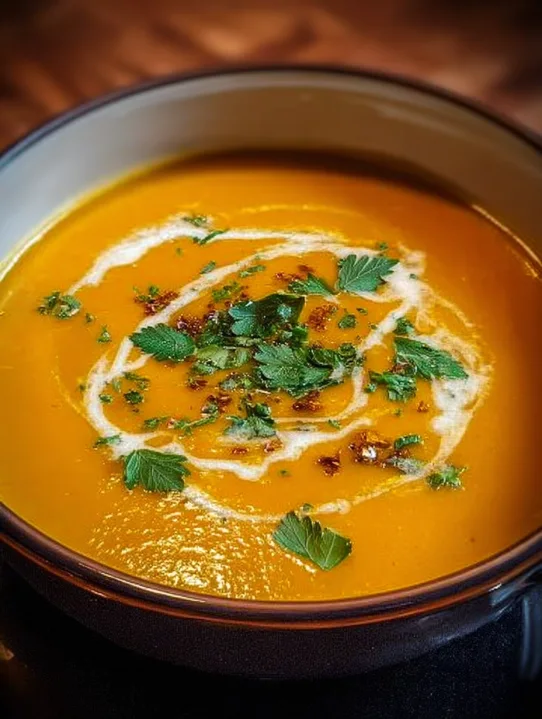
Return the pureed soup to the stove over low heat. Stir in your cup of coconut milk. As you stir, you’ll see the color of the soup transform from a deep, dark orange to a soft, creamy apricot hue. Let it warm through for a few minutes, but do not let it come back to a boil, as this can sometimes cause the coconut milk to separate. This is the time to taste your creation. Add salt and black pepper gradually. Finally, stir in your lemon or lime juice. Taste it again—you’ll notice how the citrus makes the sweet potato flavor “sing.” Adjust as needed until the balance of sweet, savory, and bright is just right.
Step 7: The Art of Garnishing
Ladle the hot soup into deep bowls. This is where you can get creative. A small dollop of plain yogurt or a swirl of coconut cream in the center adds visual appeal and a cooling element. Sprinkle a handful of toasted pumpkin seeds over the top for that essential crunch. Finish with a scatter of freshly chopped cilantro for a pop of green and a burst of herbal flavor. Serve it alongside a thick slice of toasted sourdough bread or a crusty baguette, perfect for swiping up every last drop of the golden liquid.
Variations, Make-Ahead Strategies, and Storage
Creative Flavor Variations
While the base recipe is spectacular, sweet potato soup is an excellent canvas for different flavor profiles. If you want to take it in a more global direction, consider these variations:
- Thai-Inspired: Add a tablespoon of red curry paste in Step 2 along with the garlic and ginger. Use lime juice instead of lemon and top with crushed peanuts and a drizzle of Sriracha.
- Warmly Spiced: Add a teaspoon of ground cumin and a half-teaspoon of ground coriander when you add the paprika. This gives the soup a Middle Eastern or North African flair that pairs beautifully with the sweet potatoes.
- Apple and Sage: For a true autumn feel, replace one of the sweet potatoes with a peeled and chopped Granny Smith apple. Use fresh sage instead of cilantro as a garnish. The tartness of the apple complements the potato’s sweetness wonderfully.
- Protein Boost: Stir in a can of rinsed and drained chickpeas or red lentils (if using lentils, add them in Step 4 to cook with the potatoes). This adds bulk and makes the soup even more filling.
Make-Ahead Strategies for Busy Cooks
This soup is a dream for meal preppers. In fact, many people find that the flavors actually improve after a day in the refrigerator, as the spices and aromatics have more time to meld together. You can easily make a double batch on the weekend. If you are planning to freeze the soup, some experts suggest freezing it before adding the coconut milk, as dairy or coconut milk can sometimes change texture slightly when thawed. However, because this is a pureed soup, it generally holds up very well even with the coconut milk included. Simply leave about an inch of space at the top of your freezer-safe containers to allow for expansion.
Storage and Reheating Tips
In the Refrigerator: Store the soup in an airtight container for up to 5 days. It will thicken slightly as it cools, so you may need to add a splash of water or broth when reheating to bring it back to your desired consistency.
In the Freezer: This soup freezes beautifully for up to 3 months. To thaw, place it in the refrigerator overnight or use the defrost setting on your microwave.
Reheating: For the best results, reheat the soup on the stovetop over medium-low heat, stirring occasionally. Avoid bringing it to a rapid boil to keep the texture smooth. If using a microwave, heat in 1-minute increments, stirring in between to ensure even heating. Always taste and add a fresh squeeze of lemon juice after reheating to “wake up” the flavors.
Perfect Pairings
While a bowl of this soup is a meal in itself, it pairs wonderfully with several sides. A simple garden salad with a light vinaigrette provides a crisp contrast to the creamy soup. For something more substantial, try an artisanal sourdough toast topped with smashed avocado and a sprinkle of sea salt. If you’re feeling adventurous, a grilled cheese sandwich made with a sharp white cheddar or gruyère is the ultimate companion for dipping into the warm, orange broth. The sharpness of the cheese cuts through the sweetness of the potato in a way that is truly addictive.

Sweet Potato Soup
Ingredients
Method
- Heat oil in a large pot over medium heat. Add chopped onion and a pinch of salt. Cook 5–7 minutes until soft and translucent.
- Add garlic and ginger. Cook 1–2 minutes until fragrant.
- Stir in the sweet potato cubes and smoked paprika. Mix to coat.
- Pour in vegetable broth, bring to a boil, then reduce heat. Simmer 20–25 minutes until sweet potatoes are very tender.
- Remove from heat. Use an immersion blender to puree until smooth. Alternatively, blend in batches in a countertop blender.
- Return to low heat, stir in coconut milk, and warm through. Adjust salt and pepper. Add lemon juice to brighten.
- Serve topped with a spoonful of plain yogurt or coconut cream, seeds, and fresh herbs.
Notes
🍲 More Cozy Homemade Soups to Try:
- Thai Sweet Potato & Carrot Soup – vibrant sweet potatoes and carrots in a rich, fragrant Thai curry broth
- Roasted Sweet Potato and Carrot Soup with Lentils – deep roasted vegetable sweetness paired with hearty protein-rich lentils
(FAQs)
Do I have to peel the sweet potatoes?
While the skin of the sweet potato is edible and contains a lot of nutrients, for this specific recipe, it is highly recommended that you peel them. The goal of this soup is a perfectly smooth, velvet-like texture. Even with a high-powered blender, the skins can leave behind small, fibrous bits that disrupt the silkiness of the puree. Peeling ensures that professional, elegant finish that makes this soup so special.
My soup is too thick. How do I fix it?
Sweet potatoes are very starchy, and sometimes they can absorb more liquid than expected, resulting in a soup that is more like a mash. This is an easy fix! Simply stir in more vegetable broth or water, a quarter-cup at a time, while the soup is over low heat. Keep adding and stirring until you reach your preferred consistency. Remember to taste and adjust the seasoning (salt and pepper) afterward, as adding more liquid will dilute the flavors slightly.
My soup is too thin. What should I do?
If your soup feels more like a broth than a creamy puree, you have a few options. The simplest method is to let it simmer uncovered for an additional 10 to 15 minutes; this allows some of the water to evaporate, concentrating the solids. Alternatively, you can blend in a half-cup of canned white beans (like cannellini). They are neutral in flavor but will add incredible creaminess and thickness without changing the taste of the sweet potato.
Can I use yams instead of sweet potatoes?
In most North American grocery stores, the vegetables labeled as “yams” are actually sweet potatoes, so they will work perfectly. However, “true” yams (which are more common in African and Caribbean markets) are much starchier, less sweet, and have a bark-like skin. If you use a true yam, the soup will be much more savory and have a different texture. For the flavor profile described in this recipe, the orange-fleshed sweet potato (Jewel or Garnet) is definitely the way to go.
Is it safe to blend hot soup in a regular blender?
Yes, but you must take precautions. Heat creates steam, and steam creates pressure. If you fill a blender to the top and turn it on, the lid can fly off, leading to burns and a big mess. Always fill the blender no more than halfway. Remove the center cap from the lid to let steam escape, and hold a thick kitchen towel firmly over the opening. Start on the lowest speed and gradually increase it. If you make soup often, an immersion blender is a worthwhile investment for both safety and convenience.
Why does my soup taste bland?
If your soup tastes a bit “flat,” it usually needs one of two things: salt or acid. Salt is a flavor enhancer—it doesn’t just make things salty; it makes the other ingredients taste more like themselves. Add a pinch, stir, and taste. If it still feels dull, add another squeeze of lemon or lime juice. The acid provides a “high note” that balances the earthy sweetness of the potatoes. Often, just a tiny bit more of these two ingredients will make the flavors “pop.”
Can I make this in a slow cooker or Instant Pot?
Absolutely! For a slow cooker, add all ingredients except the coconut milk and lemon juice. Cook on low for 6 to 8 hours or high for 3 to 4 hours. Once the potatoes are soft, blend and stir in the milk and juice. For an Instant Pot, use the sauté function for the aromatics, then add the potatoes and broth. Cook on high pressure for 8 minutes, do a quick release, blend, and finish with the milk and juice. Both methods work wonderfully and can save you time on a busy day.
Creating this sweet potato soup is more than just a task; it is an act of care. From the careful chopping of the vegetables to the final, artistic swirl of yogurt on top, every step is an opportunity to slow down and enjoy the process of making something beautiful. It is a dish that honors the simplicity of nature’s bounty and the warmth of a home-cooked meal. As you sit down to enjoy your bowl, take a moment to appreciate the vibrant colors, the complex aromas, and the incredible texture you’ve created. Whether you are sharing it with loved ones or enjoying a quiet moment of solitude, this soup is sure to bring a sense of comfort and joy to your table. Happy cooking!
Sweet Potato Soup
Ingredients
Method
- Heat oil in a large pot over medium heat. Add chopped onion and a pinch of salt. Cook 5–7 minutes until soft and translucent.
- Add garlic and ginger. Cook 1–2 minutes until fragrant.
- Stir in the sweet potato cubes and smoked paprika. Mix to coat.
- Pour in vegetable broth, bring to a boil, then reduce heat. Simmer 20–25 minutes until sweet potatoes are very tender.
- Remove from heat. Use an immersion blender to puree until smooth. Alternatively, blend in batches in a countertop blender.
- Return to low heat, stir in coconut milk, and warm through. Adjust salt and pepper. Add lemon juice to brighten.
- Serve topped with a spoonful of plain yogurt or coconut cream, seeds, and fresh herbs.